
Last updated November 15, 2026
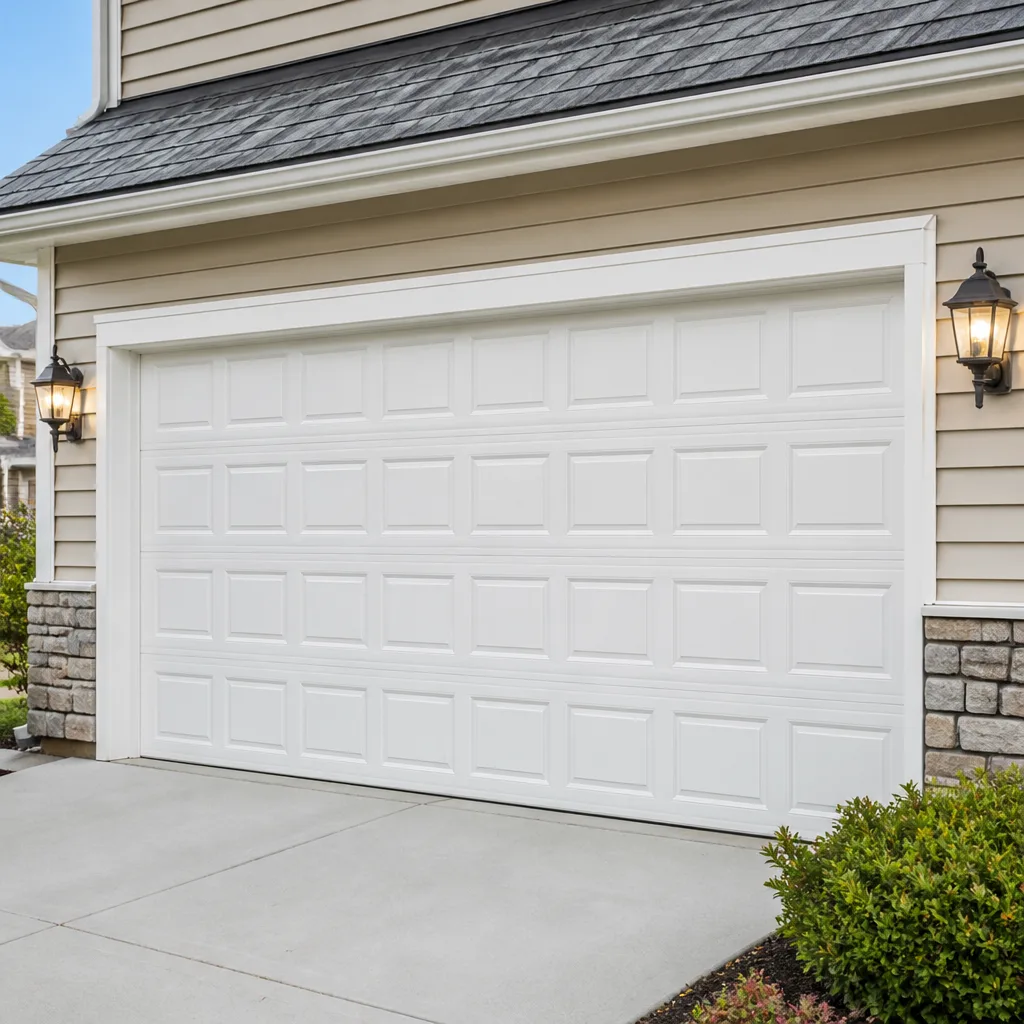 Raised-panel steel
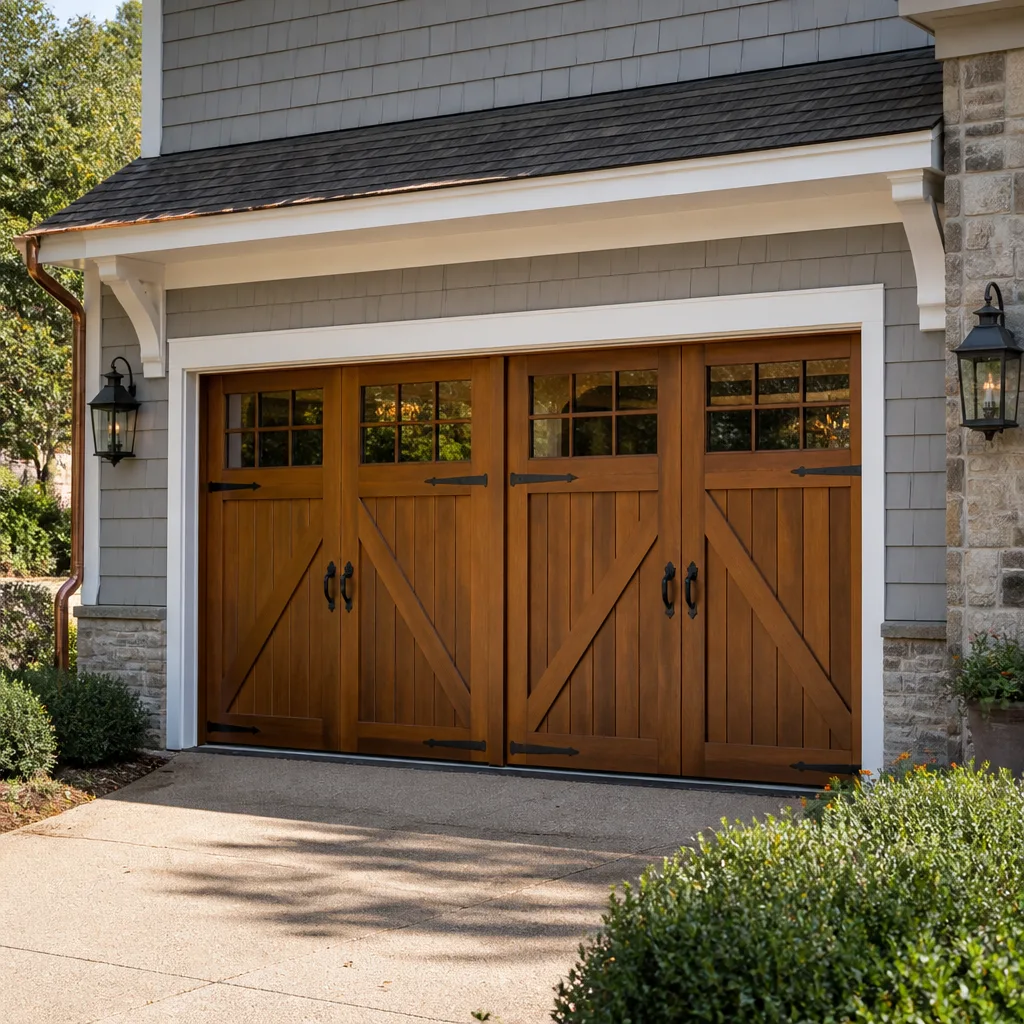 Carriage house
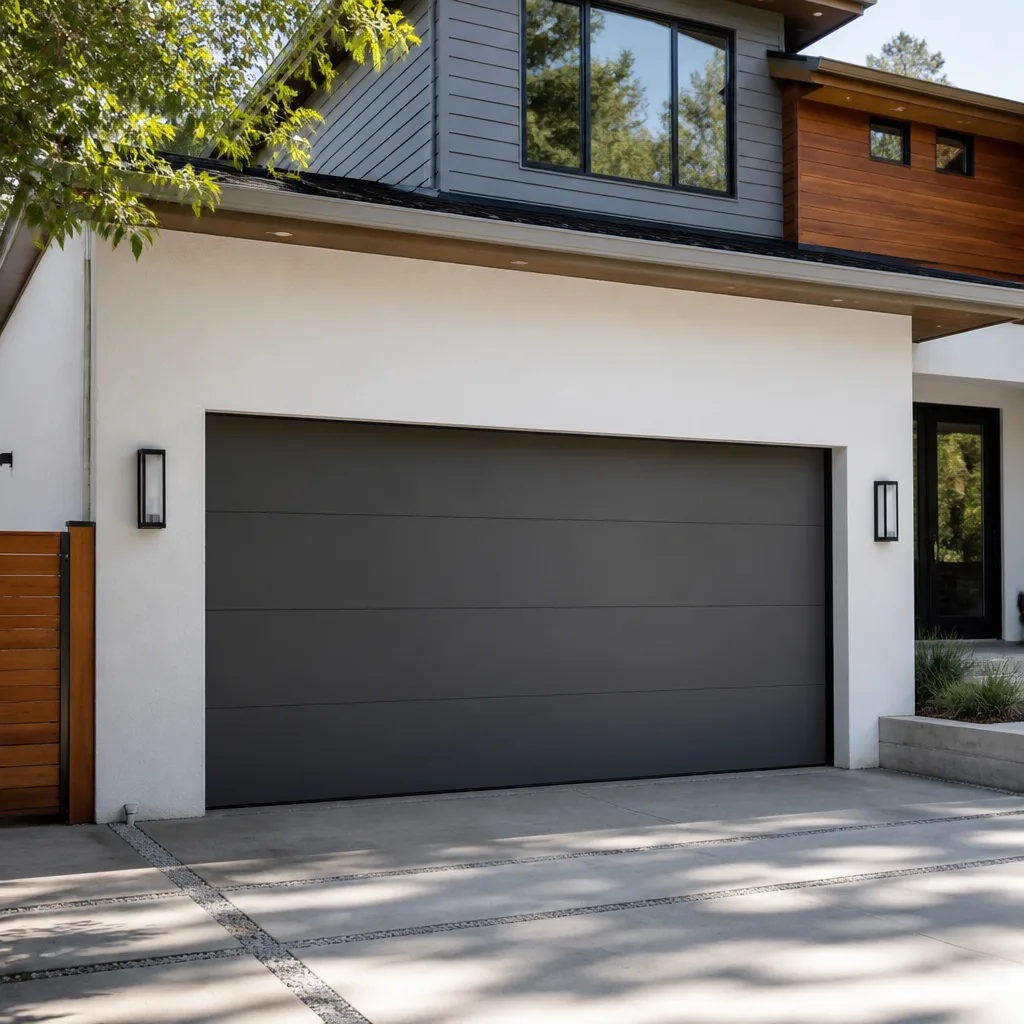 Modern flush
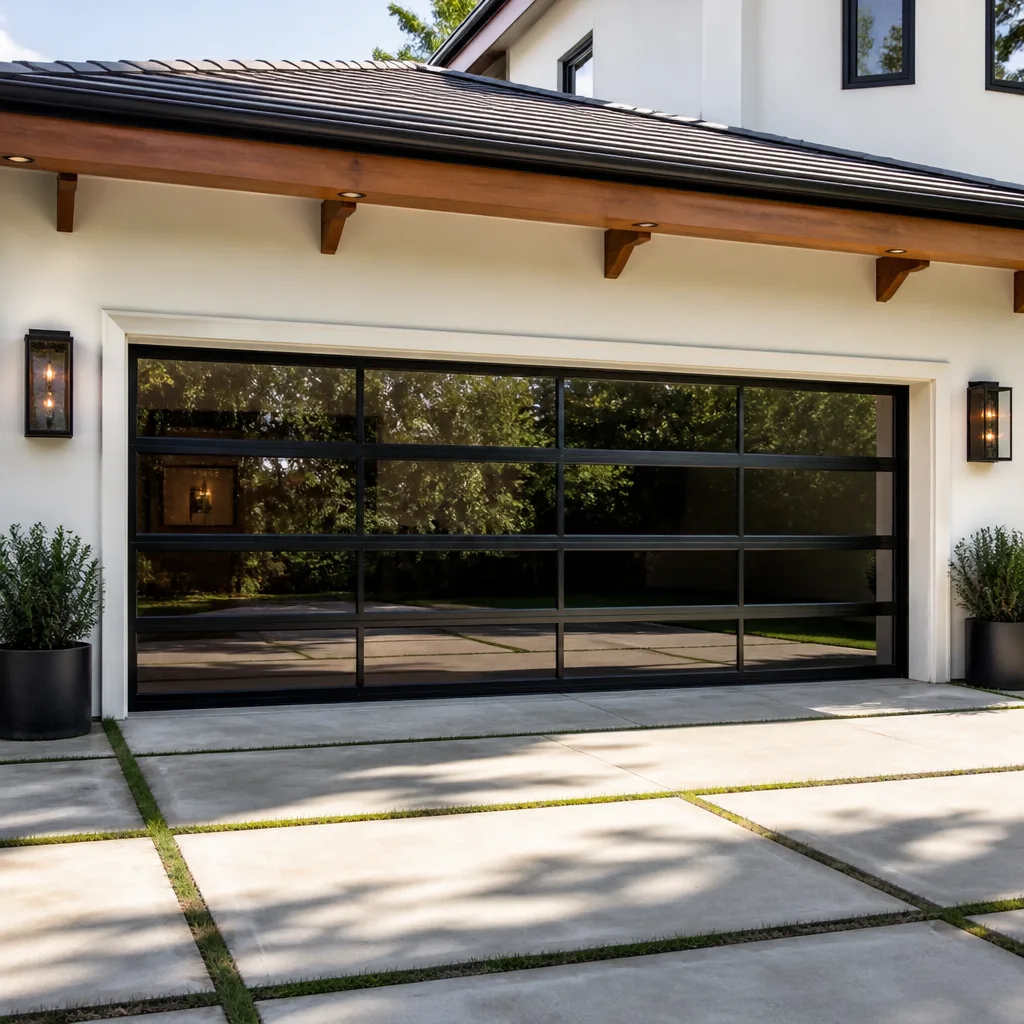 Full-view glass
 LiftMaster openers
 Chamberlain openers
Full 25-point door and opener safety check with every visit - springs, cables, rollers, tracks, and your LiftMaster or Chamberlain opener included
You get a price before we start. It does not change when the pro arrives.
Get your free estimateChoosing the Right Garage Door Brand: A Buyer’s Guide for Modesto
Most buyers start with the brand name they’ve seen advertised the most, and that’s usually the wrong place to start. The loudest brand in California isn’t automatically the one with the best-performing insulation when your west-facing garage door is baking through a 108°F Modesto August afternoon. R-value ratings are measured at standard lab temperatures, and the real-world gaps between brands widen once the heat climbs well past that. In this guide we’ll walk through the things that actually decide whether a door holds up here: insulation value against Central Valley heat, steel gauge and how it holds its finish under the sun, whether parts for that brand are easy to get in the Modesto area when you need a panel years down the road, what the warranty really covers, and which brands give honest value at the budget end. By the end you’ll know how to judge a brand by how it performs in Modesto, not by how well it’s marketed.
Quick Answer
The best garage door brand for a Modesto home is the one that pairs solid insulation (R-13 or better for an attached garage, higher if the garage shares walls with living space), a heavier steel gauge that resists denting and holds its finish under intense Valley sun, and reliable local availability for parts and warranty support. Clopay, Amarr, Wayne Dalton, and Raynor all make doors that fit that profile at different price points, but the right pick depends on your exposure, your budget, and which installer near you is an authorized dealer. There’s no single winner; there’s a winner for your situation.
Styles & brands we work with
- Raised-panel steel
- Carriage house
- Modern flush
- Full-view glass
- LiftMaster openers
- Chamberlain openers
Table of Contents
- How Insulation Ratings Hold Up in Modesto Heat
- Steel Gauge: Why It Matters More Than the Finish
- Local Parts and Service Availability
- Warranty Reality Check
- Budget Tiers: What $1,200 – $1,800 Actually Buys
- Pairing Your Door With the Right Opener Brand
- How to Verify Your Installer Before You Buy
- Common Mistakes to Avoid
- When to Call a Professional
How Insulation Ratings Hold Up in Modesto Heat
An R-value tells you how well a door resists heat transfer, and the number matters more here than it does in a mild coastal town. Modesto summers push past 100°F regularly, and an uninsulated or thin-insulated garage door turns an attached garage into a heat box. That heat works its way through the shared wall into the house, so your air conditioner runs harder to hold the rooms comfortable.
Here’s the honest way to think about the two common ratings you’ll see on door spec sheets:
- R-13 or similar is a solid working baseline for a well-ventilated attached garage. It takes the edge off, cuts the blast of heat when you open the door from the house, and costs noticeably less than the higher rungs.
- R-18 and up is worth considering when the garage shares one or more walls with living space, when the garage sits on the sunny west or south side of the house, or when you use the space for more than parking. The added insulation slows heat gain more effectively, and the difference is something you feel rather than just read on paper.
The catch is that those ratings are measured at standard temperatures. In extreme heat, the performance gap between a poorly built insulated door and a well-built one can grow. A door with a continuous layer of insulation bonded to the back panel usually performs more consistently than one with loose panels that leave gaps. When you compare brands, look at how the insulation is built in, not just the R-value sticker. The same logic applies to choosing any component on your door, which is why our garage door repair team always reads the full build spec, not just the headline number.
For a single-car door in a detached garage that never gets used as living space, chasing the highest R-value is money you won’t feel. For a two-car door on the sunny side of a house in Modesto, spending up for better insulation is one of the smarter dollars in the whole purchase.
Steel Gauge: Why It Matters More Than the Finish
Steel gauge is the thickness of the metal skin on your door, and it’s the spec most buyers never ask about. A lower gauge number means thicker steel. That single number affects three things that matter in the Central Valley: dent resistance, how much the door heats up, and how long the finish lasts under relentless sun.
Thin steel dents easily. A stray basketball, a bicycle handlebar, a lawnmower wheel clipping the bottom panel, and you have a crease that never comes out. Thicker steel absorbs that impact and shrugs it off. Thicker steel also resists warping and holds its shape better through years of daily cycles in heat that softens cheap metal over time.
Then there’s the finish. Factory-applied finishes on reputable brands (Clopay, Amarr, Wayne Dalton, and Raynor all fall in this group) are baked on and bonded to the steel. On a thin-skinned door, the metal flexes more under heat and impact, and that flexibility is what eventually causes paint to fail and rust to start at seams and the bottom edge. Thicker steel flexes less, so the finish stays put.
- Ask for the steel gauge on every brand you’re considering. A reputable dealer will have it and won’t dodge the question.
- Compare the same door style across brands at the same gauge before you compare price. A cheaper price at a thinner gauge isn’t a bargain.
- Check the bottom section and end stiles, where thin doors fail first. Look for thicker steel there and a section that feels rigid when you press it.
- Ask how the finish is applied and whether the panels are primed before painting. A multi-step factory finish holds up far better than a single coat.
In our experience across Modesto, the doors that last longest without cosmetic problems are almost always the ones with heavier steel and a proper factory finish, even when the R-value is only average. The metal is the foundation everything else sits on.
Local Parts and Service Availability
This is the factor almost no buyer’s guide covers, and it’s the one that can cost you the most in year six. A garage door is a system of panels, hinges, rollers, cables, and springs, and when one panel gets damaged, you want a replacement that matches. If the brand’s distribution is thin in the Modesto area and the panel takes weeks to arrive, that dented door sits there looking bad and possibly letting weather in.
Before you commit to a brand, ask your installer a direct question: if this door needs a matching panel in a few years, how quickly can they get one here? The answer tells you a lot about a brand’s local support. Brands with strong distribution and dealer networks in the Central Valley are far easier to keep whole than brands sold mostly online with no local supply relationship.
The same holds for service and warranty work. A brand whose parts are easy to source means faster repairs when something fails. A brand with a thin local footprint can turn a simple repair into a waiting game while a part ships in from out of the area. That’s part of why we work across the major brands rather than pushing one: we would rather match the door to what’s actually serviceable near you. Our garage door opener repair specialists see the same pattern with openers; the units that serve homeowners best over the long haul are the ones whose parts and support are close at hand.
When you’re evaluating brands, treat local service availability as a hard requirement, not a bonus. Ask the installer whether they stock or can readily source the parts for the brand you’re considering. A door you can’t get serviced quickly isn’t a good deal at any price.
Warranty Reality Check
Manufacturer warranties and installer warranties cover different things, and buyers confuse them constantly. Getting this straight before you buy saves you an argument years later.
Manufacturer warranties generally cover the door itself. That means defects in the panels, the finish, and the hardware that came with it, for whatever term the brand sets. They do not cover the labor to diagnose and install the replacement part. So a warranty that replaces a failed panel still leaves you paying for the work to put it on.
That’s where the dealer or installer labor warranty comes in. A good installer stands behind their installation work and the labor on warranty repairs for some period. The strength of that labor warranty varies wildly between installers, and it’s the piece buyers most often forget to ask about.
- Manufacturer warranty: covers the product, usually for a set number of years, and typically requires you go through an authorized dealer to make a claim.
- Installer labor warranty: covers the work of installing and, often, the labor on warranty repairs. Confirm the length and terms in writing.
- Dealer status: many manufacturer warranties only fully apply if the door was installed by an authorized dealer. If your installer isn’t one, you may have a weaker claim.
So the practical step is to verify your installer’s dealer status with the brand before you sign. Ask the installer to show their authorization, and confirm the warranty terms cover a door installed by them specifically. It’s a short conversation now that prevents a frustrating one later. If you’re shopping door and opener together, our Frontline Garage Door Service team can walk you through how the paperwork should line up so nothing falls through the gap between manufacturer and installer.
Budget Tiers: What $1,200 – $1,800 Actually Buys
In the $1,200 – $1,800 installed range in Modesto, you can absolutely get a good garage door, but the range is wide enough that quality varies a lot. Here’s how to tell which brands earn their price at that tier and which quietly cut corners.
At this price band you’re typically looking at a single or double door in a standard steel style with modest to good insulation. The brands that earn their price at this tier give you a consistent steel gauge, a properly bonded insulation layer, and a factory finish with real durability. The brands that cut corners shave the steel thickness, use thinner insulation with gaps, and offer a finish that starts failing in a few Valley summers.
What legitimate value looks like at the budget end:
- Steel thick enough that the panels feel solid and resist a light impact, not tinny and flexible.
- Insulation bonded to the panels with no visible gaps or loose sections.
- A factory finish applied in multiple steps and primed before paint.
- Hardware (rollers, hinges) that isn’t the cheapest grade in the catalog.
What the cut corners look like:
- Panels that oil-can when you press them, one gauge thinner than the better brands offer.
- Loose or thin insulation inserts with gaps along the edges.
- A single-coat finish that chips or fades early.
- Bargain hardware that wears out long before the door does.
The honest advice is to compare two or three brands at the same gauge and insulation value, not at the lowest price. In the Modesto market, spending up a little for thicker steel and better insulation regularly pays off in fewer cosmetic problems and a door that still looks and works right when a cheaper one is showing its age.
Pairing Your Door With the Right Opener Brand
A new door is only half the system. The opener that lifts it needs to match the door’s weight and style, and the brand you choose affects reliability, security, and how easy it is to service later. Most modern openers from LiftMaster or Chamberlain are Wi-Fi-enabled smart units, and these have real advantages: phone control to open the door for a delivery, alerts when the door opens, and scheduling. Craftsman is common too and dependable, but the smart features depend on the specific model.
Brand pairing matters because a good technician can match the opener’s lifting capacity to the door’s actual weight, which is heavier with an insulated two-car door than with a thin single door. Too small an opener strains every cycle and shortens the life of both units. Older or legacy openers from these brands are still serviceable, so year six on the opener is not the end.
- Confirm your new door’s weight and match the opener’s rated capacity with margin to spare.
- Decide whether you need smart features. If you want phone control and alerts, choose a LiftMaster or Chamberlain unit with that capability.
- If you have an existing opener you’re happy with, ask whether it’s compatible with the new door’s weight and rail before replacing it.
- Have the opener installed and adjusted with the door together so the travel and force limits are set correctly for that specific door.
This is why it helps to work with a company that handles both sides. Our technicians’ up to experience spans the door and the opener, so the pairing is measured for your door, not guessed. If your opener is failing, a quick call to our Modesto team can get it looked at the same day.
How to Verify Your Installer Before You Buy
Brand quality means little if the installation is sloppy or the installer isn’t authorized to sell the door. Before you sign, run through a short checklist.
- Confirm the installer is an authorized dealer for the brand you’re choosing. Ask to see the authorization, and don’t take “we can get anything” as a yes.
- Ask about the installer labor warranty in writing, separate from the manufacturer warranty.
- Ask how quickly they can source a matching replacement panel for that brand locally.
- Check that the written quote covers removal of the old door, hardware, and cleanup, not just the door itself.
- Ask who performs the install and how many installations they’ve done for that specific door model.
- Make sure the final price is quoted and agreed in writing before the work begins.
A short conversation covers all six. An installer who hesitates on any one of them is telling you something. This checklist is the same whether you’re buying a budget door or a premium one, and it’s the fastest way to protect a $1,200 to $1,800 investment.
Common Mistakes to Avoid
- Buying on brand fame alone. The most-advertised brand in California isn’t automatically the best-insulated door for a hot Modesto summer. Judge the spec, not the ad spend.
- Ignoring steel gauge. Buyers scrutinize color and style but skip the one number that decides dent resistance and finish life in Valley sun. Ask for the gauge on every brand you compare.
- Chasing the highest R-value blindly. For a detached garage that’s never lived in, spending up for R-18 when a solid R-13 will do puts money where you won’t feel the difference.
- Not checking local parts availability. A brand that can’t get you a matching panel in year six turns a dent into a long wait. Confirm sourcing before you buy.
- Confusing manufacturer and installer warranties. A warranty that covers the product doesn’t cover the labor. Get the installer labor warranty in writing too.
- Pairing the wrong opener to a heavier door. A new insulated two-car door on an undersized opener strains both. Match the opener’s capacity to the door’s weight.
- Not verifying dealer status. If the installer isn’t authorized for the brand, your manufacturer warranty may not fully apply. Verify before signing.
When to Call a Professional
Some garage door situations are straightforward to plan out over time, like a new door purchase or a cosmetic upgrade. Others need a trained technician and no delay: a broken spring, a door that won’t open or has come off its track, cables that have snapped, an opener that’s dead or behaving unpredictably, or a door that’s become dangerously heavy to lift. Springs and cables under tension are genuinely dangerous and belong to a trained professional; please don’t attempt that work yourself. For anything on that list, or when you’re ready to buy a new door and want an honest comparison across brands, Frontline Garage Door Service offers free estimates in Modesto. Call (855) 473-8505. We answer 24/7. Fast dispatch from 7am to 7pm, Sunday through Friday. The price is quoted and agreed before any work starts, so there are no surprises when the job is done.
See the difference
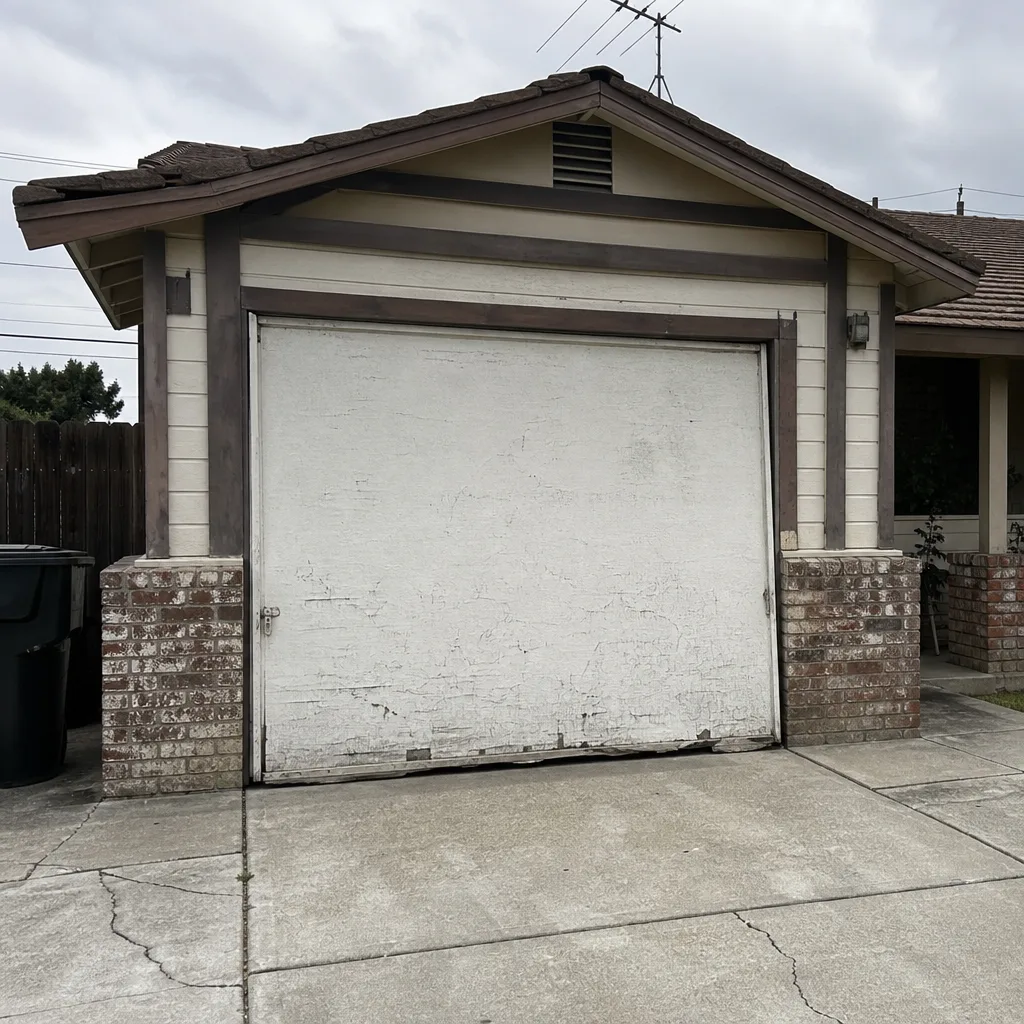 Before
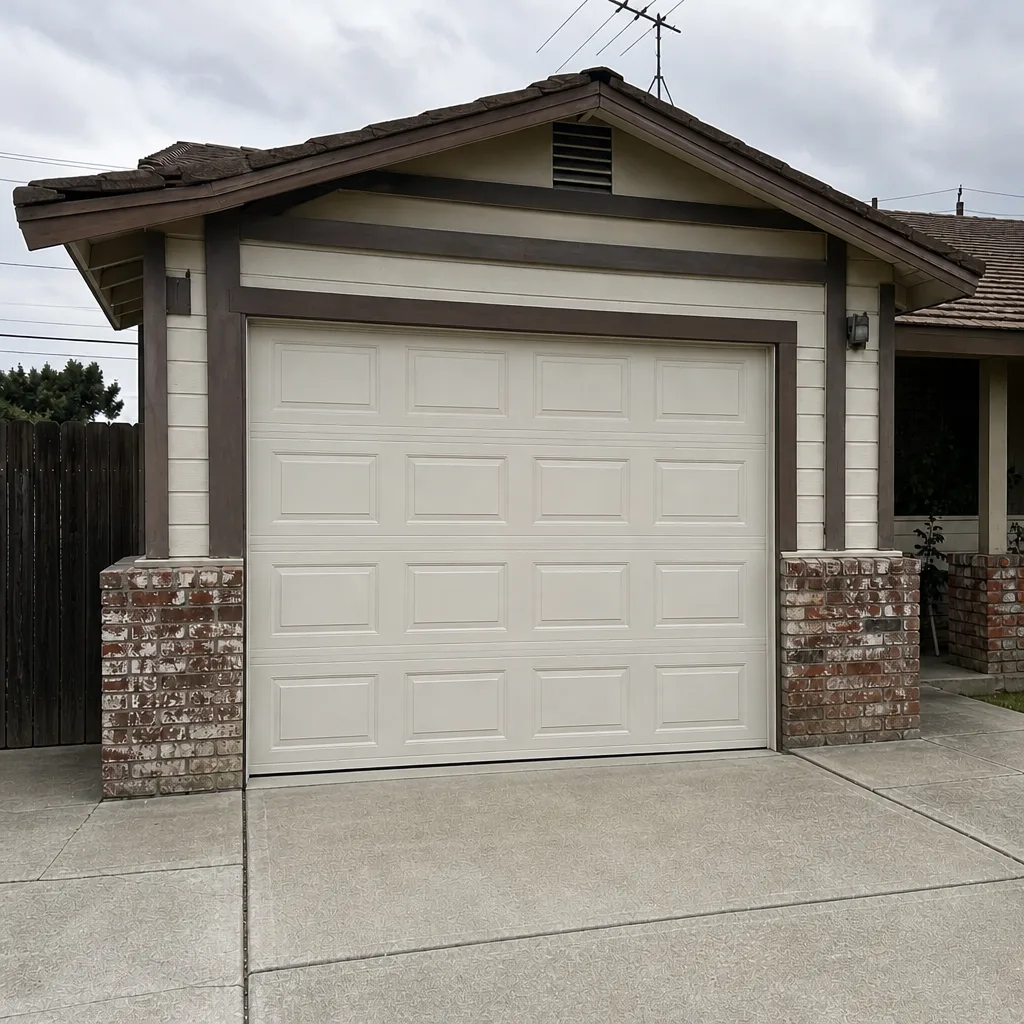 After
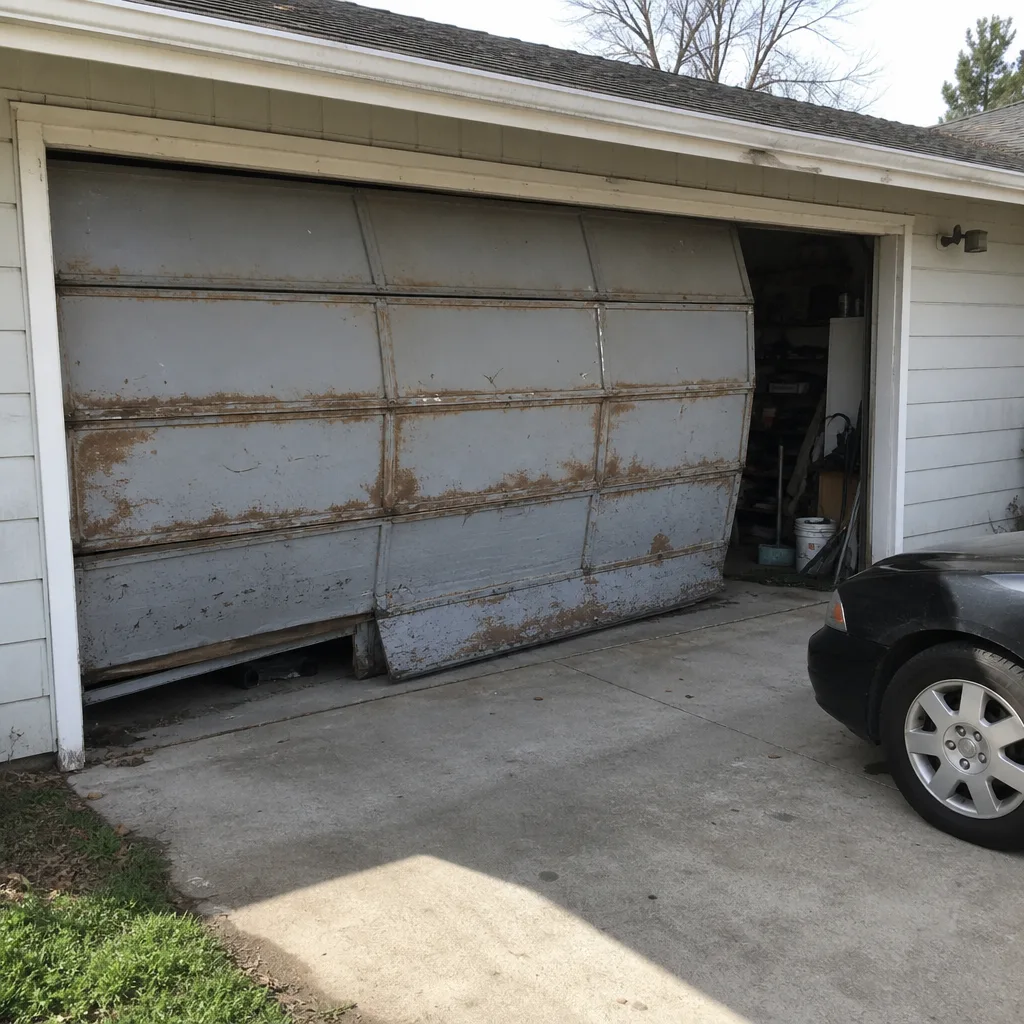 Before
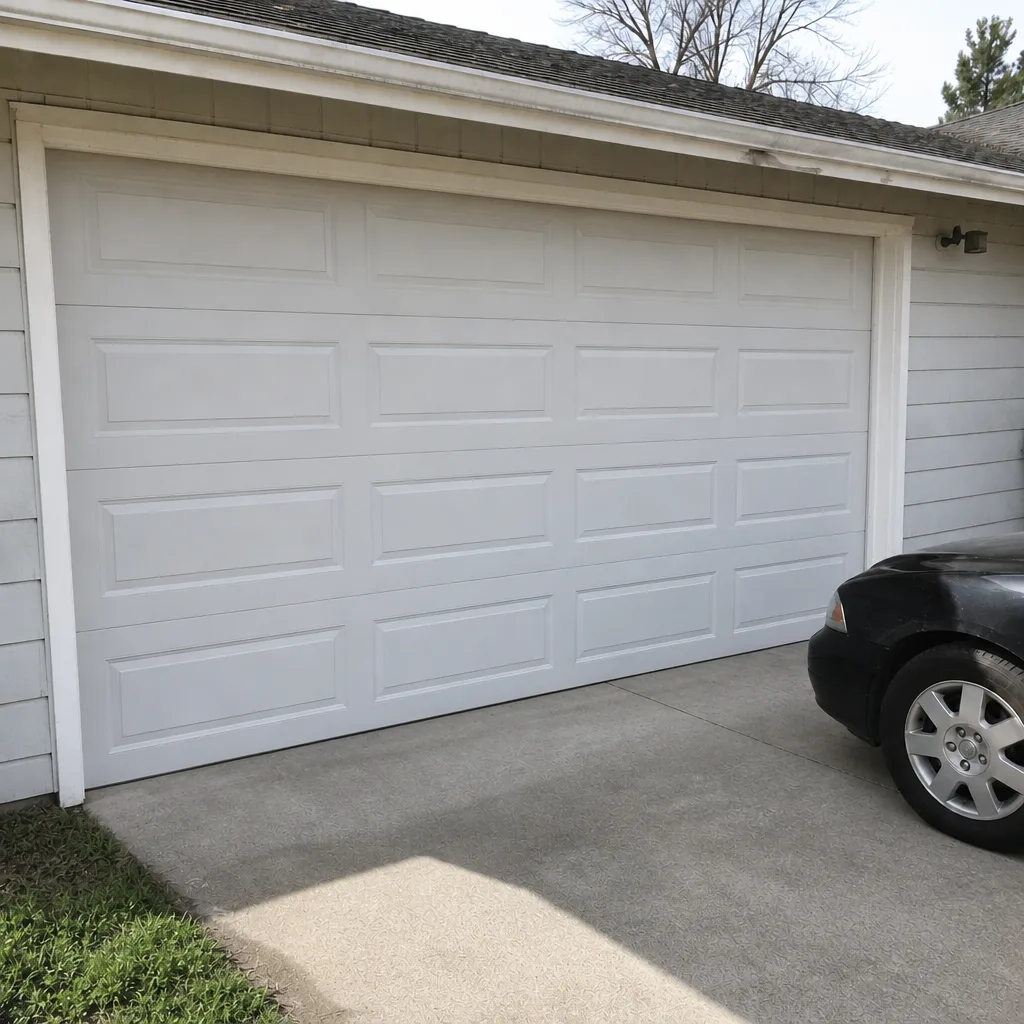 After
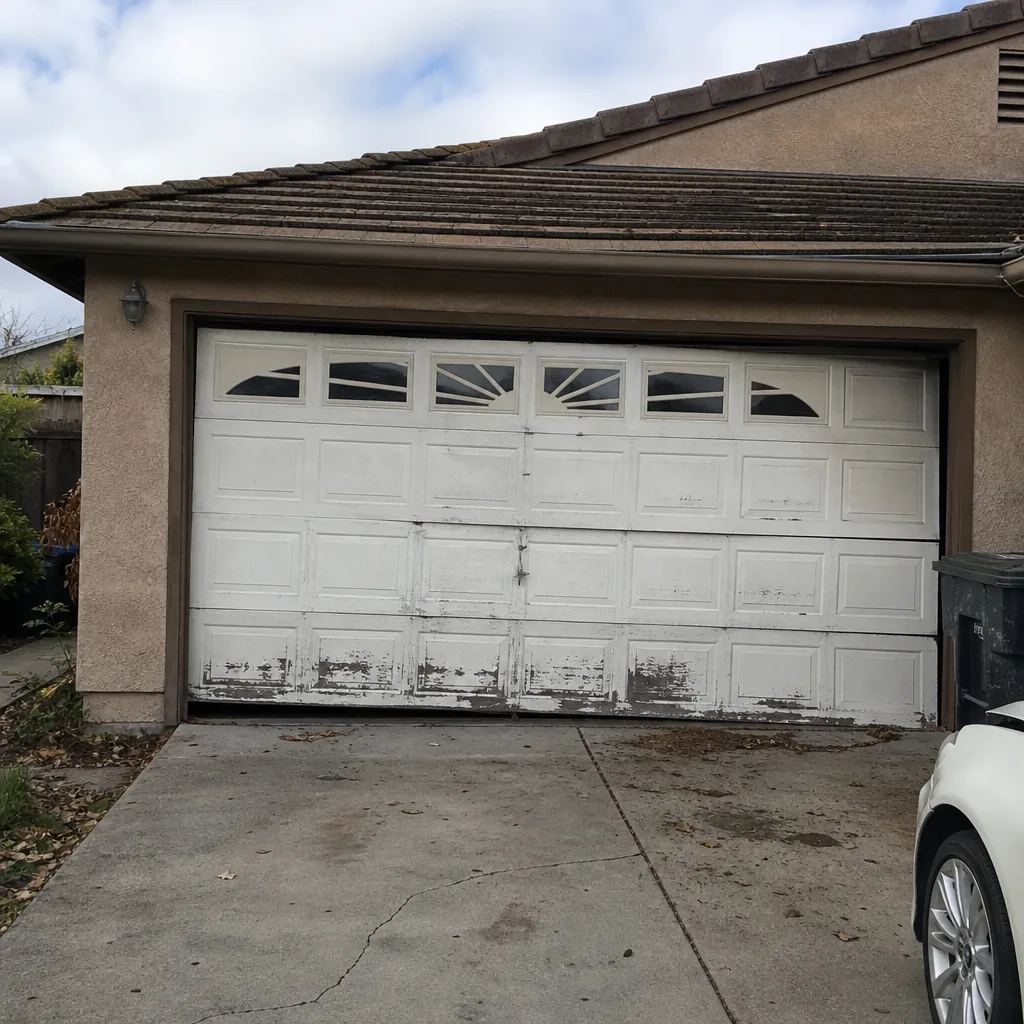 Before
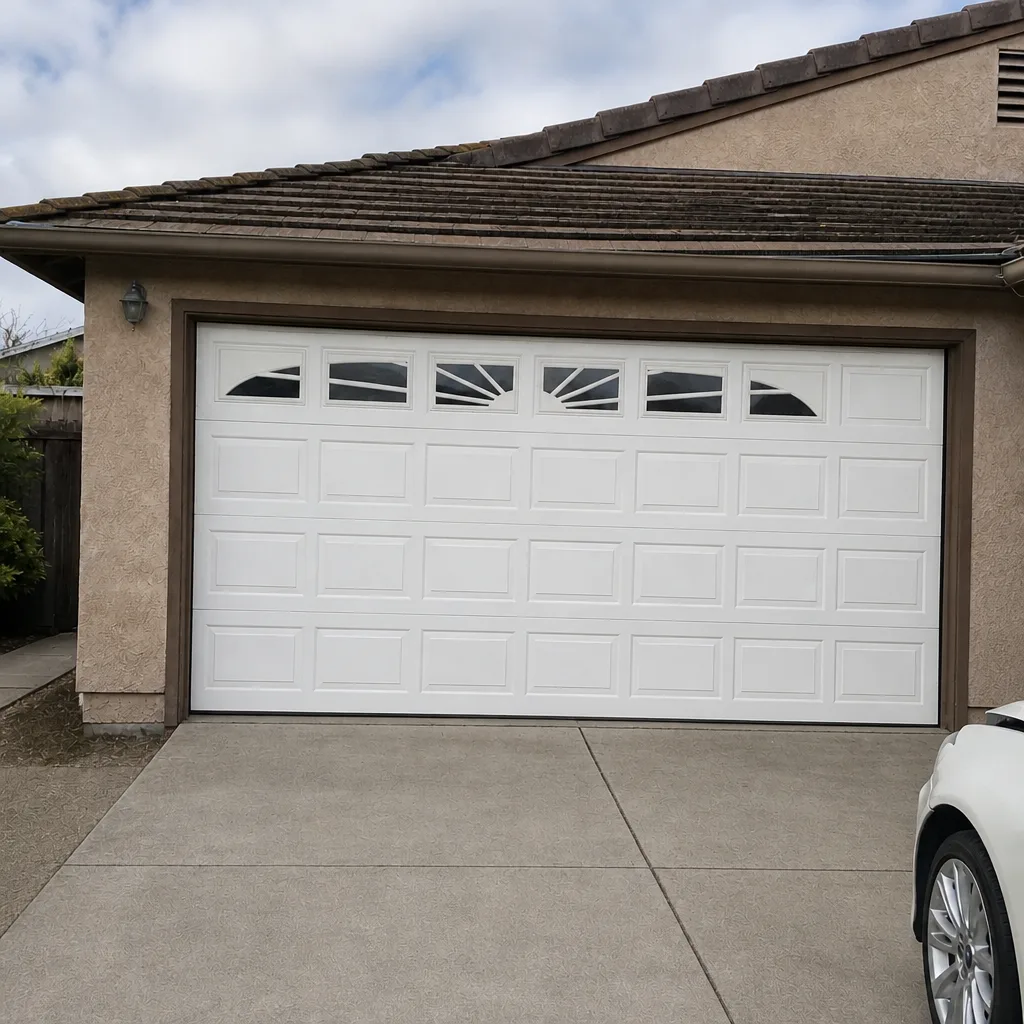 After
Frequently Asked Questions
There’s no single best brand, but the doors that hold up best in Modesto heat combine solid insulation (R-13 or higher for an attached garage), a heavier steel gauge, and a properly bonded factory finish. Clopay, Amarr, Wayne Dalton, and Raynor all offer doors that meet that profile at a range of prices. Match the insulation to whether the garage shares walls with living space and which direction it faces, and compare at the same gauge before you compare price. Call (855) 473-8505 for a free estimate on the right fit for your house.
It depends on the garage. If the garage shares walls with living space, faces the hot afternoon sun, or gets used for more than parking, the higher insulation slows heat gain in a way you’ll feel. For a detached garage that never gets lived in, a solid R-13 door is usually the better value. R-values are measured at standard temperatures, so pay attention to how the insulation is built in, not just the number. Call (855) 473-8505 to talk through your situation; estimates are free.
Ask them to show their authorization from the brand, and don’t accept a vague “we can get anything” as confirmation. Many manufacturer warranties only apply in full when the door was installed by an authorized dealer, so this matters. While you’re at it, get the installer labor warranty in writing alongside the manufacturer warranty. Call (855) 473-8505 if you’d like help checking how the paperwork should line up before you buy.
Because a door is more than a single piece. If a panel gets damaged in year six and the brand’s distribution is thin in the Modesto area, you could wait a long time for a matching replacement. Brands with strong local dealer and parts networks keep you driving in and out normally. Before you buy, ask your installer how quickly they can source a matching panel for that brand. Call (855) 473-8505 for a straight answer on what’s serviceable near you; estimates are free.
A good single or double steel door with modest to solid insulation, provided you compare at the same steel gauge and insulation value rather than at the lowest price. Brands that earn their price at this tier give you thick-enough steel, insulation bonded to the panels with no gaps, and a multi-step factory finish. Brands that cut corners shave the steel, use loose insulation, and offer a finish that fades early. Call (855) 473-8505 for an exact quote on a door in that range; estimates are free.
Not always, but the opener has to be rated for the new door’s weight. An insulated two-car door is much heavier than a thin single door, and an undersized opener will strain every cycle. If your existing unit is rated for the load, it may stay. If it’s marginal or you want smart features, a LiftMaster or Chamberlain unit is worth considering. Call (855) 473-8505 and we’ll check the load match; same-day service is often possible.
The Bottom Line
Choosing a garage door brand isn’t a popularity contest. It’s about matching a door to how a Modesto home actually lives: enough insulation to fight a 108°F summer, steel thick enough to resist denting and hold its finish under hard sun, and a brand with the parts and support network to keep your door whole for years. Compare brands at the same steel gauge and insulation level, not at the headlined price. Verify your installer’s dealer status and get the labor warranty in writing. Then pair the door with an opener rated for its weight. Any of the major brands can serve you well when those boxes are checked. When you’re ready to buy or need a broken door fixed, Frontline Garage Door Service offers free estimates in Modesto. Call (855) 473-8505. We answer 24/7. Fast dispatch from 7am to 7pm, Sunday through Friday.
Written by the team at Frontline Garage Door Service.