
Last updated November 15, 2026
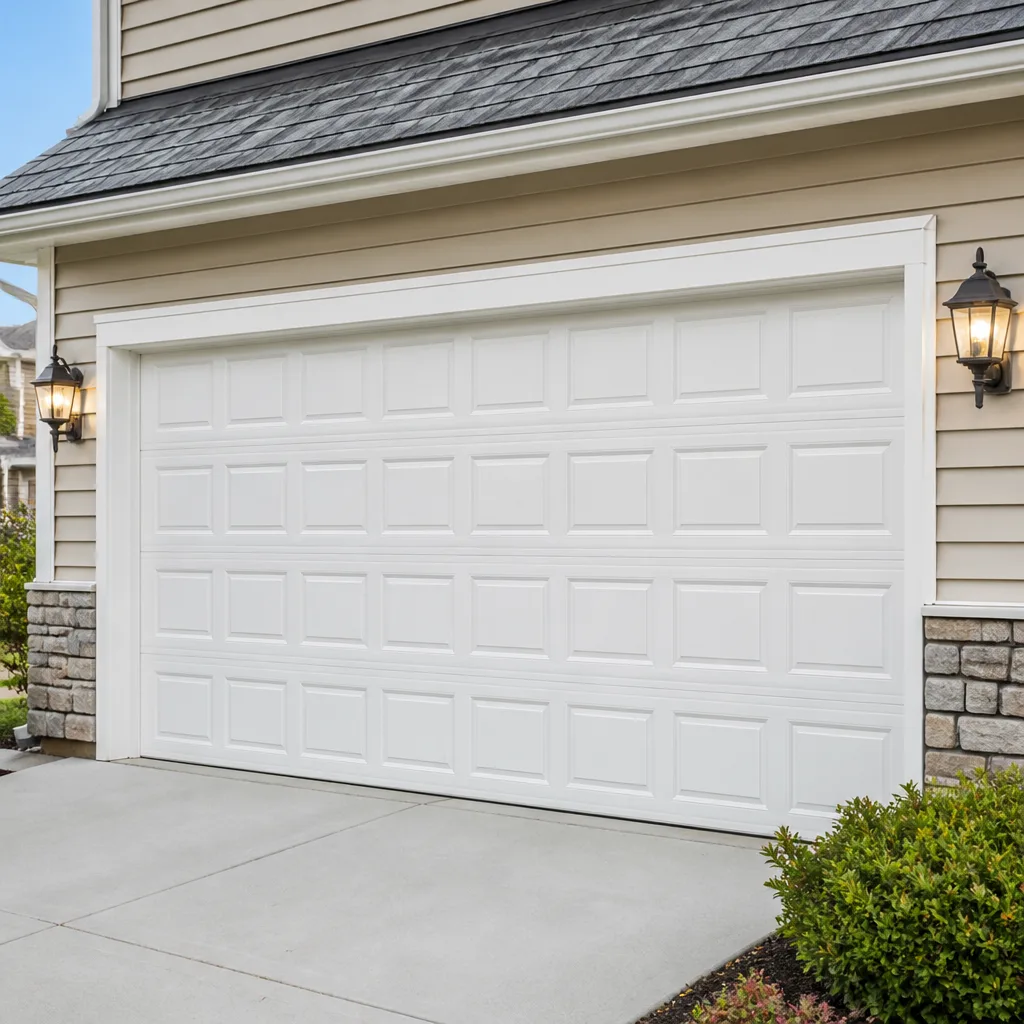 Raised-panel steel
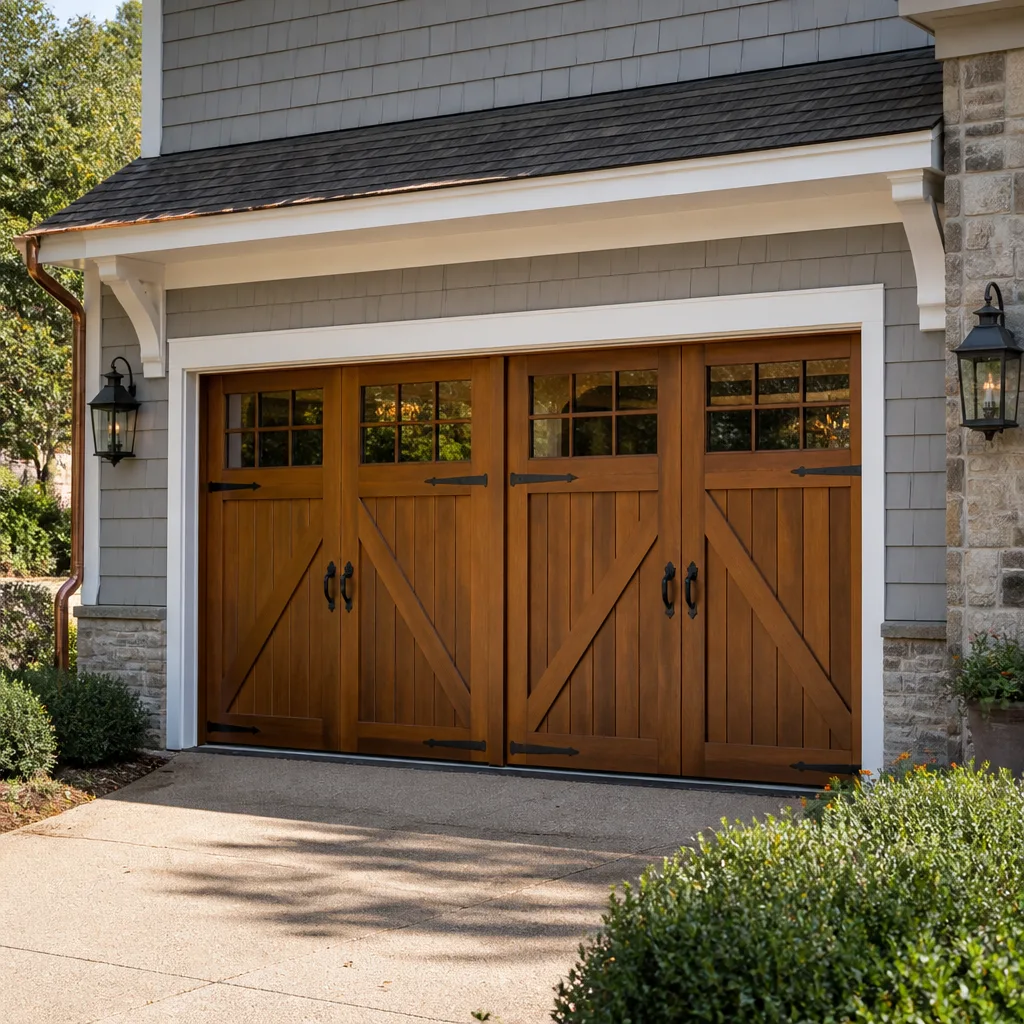 Carriage house
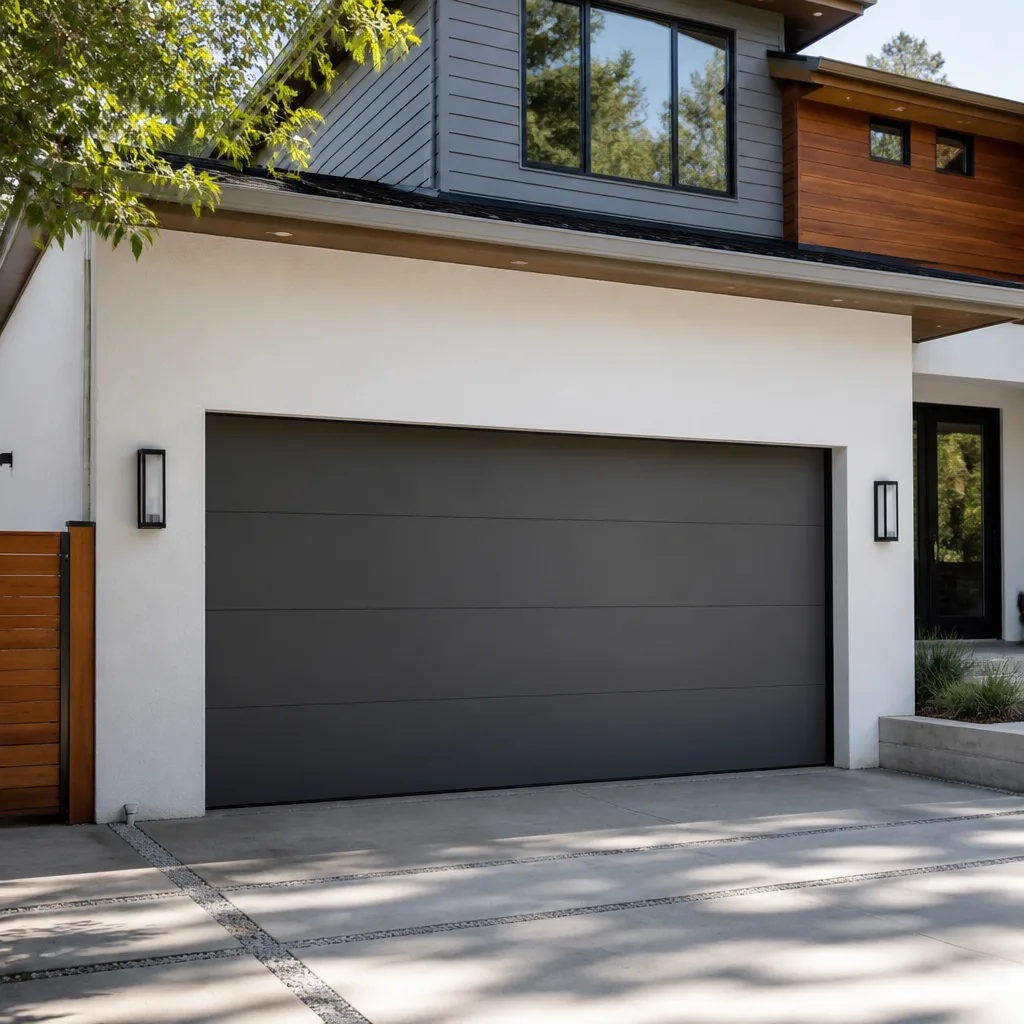 Modern flush
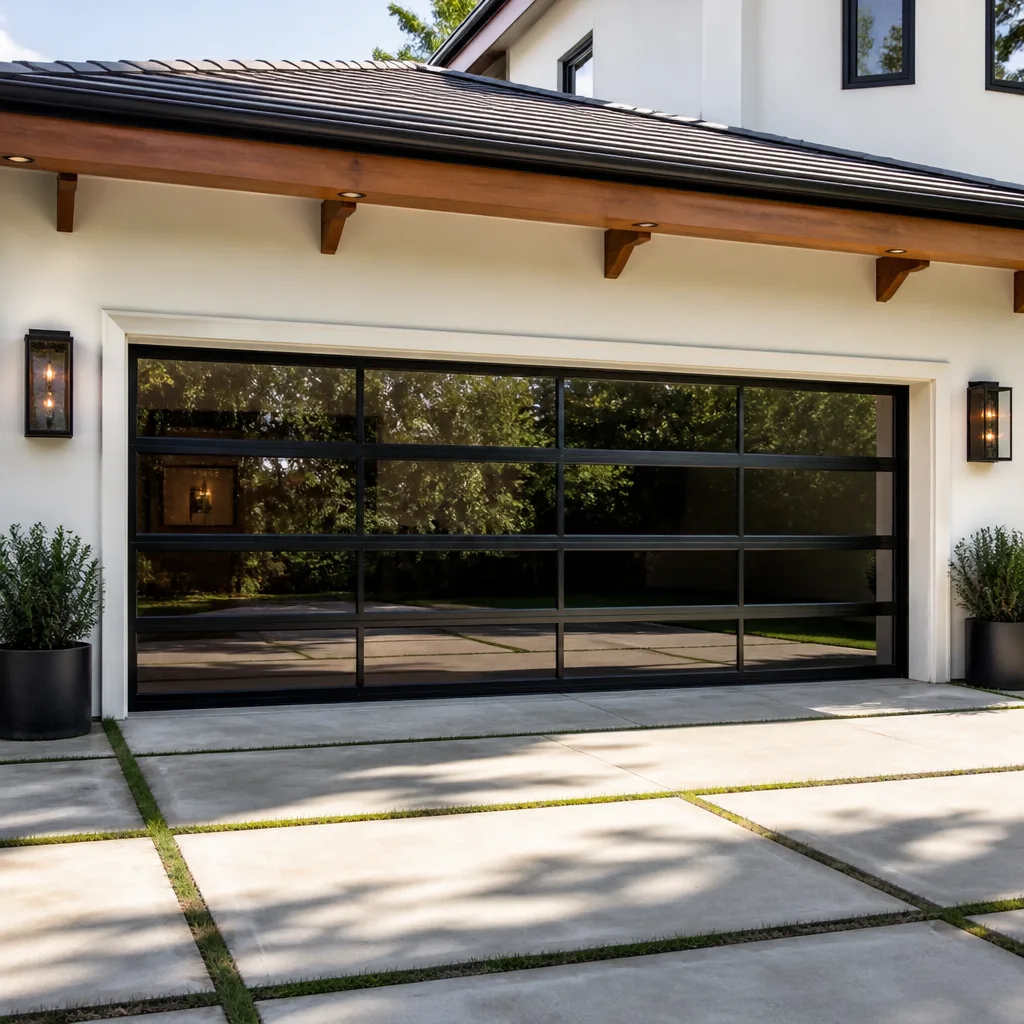 Full-view glass
 LiftMaster openers
 Chamberlain openers
Full 25-point door and opener safety check with every visit - springs, cables, rollers, tracks, and your LiftMaster or Chamberlain opener included
You get a price before we start. It does not change when the pro arrives.
Get your free estimateThe Complete Guide to Garage Doors in Modesto
Most garage door guides are written for a hypothetical homeowner in a hypothetical city. They assume a freeze-thaw winter, a four-season climate, and a house built in some vague recent decade. Modesto is none of those things. Our summers push past 100 degrees for weeks at a stretch, the Central Valley air sits heavy with dust and pollen, and the majority of attached garages here were framed during the 1970s through the 1990s. That combination makes at least half of the generic advice you’ll read online wrong for your driveway. This guide treats Modesto as the subject, not an afterthought. You’ll learn how local heat stresses springs and seals, what each housing era typically needs, when a repair crosses into a permitted replacement, and how to decide between a tune-up, a repair, and a new door.
Quick Answer
In Modesto, heat is the dominant wear factor on a garage door. Springs lose tension faster, weather seals crack and harden, and opener motors work harder during long hot stretches. The right service cadence depends on your door’s age and housing era: 1970s ranch homes usually need hardware and opener attention, 1990s stucco tracts often need spring and seal replacement, and 2000s planned-community doors typically need opener upgrades and balance adjustments. Match the fix to the symptom and the era before you spend on a full replacement.
Styles & brands we work with
- Raised-panel steel
- Carriage house
- Modern flush
- Full-view glass
- LiftMaster openers
- Chamberlain openers
Table of Contents
- How Modesto’s Heat Affects Your Garage Door System
- What Each Modesto Housing Era Typically Needs
- Why Attached Garages Raise the Stakes
- Repair, Tune-Up, or Replace: The Decision Tree
- When a Repair Becomes a Permitted Replacement
- Seals, Insulation, and Valley Air Quality
- Openers in the Heat: What Fails and Why
- A Season-by-Season Service Cadence for Modesto
How Modesto’s Heat Affects Your Garage Door System
Central Valley heat does more to a garage door than most homeowners realize. When the mercury climbs past 100°F, every component on the door and opener is working in conditions the manufacturer didn’t design a coastal California product around. The result is a predictable pattern of wear that shows up year after year in Modesto.
Here’s what’s happening mechanically:
- Torsion springs lose tension faster. Heat expands the steel and cycles it through wider temperature swings. A spring that would last many cycles in a mild climate can weaken noticeably sooner when it’s flexing between cool mornings and triple-digit afternoons.
- Weather seals harden and crack. The bottom seal and side seals are the first rubber to give up. Once they harden, dust and hot air flow under the door freely.
- Opener motors run hotter and longer. A door that’s slightly out of balance forces the opener to compensate. In heat, that extra load translates into more strain on the motor and the drive gear.
- Lubricant dries out. Rollers, hinges, and tracks all need lubrication that survives the dry summer air. Untended, rollers flat-spot and the door gets noisier and harder to move.
What this means practically: a Modesto garage door needs attention more often than a door in a cooler climate. The spring, the seals, and the lubrication schedule are the three places where local heat changes the math. If you’re noticing a door that gets sluggish in July and August, the heat isn’t your imagination. It’s the mechanism telling you something needs adjusting or replacing. Our garage door repair service exists for exactly these heat-driven failures.
What Each Modesto Housing Era Typically Needs
Modesto’s housing stock falls into three broad eras, and each one has a signature set of garage door issues. Knowing your home’s era narrows down what you’re likely to face before you ever pick up the phone. In our experience working on local homes, the pattern is remarkably consistent.
1970s Ranch Homes
The older ranch neighborhoods across Modesto were built with simple single-car or modest two-car doors. What’s usually still original or lightly replaced:
- Wood or early steel doors that warp with heat and moisture swings
- Chain-drive openers that are loud and near the end of their life
- Original hinges, rollers, and track that have worn together over decades
- Seals that have been replaced more than once and may still be leaking
These homes usually benefit most from hardware and opener attention rather than a full door swap, unless the door itself has warped past the point of adjustment.
1990s Stucco Tracts
The stucco-clad tracts that spread through Modesto in the 1990s brought sturdier steel doors and sectional designs. Typical needs now:
- Torsion springs reaching the end of their cycle life
- Weather seals that have cracked and hardened under years of Valley sun
- Openers that still work but struggle with a modern smart-home setup
- Panels that have taken a hit and need straightening or replacement
This era is often where the spring-and-seal combination comes up most often, because the doors are old enough to have worn springs but sound enough structurally to keep.
2000s Planned Communities
The newer planned-community homes around Modesto came with insulated steel doors and modern sectional designs. The doors themselves are usually fine. What needs attention:
- Openers that predate Wi-Fi and smart-home integration
- Balance adjustments as doors settle into their years
- Safety-reverse sensor alignment issues
- Occasional panel or seal replacement from sun exposure
If you’re in a newer area, an opener upgrade or a balance check is a more likely spend than a new door. Brands like LiftMaster and Chamberlain are common on these homes, and if you’re unsure what you have, our garage door opener repair team can identify it on sight.
Why Attached Garages Raise the Stakes
Nearly every home in Modesto has an attached garage, and that changes the safety and insulation story compared to a detached one. When your garage shares a wall, a ceiling, or a door with the living space, the garage is part of your house’s envelope whether you think of it that way or not.
Here’s what that means in practice:
- Safety-reverse sensors matter more. A door that doesn’t reverse on contact is a hazard on any property, but on an attached garage the door is often the buffer between small children, pets, and the driveway. Test your sensors at least monthly.
- Insulation is a comfort question, not just an energy one. An uninsulated attached garage gets brutally hot in August and bleeds that heat into the adjacent rooms. An insulated door keeps the garage more usable and the wall it shares cooler.
- Seals are a home-envelope issue. A cracked bottom seal lets hot Valley air and dust straight into the space next to your kitchen. It’s not just a garage problem.
- Auto-reverse and photo-eye testing are routine basics. Any tune-up should include testing both, because in an attached-garage home a failed sensor is a family safety concern.
When we evaluate an attached garage in Modesto, we treat the door as part of the whole house rather than a standalone unit. The stakes are higher than they look, and the fix is usually cheap: sealing, insulating, and testing sensors takes far less than most homeowners expect.
Repair, Tune-Up, or Replace: The Decision Tree
This is the question that drives most of the spend on a Modesto garage door, and it’s the question most homeowners answer by guesswork. Here’s a simple decision tree we walk through when a caller isn’t sure what they need.
- Start with the door’s age. Under 10 years old, lean toward repair or a tune-up. Over 20, weigh the cost of repairs against the cost of a new door. Between those, repair usually wins unless the structure has failed.
- Identify the symptom. A single broken spring, a noisy door, or a stuck door are all repair or tune-up territory. A door with warped panels, cracked sections, or a failing frame may be past repair.
- Count recent repairs. One fix in a year is normal. Three or more in a year on the same door is a sign the system is at the end of its useful life and a replacement is the better use of money.
- Match the spend to the home’s value. In the older ranch neighborhoods, a full replacement is often unnecessary because the surrounding home value doesn’t justify it. In the newer planned communities, an upgraded door holds value better because the home is otherwise modern.
- Let a professional confirm before you decide. A free estimate in Modesto on the door itself tells you whether you’re looking at a $150-range tune-up, a spring or opener repair, or a replacement. Guessing is the expensive method.
One hard rule of thumb: never let a salesperson talk you into a replacement before a technician has checked whether the spring, opener, or balance is the actual failure. Most door calls turn out to be repairs, not replacements.
When a Repair Becomes a Permitted Replacement
In Modesto, the line between repair and replacement matters for permits. A like-for-like repair, swapping a spring or an opener or a seal, is generally not a permitted item. A full door replacement is often a different story.
The trigger we see most often: a door replacement, especially one that changes the door’s size, structure, or attachment to the frame, is often the point where the City of Modesto or Stanislaus County wants a permit pulled. This isn’t a rule we can state as a code section, because permit requirements vary and are set by the jurisdiction for the specific job. What we can say is that this is exactly the kind of thing to check with the City of Modesto’s building department before the job starts.
What that means for you:
- Ask about permits before you sign a replacement contract. A good company will tell you what’s required for your address and not assume.
- Repairs are often the permit-free path when the door stays the same and the fix is mechanical.
- Don’t guess. Requirements hinge on your address, the scope of work, and the year the home was built. A phone call or a short online inquiry to the city settles it.
- Keep the paperwork. If a permit is required and pulled, keep the inspection record with your other home documents, especially if you may sell.
If your job is a full replacement rather than a repair, a free estimate should include a straightforward conversation about whether a permit is needed for your specific Modesto address. That conversation protects you from a surprise later.
Seals, Insulation, and Valley Air Quality
Valley air is dry, dusty, and full of pollen through the summer. That has a direct effect on the seals and the insulation inside your garage door, and it’s an area generic guides skip entirely.
What breaks first, in our experience:
- Bottom seals crack. The rubber at the base of the door hardens from heat and shrinks from dry air. Once it cracks, dust and hot air flow straight in.
- Side seals pull away. The strips along the door jamb lose their grip over time, letting dust and pests in around the edges.
- Insulation degrades slowly. A properly insulated door’s foam core holds up well, but the edges and seams are where air leaks develop after years of heat cycling.
- Window panels fog or crack. Doors with decorative windows eventually lose the seal, and the glass becomes a weak point.
Replacing bottom and side seals is one of the cheapest upgrades on a Modesto home and one of the most noticeable. It’s a repair-level job, requires no permit, and it keeps Valley dust and heat out of the shared wall. If you’re not sure whether your seals are past their good years, run your hand along the bottom seal on a hot afternoon and feel for drafts or heat coming through. That’s the honest test.
Openers in the Heat: What Fails and Why
Opener failures in Modesto follow the heat. The motor, the drive mechanism, and the logic board all run hotter in a garage that hits 110°F or more on a summer afternoon, and the first sign is usually a door that hesitates, gets louder, or stops halfway.
What we see most often, in order:
- Chain-drive openers get louder and looser. The chain stretches slightly over time, and the added heat load means it needs re-adjustment or replacement sooner.
- Logic boards fail from heat stress. Many boards are rated for typical garage temperatures but not for a Modesto August. A board failure often shows up as erratic behavior or a beeping, non-responsive unit.
- Safety sensors drift out of alignment. Dust, sun glare, and the occasional nudge from a trash can all knock the photo-eye out. A door that closes halfway and reverses is almost always a sensor issue.
- Remotes and Wi-Fi connections drop. Older openers on modern smart-home networks often need a bridge or a full replacement to stay connected. Brands like Genie and Chamberlain have navigated this well, and a modern unit usually solves it in one step.
When an opener is past its serviceable years, replacing it is often the cleanest fix, and a new door plus a modern opener together keeps the whole system matched. We work with LiftMaster and Chamberlain units regularly for exactly this reason: they’re robust enough to survive a Valley summer and integrate with the smart-home setups many Modesto homeowners already have. We work on your brand, whichever it is.
A Season-by-Season Service Cadence for Modesto
A garage door in Modesto needs at most two purposeful checkpoints a year. That’s less than many guides claim, and more than most homeowners do. Here’s the cadence that matches the local climate.
- Early spring: the tune-up. Before the heat arrives, have the balance checked, the hinges and rollers lubricated, and the sensors tested. This is the tune-up window that catches small issues before summer amplifies them.
- Late spring: the seal check. Look at the bottom and side seals. If they’re hard, cracked, or pulling away, replace them before the hottest stretch. This keeps Valley dust out and lowers the load on the opener.
- Mid-summer: the listen. If the door gets louder, slower, or hesitates during July and August, that’s a sign. It doesn’t need a full service; it needs a specific check. Call and describe the symptom before assuming the worst.
- Early fall: the post-summer inspection. Heat cycles do their damage, and a quick look in the fall catches worn springs and greying seals before winter. Winters here are mild, so the fall check is easier than in colder climates.
- As needed: the repair. A broken spring, a dead opener, or a stuck door all land in the repair column regardless of season. Fix them promptly rather than waiting for the next scheduled checkpoint.
That’s the whole cadence. Two scheduled checks a year, plus repairs as they come up, is enough for a Modesto home. It’s less effort than most homeowners expect and far less than an emergency call after a spring snaps on a hot afternoon.
Common Mistakes to Avoid
- Guessing the cause before checking the symptom. A door that won’t open is often a broken spring, but it can also be a dead opener, a snapped cable, or a tripped lock. Diagnose before you spend.
- Skipping the seal check because the door still works. A cracking bottom seal is easy to miss and the cheapest fix on the list. Once it’s gone, dust and heat move in year-round.
- Assuming an opener issue means a whole new opener. Many opener problems are sensor alignment, a stretched chain, or a dead logic board. A full replacement is often one repair too far.
- Replacing a door that needs a repair. A warped panel or a failing spring is not the same as a failing door. A free estimate on the door tells the difference without a sales pitch.
- Ignoring a door that’s gotten loud. Noise is wear. A door that sounds bad in July is telling you something is out of adjustment, and fixing it early is cheaper than fixing it after it fails.
- Pulling a replacement without checking the permit question. Whether a replacement needs a permit in Modesto depends on the job. Ask the city’s building department before you sign a contract.
- Testing a door’s safety reverse only once. Sensors drift and dust builds up. Test the reverse monthly, and test it with your whole family around so everyone knows what a working door looks like.
See the difference
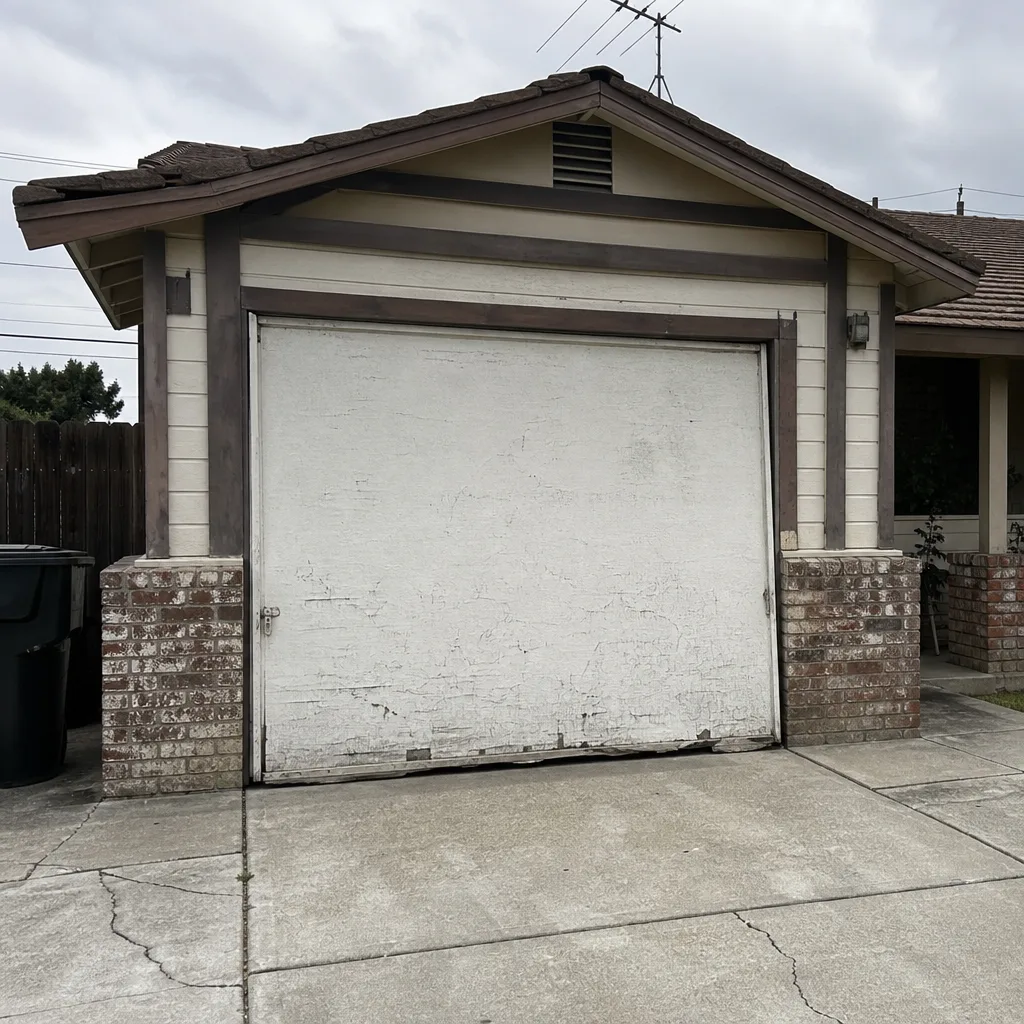 Before
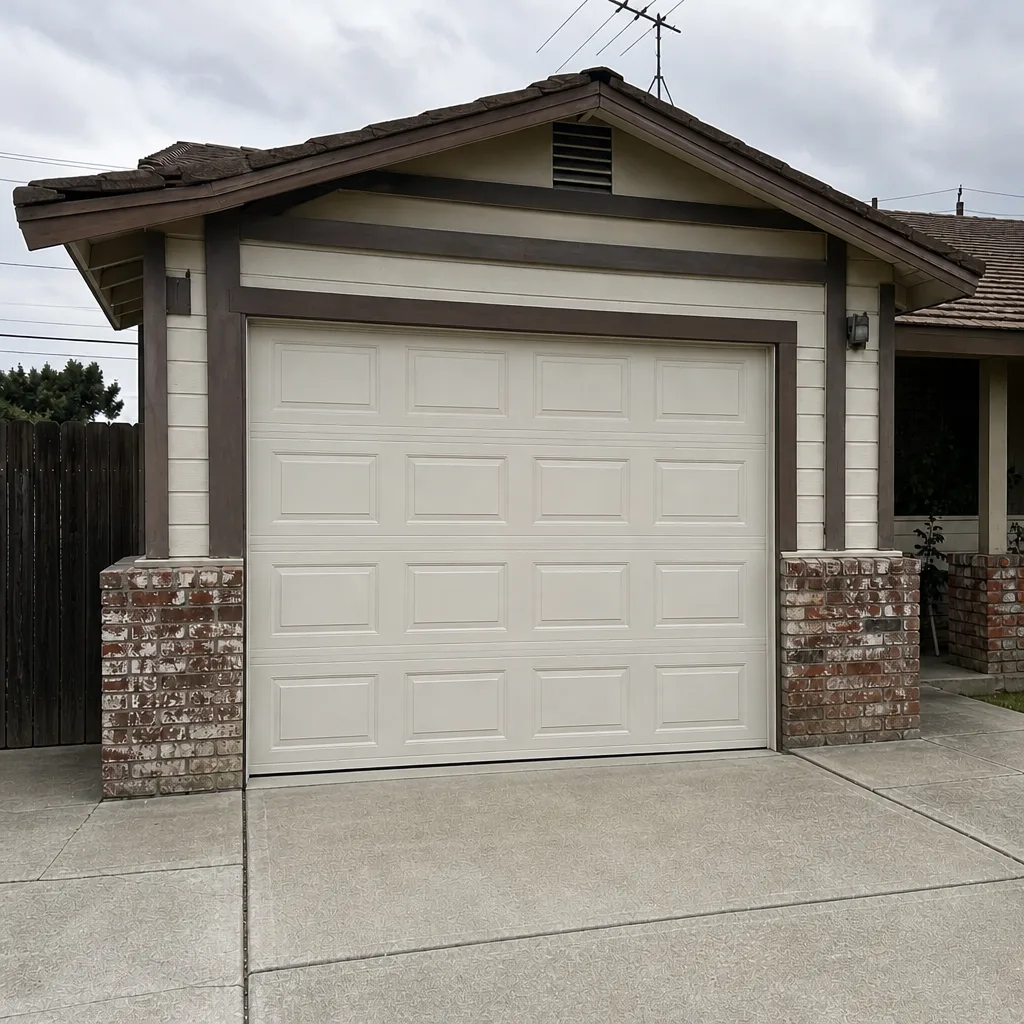 After
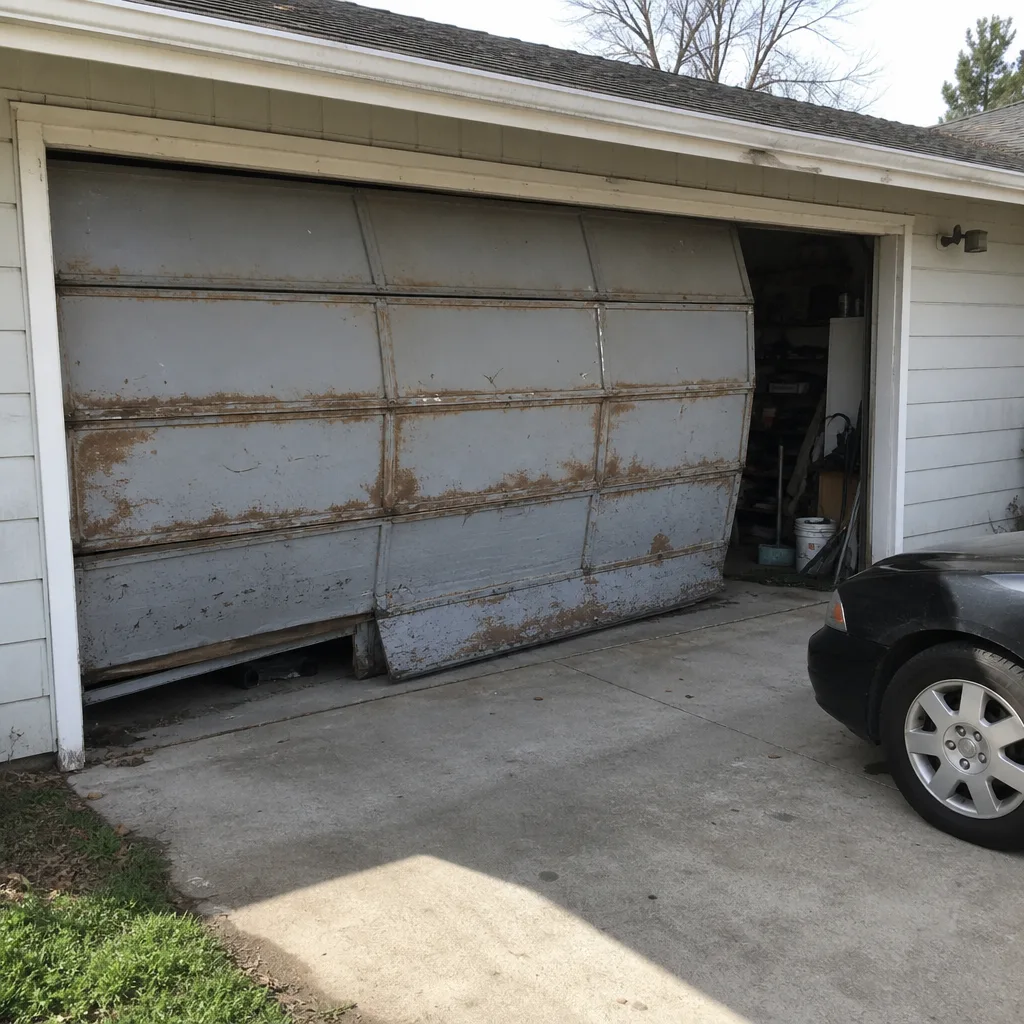 Before
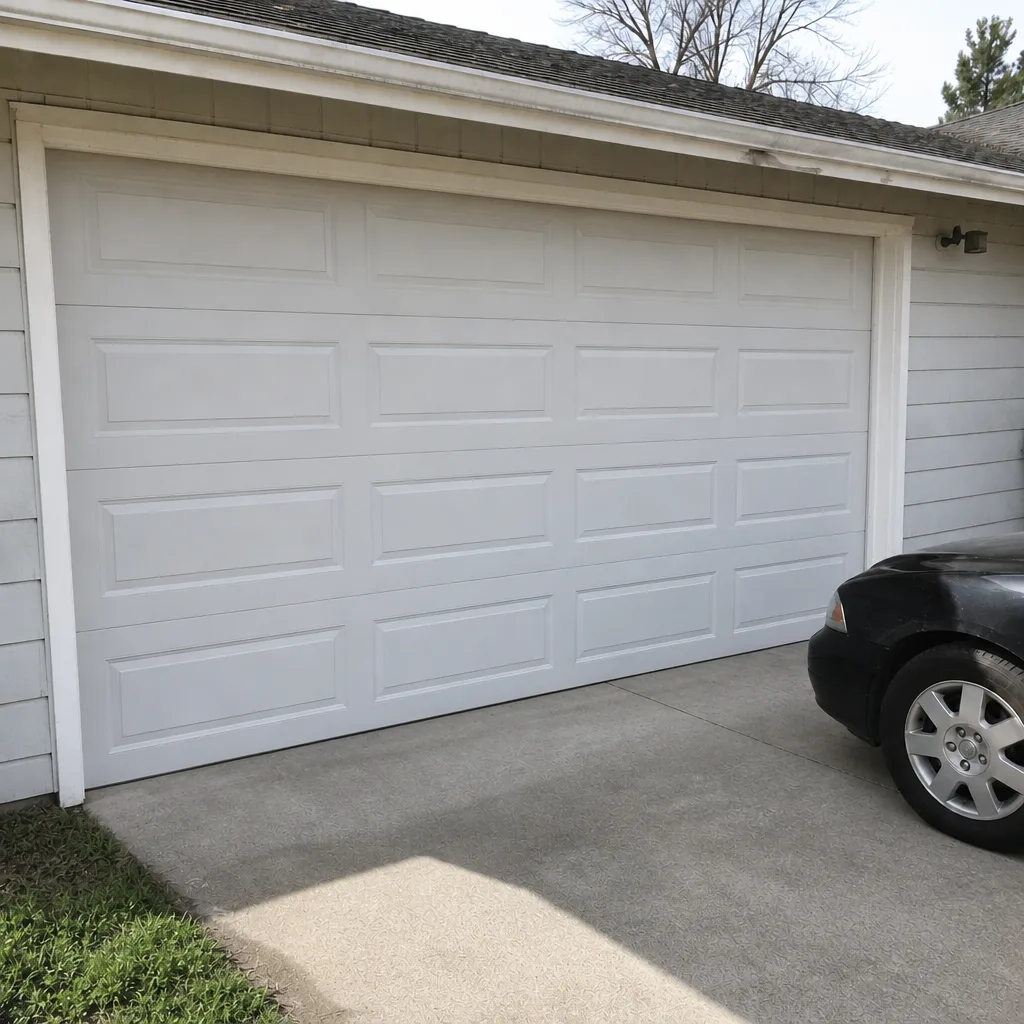 After
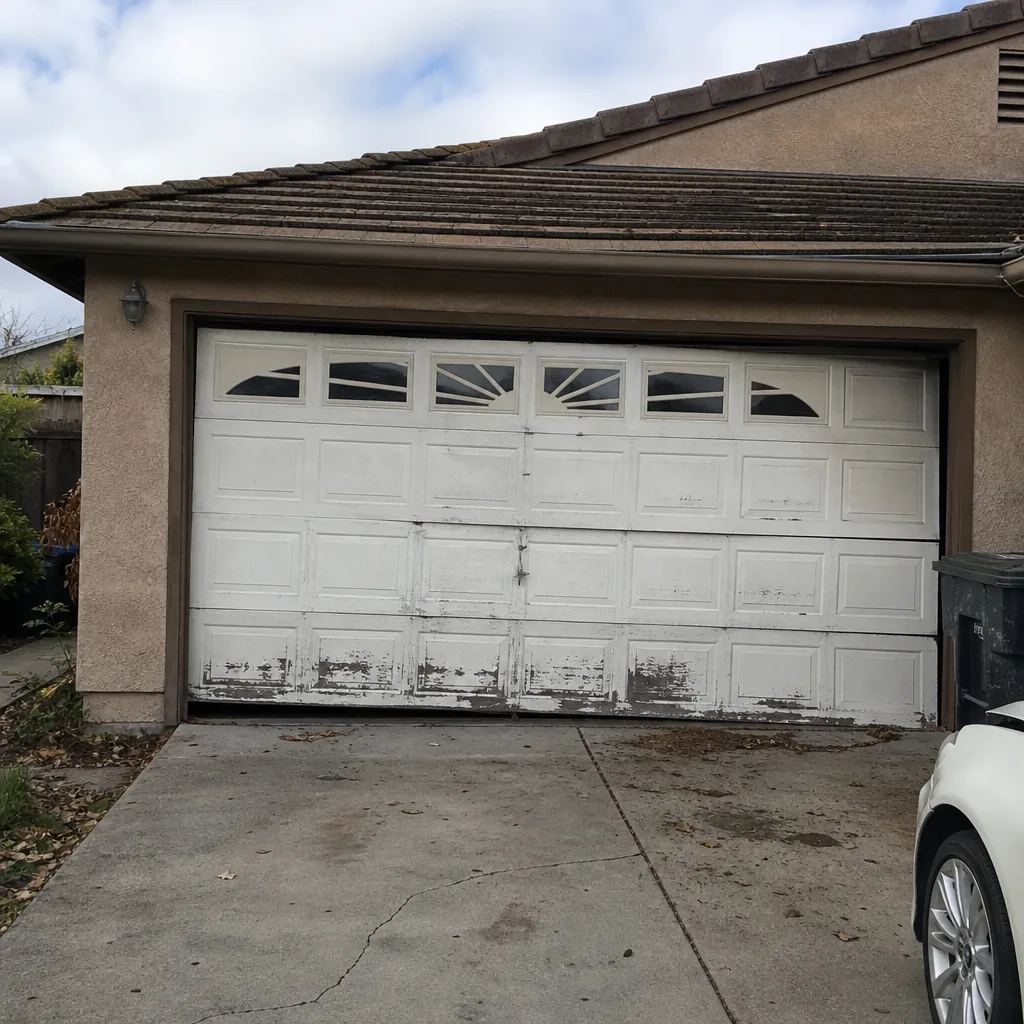 Before
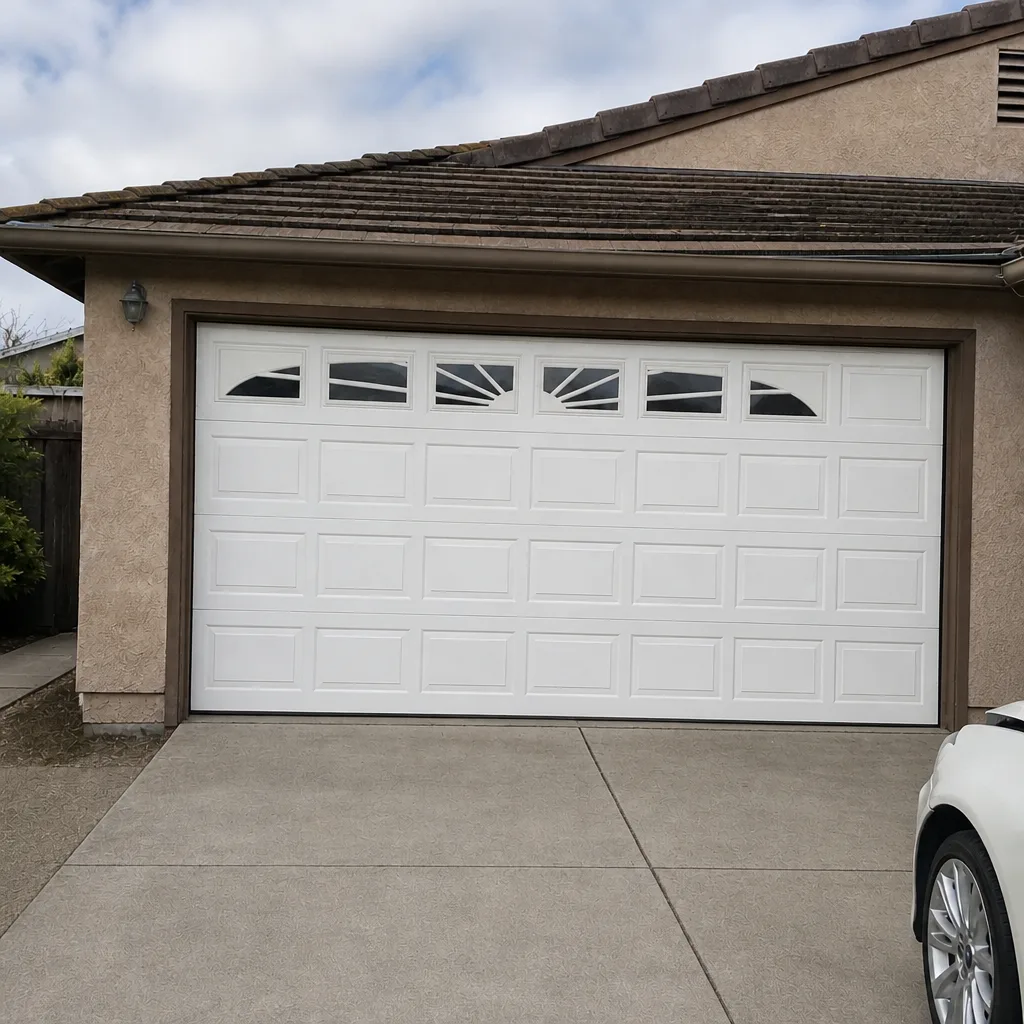 After
When to Call a Professional
Some garage door work is genuinely DIY-friendly: lubricating a track, testing a sensor, wiping dust off the photo-eye. Most of the real repairs are not. A torsion spring under tension is dangerous to touch, opener logic board replacement requires knowing the model, and a full replacement needs the permit question settled before anything starts. Call a professional when the spring is broken, the door won’t balance, the opener won’t respond, or you’re unsure what’s actually wrong. Frontline Garage Door Service offers free estimates in Modesto – call (855) 473-8505. Our technicians have up to experience, and we work on both sides of the system, from the door to the opener.
Frequently Asked Questions
Most Modesto garage door repairs fall in the $150 to $600 range depending on the part and the door. Spring replacement is usually on the higher end because springs are sold individually for one spring and a matched pair should be replaced together, so a pair costs roughly twice a single spring. The written estimate sets the final price, and it’s quoted and agreed before any work starts. Call (855) 473-8505 for a free estimate.
Same-day service is often possible for repair calls, because we keep the day flexible for urgent jobs. Call (855) 473-8505. We answer 24/7. Fast dispatch from 7am to 7pm, Sunday through Friday. A call outside dispatch hours is booked into the next opening.
No. The price is set by the written estimate you agree to before any work begins. If we find a second issue, we’ll tell you before touching it and price it separately so you can decide. Call (855) 473-8505 for an exact quote; estimates are free.
Often yes, depending on the scope of the work and your address, so it’s worth asking the City of Modesto’s building department before a replacement starts. A repair that keeps the door and replaces a component is usually a different path. We’ll walk you through the question as part of a free estimate.
Yes, we work with licensed and insured technicians who specialize in garage doors. Frontline Garage Door Service works on both the mechanical door and the opener side, so you’re not calling two specialists. Our technicians have up to experience. Call (855) 473-8505 to book.
Heat dries lubricant, expands steel, and adds load on the opener, which makes a door louder and slower in a Modesto summer. It’s a sign the rollers, hinges, and tracks need attention or the door needs a balance check. It’s usually a tune-up fix rather than a replacement. Call (855) 473-8505 to schedule one.
The Bottom Line
Modesto’s heat, Valley air, and mix of housing eras make a garage door here a specific system with specific needs. Heat drives spring wear, seal cracking, and opener strain faster than in milder climates, and the right fix depends on your door’s age and your home’s era. Ranch-era doors often need hardware and opener attention, 1990s tracts usually need springs and seals, and newer planned-community doors mostly need opener upgrades and balance checks. Match the fix to the symptom, ask the permit question before any replacement, and stick to a light seasonal cadence. That’s the whole guide, and it’s enough to keep a Modesto door running for years.
Whether you need a repair, an opener check, or a full new install, Frontline Garage Door Service can help. We work with Raynor, LiftMaster, Chamberlain, and Genie units, along with the rest of the major brands you’ll find in Modesto driveways, from the door to the opener. Call (855) 473-8505 for a free estimate. We answer 24/7. Fast dispatch from 7am to 7pm, Sunday through Friday.
Written by the team at Frontline Garage Door Service.