
Last updated November 15, 2026
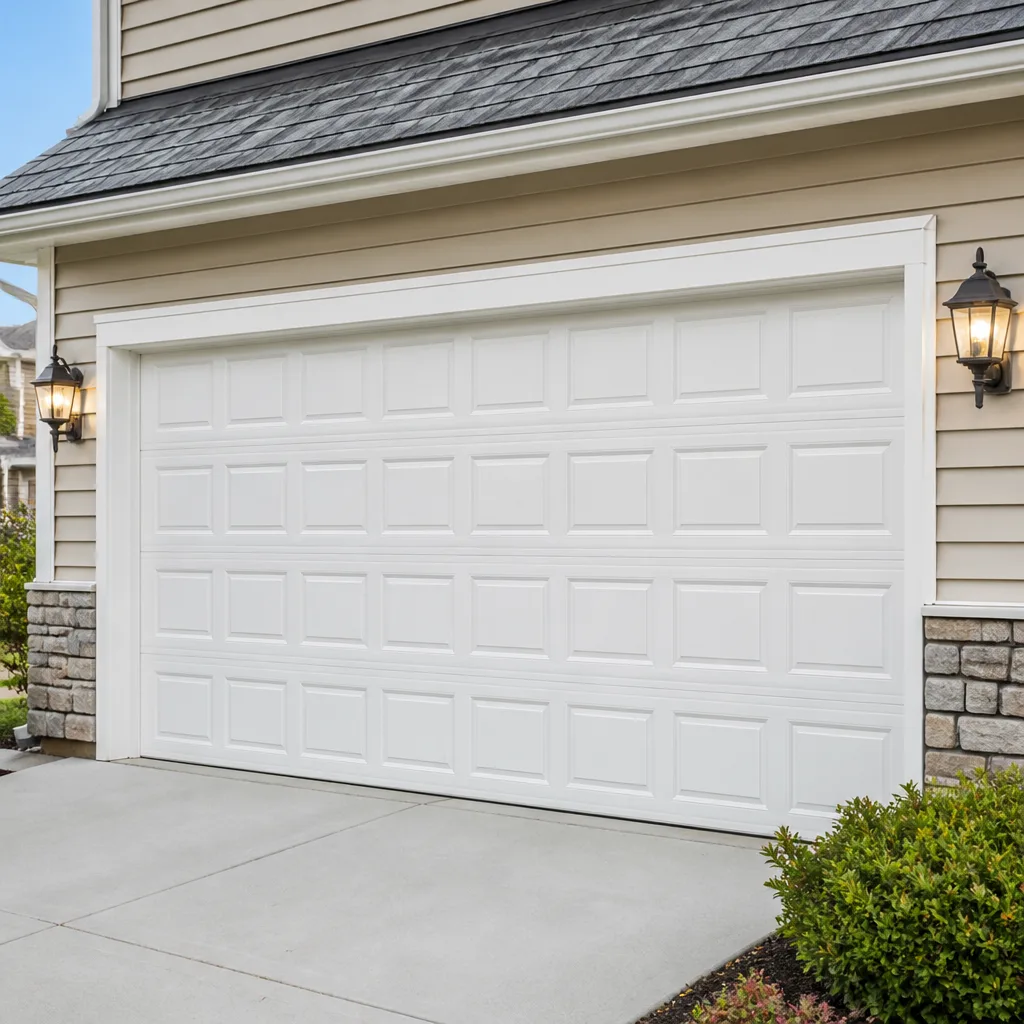 Raised-panel steel
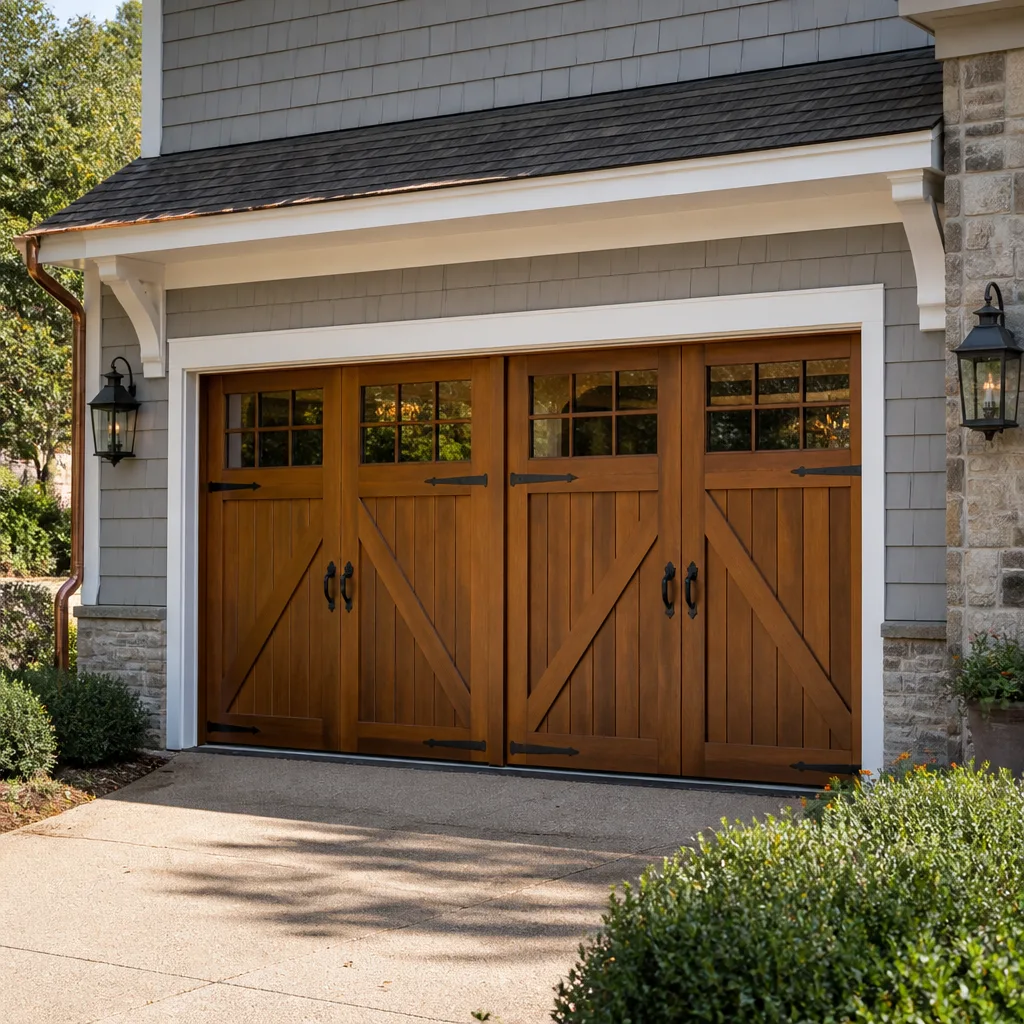 Carriage house
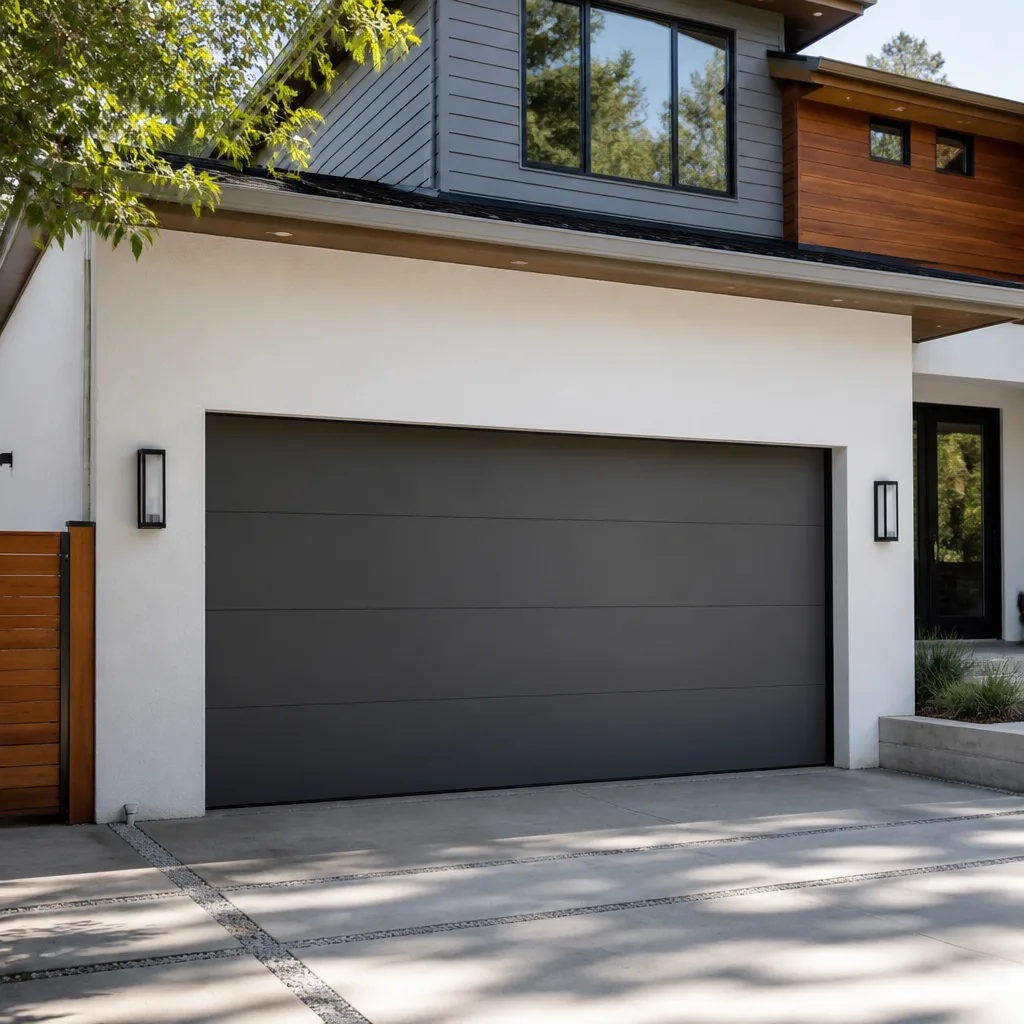 Modern flush
 Full-view glass
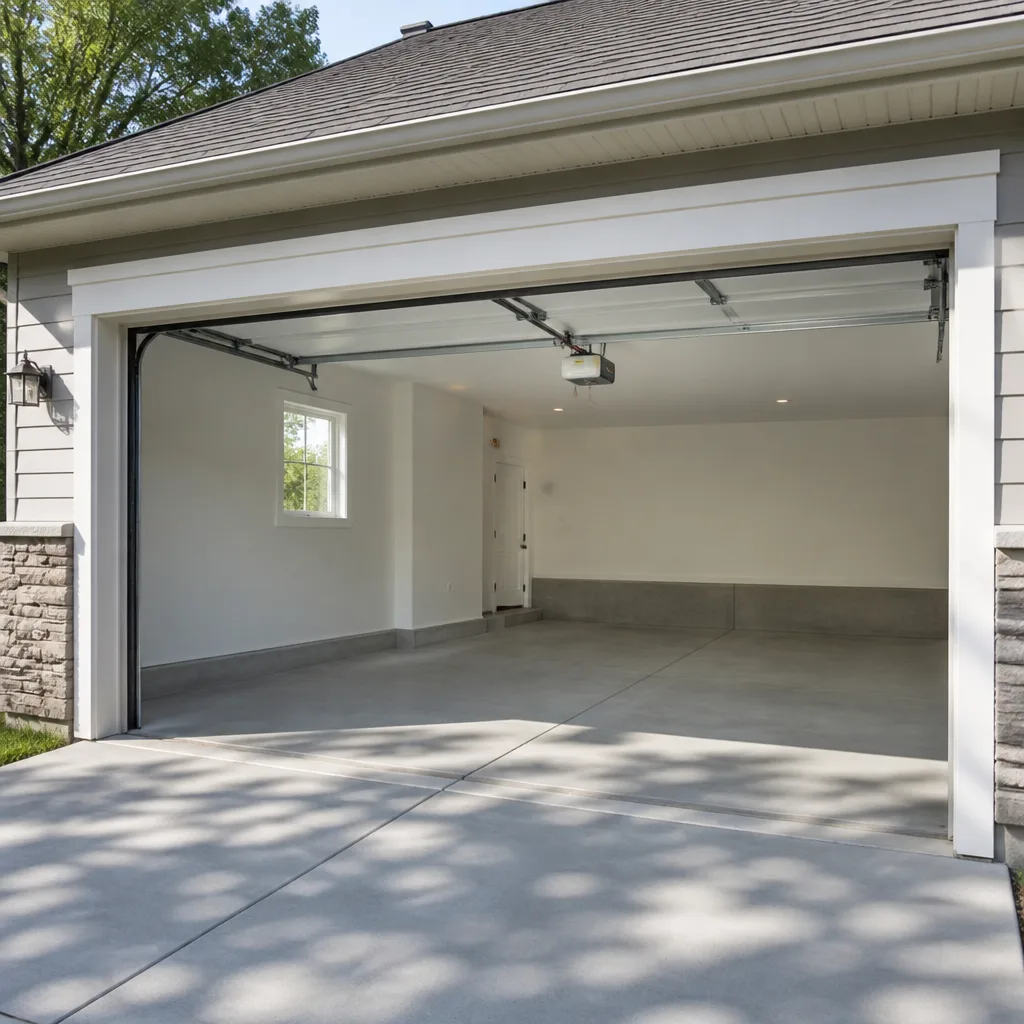 LiftMaster openers
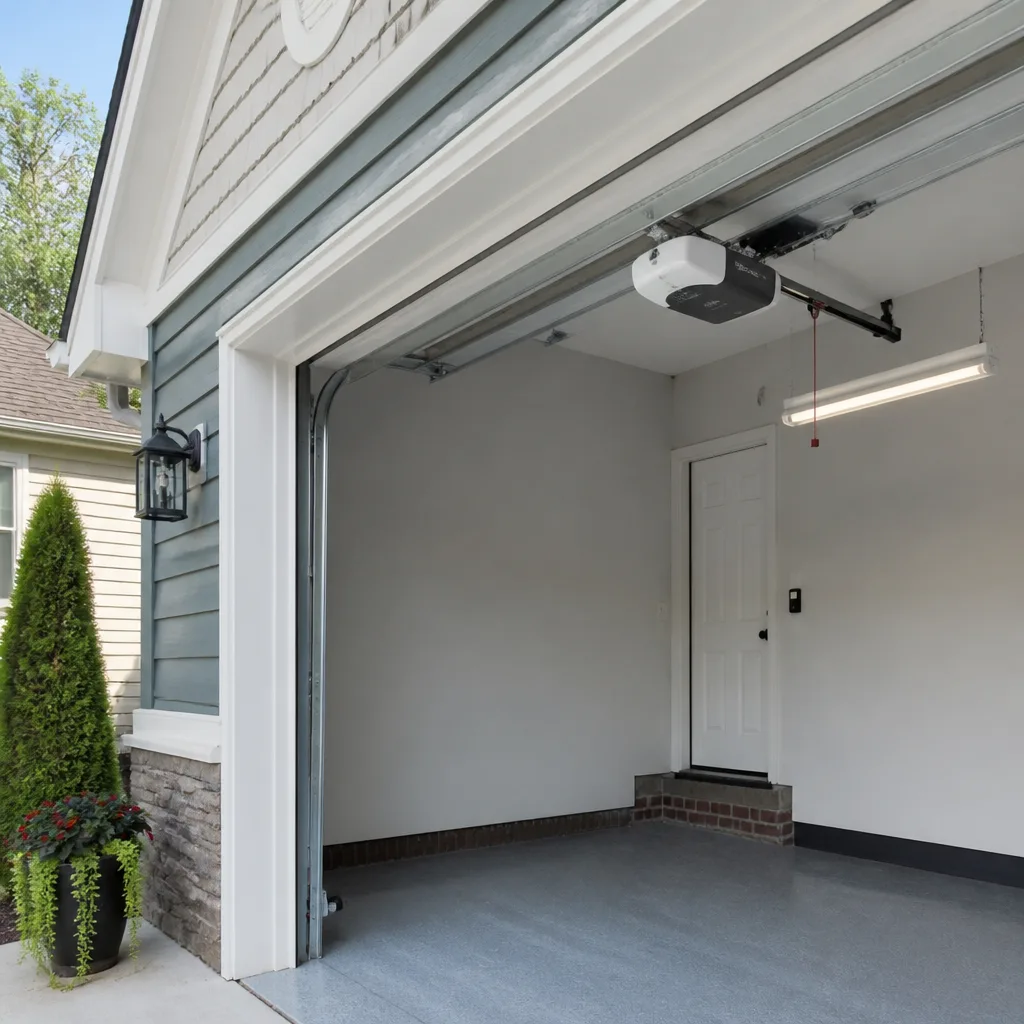 Chamberlain openers
Full 25-point door and opener safety check with every visit - springs, cables, rollers, tracks, and your LiftMaster or Chamberlain opener included
You get a price before we start. It does not change when the pro arrives.
Get your free estimateGarage Door Emergency Preparedness Guide for Modesto Homes
Most homeowners in Modesto will touch their garage door hundreds of times this year without ever asking the one question that matters when the power dies: can this door actually be lifted by hand? The answer surprises a lot of people. A door that runs perfectly on a Genie or LiftMaster opener can be nearly impossible to lift manually once spring tension has weakened, and the manual release cord does nothing to help you if the door itself is too heavy to move. This guide separates the two kinds of garage door emergencies Modesto homes face – mechanical failures and disaster-driven failures – because they need completely different preparation. You’ll learn how to test your door now, how to get it open safely in a power outage, and what to do in the first 30 minutes of a real breakdown.
Quick Answer
Garage door emergency preparedness in Modesto comes down to three checks: confirm your door lifts easily by hand with the opener disengaged, verify your exterior emergency release is installed correctly and secure, and know where your manual release cord is before you need it. Mechanical failures (broken springs, dead openers, off-track doors) and disaster failures (earthquakes, grid outages, wildfire smoke events) require separate plans, and most homes need both. If your door fails any of these checks, that’s the moment to call a specialist, not the moment the door actually breaks.
Styles & brands we work with
- Raised-panel steel
- Carriage house
- Modern flush
- Full-view glass
- LiftMaster openers
- Chamberlain openers
Table of Contents
- Why Modesto Faces Two Different Kinds of Garage Door Emergency
- How Do You Open a Garage Door During a Power Outage?
- The Spring Balance Test Every Modesto Homeowner Should Do Today
- Earthquake Preparedness for Modesto Garage Doors
- Emergency Release From Outside: Security and Function
- What to Do in the First 30 Minutes of a Mechanical Emergency
- Your Pre-Season Garage Door Checklist for Modesto
- Summer Grid Stress, Wildfire Smoke, and What the Valley Does to Your Door
Why Modesto Faces Two Different Kinds of Garage Door Emergency
Most garage door emergency guides lump everything into one list: broken spring, dead battery, stuck door. That approach misses something important about living in the Central Valley. The emergencies that hit Modesto homes fall into two clean categories, and the preparation for each one is genuinely different.
Mechanical emergencies happen gradually and then all at once. A torsion spring weakens over time until one cold morning it snaps. An opener motor reaches the end of its service life. A roller comes off its track because the door was slightly out of alignment for a year before anyone noticed. These failures are common, predictable in hindsight, and usually fixable within a normal service visit. Preparation for them is about knowing your door and noticing warning signs early.
Disaster-driven emergencies happen to an otherwise healthy door. A power grid event during a Valley heat wave knocks out the opener. A seismic event shifts a track or bends a panel. Wildfire smoke season pushes homeowners to seal the garage, which reveals a door that was never actually sealed. A fire burns through a nearby neighborhood and the homeowner suddenly wants the garage door to do something it was never designed to do. Preparation for these is about having a manual override plan, understanding what your door can and can’t do without power, and knowing how to check the door afterward.
The overlap matters too. A door that’s already marginal on spring tension can fail the moment it’s forced open manually during an outage. A track that survived last year’s minor quake can let go on the next one. Modesto homes in the older neighborhoods near downtown tend to have door systems that have been through several owners, which means you may not know a door’s true mechanical condition until you test it.
Why this distinction saves you money
When you call for help, being able to say “the opener is dead but the door moves fine by hand” versus “the power is out and the door won’t budge” tells a technician what kind of visit to expect. The first is usually an opener repair. The second might be a spring or balance issue that was hiding behind the motor assist. Knowing the difference before you call means you’re not surprised by what the technician finds, and you’re not paying for a diagnostic visit just to learn your door can’t be lifted safely.
How Do You Open a Garage Door During a Power Outage?
You open a garage door during a power outage by pulling the manual release cord that hangs from the opener trolley, disconnecting the motor from the door. Then you lift the door by hand. That’s the whole process, and it works on nearly every residential opener regardless of brand. The catch is that it only works if your door’s springs are healthy enough to let you lift the door by hand, which is why the balance test in the next section matters so much.
The manual release, step by step
- Locate the release cord. It hangs from the trolley on the opener rail, usually about six feet off the floor and often has a red or T-shaped handle on the end.
- Pull the cord straight down toward the floor. This disconnects the trolley from the door arm. You’ll feel or hear the release.
- Stand clear of the door’s path and lift the bottom section slowly, using both hands. If it lifts easily and stays where you put it, you’re good.
- To re-engage the opener after power returns, pull the cord again or lift the door slightly until the trolley catches, then run the opener to confirm it reconnected.
Never force the door. If it won’t lift with reasonable effort, stop and call for help. A door that’s binding on its track or whose springs have failed can come down hard if it slips, and that’s a genuinely dangerous moment in a way that a stuck door isn’t.
What to check before you need this
- Find your release cord now and confirm it’s intact, not frayed, and not tangled in anything.
- Test that it actually disengages by pulling it and lifting the door, then re-engaging. Do this on a day when nothing is going wrong.
- Confirm your door’s balance using the test below. If the door doesn’t balance, the manual release won’t save you.
- Know that a battery backup opener – many LiftMaster and Chamberlain units have one – will open your door a few cycles after power loss, which buys you time and a way out.
If you find your door doesn’t lift by hand or the release is stuck, that’s a repair worth scheduling before an emergency finds you. Reach out for garage door repair while the door is still cooperative, and the fix will be simpler and cheaper than dealing with it during an outage.
The Spring Balance Test Every Modesto Homeowner Should Do Today
Most people never test whether their garage door can be lifted manually. They assume that a door that runs smoothly on its opener must be mechanically sound. That’s a common and costly assumption. The motor does most of the work until the motor can’t, and by then the springs may have weakened to the point where the door is a genuine hazard to move by hand.
How the balance test works
- Fully close the door, then disconnect the opener using the manual release cord.
- Lift the door by hand to about halfway open. Use both hands and keep your body clear of the door’s path.
- Let go. A properly balanced door should stay roughly where you left it, or drift slightly.
- If the door drops fast or requires visible effort to lift, the spring tension is off. Don’t test repeatedly – you already have your answer.
If the door slams down or feels extremely heavy, stop using it until a technician inspects it. A door that can’t be lifted by hand is a door whose springs are no longer doing their job, and forcing it is how injuries happen. We’ve seen this exact pattern in Modesto homes where the door ran fine on the opener for years while the torsion spring quietly lost tension.
Why this test matters even more here
Modesto’s summer heat is hard on springs and openers. Metal expands, lubricant thins, and the wear that would take a decade in a cooler climate can progress faster here. Valley heat waves stress opener motors too, and a door that’s out of balance makes the motor work harder than it should, which shortens its life. If your door fails the balance test and the opener is acting tired at the same time, it’s worth having both looked at together. Learn more about garage door opener repair so you know what the technician will check.
When not to test it yourself
Torsion springs are high-tension components and adjusting them is the most dangerous part of this trade. The balance test above is safe when done with two hands and a clear path, but do not attempt to tighten, loosen, or replace a spring on your own. If you see a visible gap in a torsion spring, hear a clunk that repeats, or feel a spot where the door catches, that’s a call-a-professional moment. A trained technician has the tools, the winding bars, and the experience to work on spring assemblies safely.
Earthquake Preparedness for Modesto Garage Doors
Modesto sits in a seismically active region, and the code here treats that seriously. A garage door that looks fine after a quake can still have a compromised track, a bent panel, or a spring assembly that’s one cycle away from failing. And there’s a specific piece of California equipment every opener should have: a seismic disconnect switch.
What a seismic disconnect switch does
California requires garage door openers installed here to include a seismic disconnect switch or equivalent feature, which detects sudden shaking and disconnects the door from the motor. Without it, an opener running during a quake can pull against a door that’s moved on its track, either damaging the door further or forcing it in a way that could hurt someone nearby. Many newer openers, including current LiftMaster and Chamberlain models, build this in. Older openers often don’t.
If you don’t know whether your opener has one, that’s worth checking. Ask any technician who inspects your opener, and confirm it’s working rather than just present. An opener past its service life may have one that no longer functions, and that’s a different problem from not having one at all.
Post-quake inspection: what to check and what only a technician should check
After a significant quake, these are the things you can check safely:
- Look at the door while it’s closed. Are the panels straight and aligned? Any visible gaps between panels?
- Check the tracks on both sides. Are they plumb? Any visible bend, kink, or misalignment?
- Look at the springs above the door. Any obvious gaps, or a spring that looks like it has separated?
- Check the opener rail for anything hanging loose or visibly displaced.
- Test that the door closes flush and doesn’t lean to one side.
What you should not do: run the opener if the door is visibly off its track, or force the door up if it feels bound. A bent track under tension can shear a roller and send the door down unpredictably. Call a technician to inspect it before you operate it again. The good news is that a post-quake inspection is quick, and it catches problems while they’re still small repairs.
Why older Modesto homes need a closer look
Neighborhoods with homes built decades ago often have garage doors and openers that predate current seismic considerations. That doesn’t mean those doors are unsafe, but it does mean the assumption “my door survived one quake, it’ll survive the next one” needs scrutiny. A door that’s been through several minor shakes accumulates wear in ways that aren’t obvious until you look. If your home is older and you don’t have a recent inspection on record, this is the season to get one.
If your door is off-track, don’t run the opener. Stop, keep the door still, and call. A trained technician can safely lift it back into alignment, but forcing it can turn a repair into a replacement.
Want to talk through what your door needs before the next quake window? Frontline Garage Door Service works on the mechanical door and the opener as one system, which matters after a seismic event where both can be affected.
Emergency Release From Outside: Security and Function
The exterior emergency release exists so you can get into a garage without the opener – typically when the power is out or the opener has failed. It’s a genuinely useful piece of equipment, and it’s also one of the most commonly mis-installed parts on a residential door. Done wrong, it’s a security risk.
How it works
The exterior release is a lock cylinder or keyed handle mounted on the outside of the garage door, connected by a cable to the manual release mechanism inside. When you turn the key or lift the handle, the cable disengages the door from the opener from outside, and you can then lift the door manually. Some are simple key cylinders. Some are bar-style handles mounted on the bottom section. All of them do the same job: they let you get in without a remote or working opener.
Why misinstallation is a security issue
An exterior release mounted in the wrong spot gives someone outside access to your garage. A few common problems:
- Mounted too high or too low. An exterior release should be positioned above the door’s opener-engagement point so it can’t be reached through a gap. If it’s mounted where someone can pull it from outside through a small opening, it’s a security gap.
- Cable too loose or too tight. A loose cable can be tripped accidentally. A tight one binds and won’t release when you need it.
- Cheap lock cylinder. A flimsy cylinder can be picked or forced. If the exterior release is the only way into your garage from outside, the lock quality matters.
- No bypass protection on newer doors. Modern doors with integrated exterior locks may need a specific lock style for the release to work with them rather than against them.
How to verify yours is secure
- With the door closed, check whether the exterior release handle can be operated easily from outside. If it turns freely with a hand, not a key, it’s a risk.
- Look at where it’s mounted. Is it in a spot someone could reach through a gap in the door or a side window? If yes, it’s worth repositioning.
- Confirm it actually works – turn the key, pull the cable, and see if the door disengages. Do this on a day you’re not in a hurry.
- If the exterior release is the only entry point, consider whether the lock is a quality cylinder or a basic cam lock.
If your exterior release is misaligned, hard to operate, or looks like it was added by a previous owner without much thought, it’s a small fix that closes a real security gap. We see this often on Modesto homes in older neighborhoods where the door has been upgraded over time. Get it corrected before you need it, not after.
What to Do in the First 30 Minutes of a Mechanical Emergency
When a garage door fails, the first half hour determines how easy the repair is. Panic and force are the two things that make the situation worse. Here’s the safe-versus-unsafe breakdown for each common failure.
Broken spring
You’ll usually know a spring has broken because there’s a loud bang and the door suddenly becomes very heavy. What’s safe: leave the door down, don’t run the opener, don’t try to lift the door by hand. What makes it worse: running the opener against a door with no spring tension, or forcing the door up, which can send it crashing back down. Call for help, then wait. A broken spring is the most common emergency call we get, and it’s also the one where a fast, correct response keeps a routine repair from becoming a panel replacement.
Door off track
An off-track door usually leans or is visibly misaligned. What’s safe: close it if it’s partially open and won’t move further, and keep kids and pets away from it. What makes it worse: operating the opener, which can force the door further off the track or damage the opener itself, or trying to straighten the door by hand. A door off its track can release suddenly if you push on the wrong spot. Call a technician and leave it alone.
Opener motor failure
If the opener runs but the door doesn’t move, or the opener makes a grinding noise or hums without moving the door, the opener has failed or lost drive. What’s safe: disconnect the opener using the manual release and test whether the door lifts by hand. If it does, you can get the car out and drive while the opener is repaired. If it doesn’t, the door’s springs are likely involved too. What makes it worse: repeatedly trying to cycle the opener, which can strip gears or burn out the motor faster.
Door jammed mid-cycle
A door stuck partway open is the most awkward version of the problem. What’s safe: leave the door where it is, disconnect the opener with the manual release, and lift or lower the door slowly by hand only if you’re confident the springs are balanced. What makes it worse: pulling on the door while the opener is still engaged, which can damage the trolley or strip the opener. If the door won’t move either way, don’t force it.
The one-page decision framework
- Is there a broken spring or a door off its track?
- If yes: no opener, no lifting, no forcing. Call for help.
- If no: try the manual release. Does the door lift by hand?
- If yes: get the car out, then schedule whatever repair the failure needs.
- If no: treat it as a spring or balance issue and call for help.
- In every case: keep the door as still as possible until a technician has looked at it.
If it’s a mechanical failure and you’re stuck, we answer 24/7. Fast dispatch from 7am to 7pm, Sunday through Friday. Call (855) 473-8505 and we’ll get you scheduled into the next opening. When we do arrive, we work on the door and the opener together, so you’re not calling one specialist for the door and another for the opener.
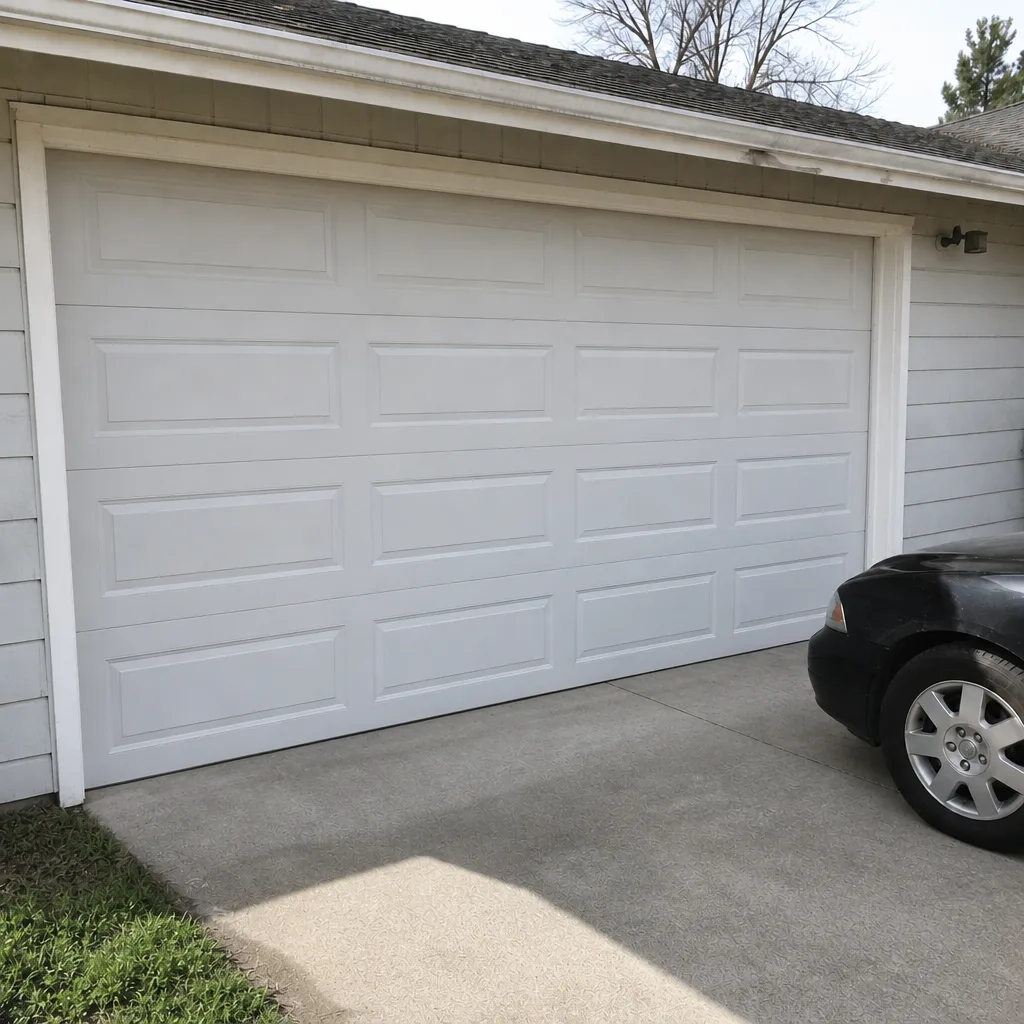
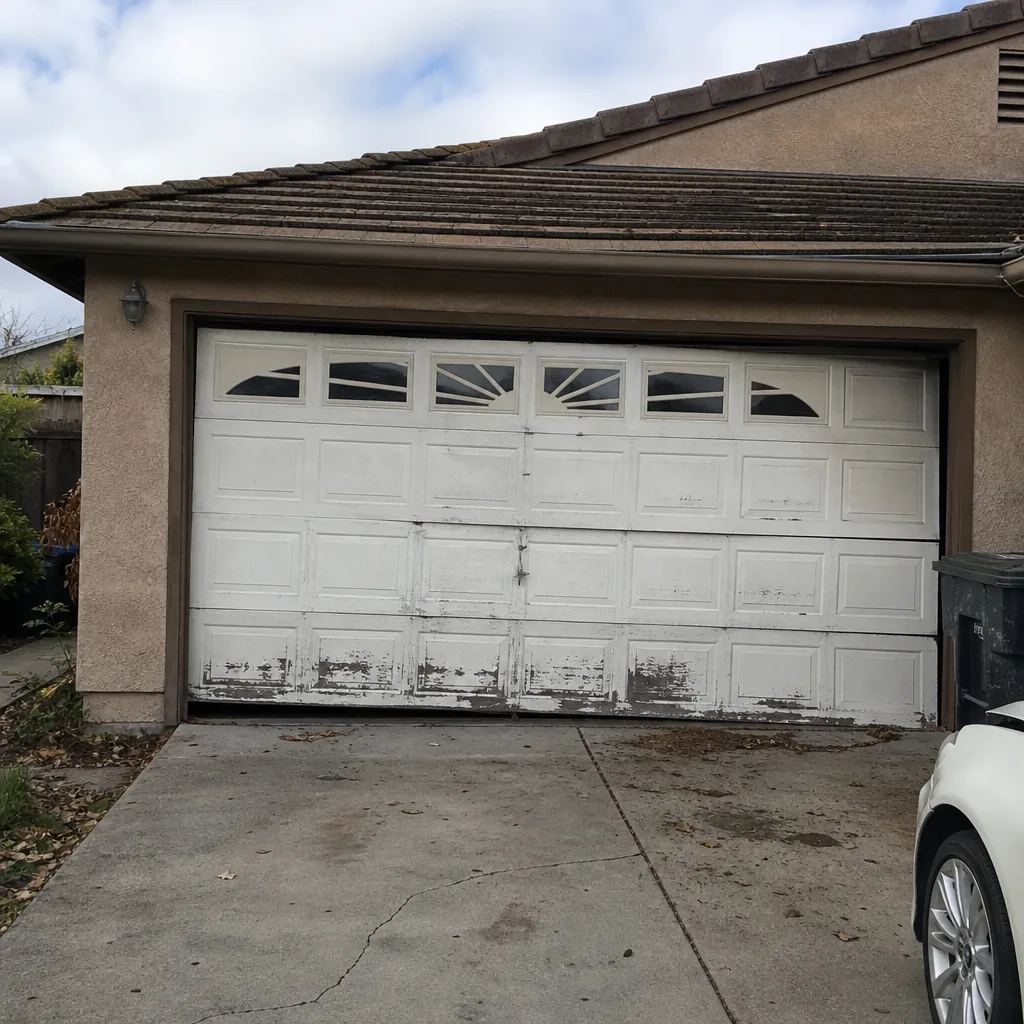
See the difference
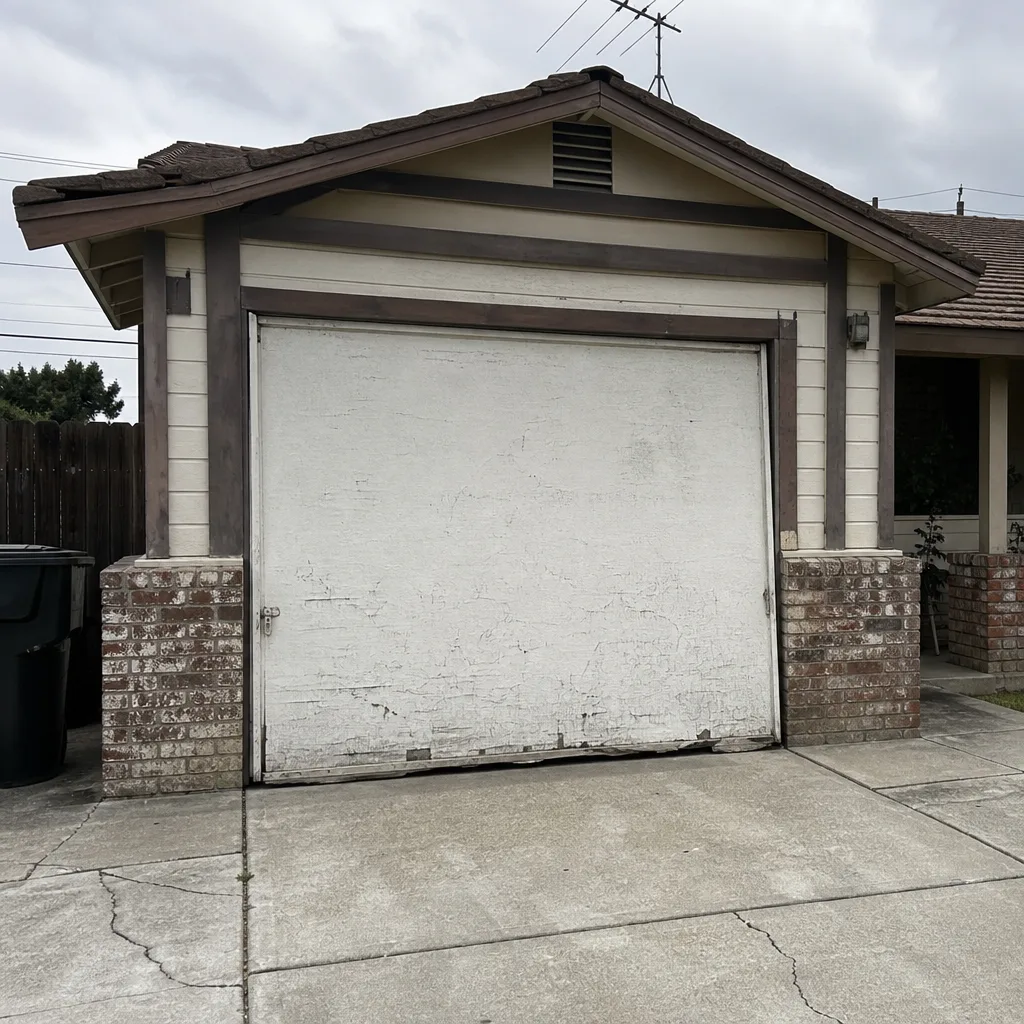 Before
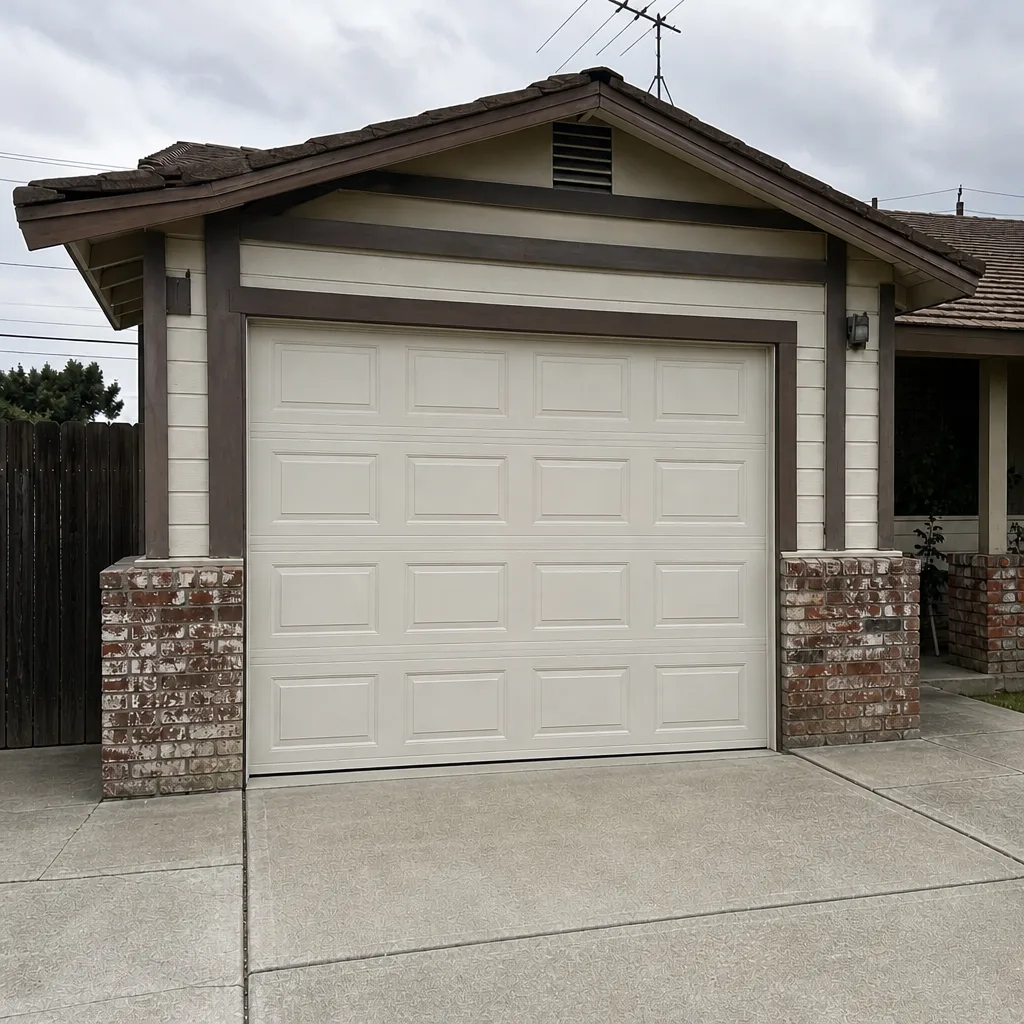 After
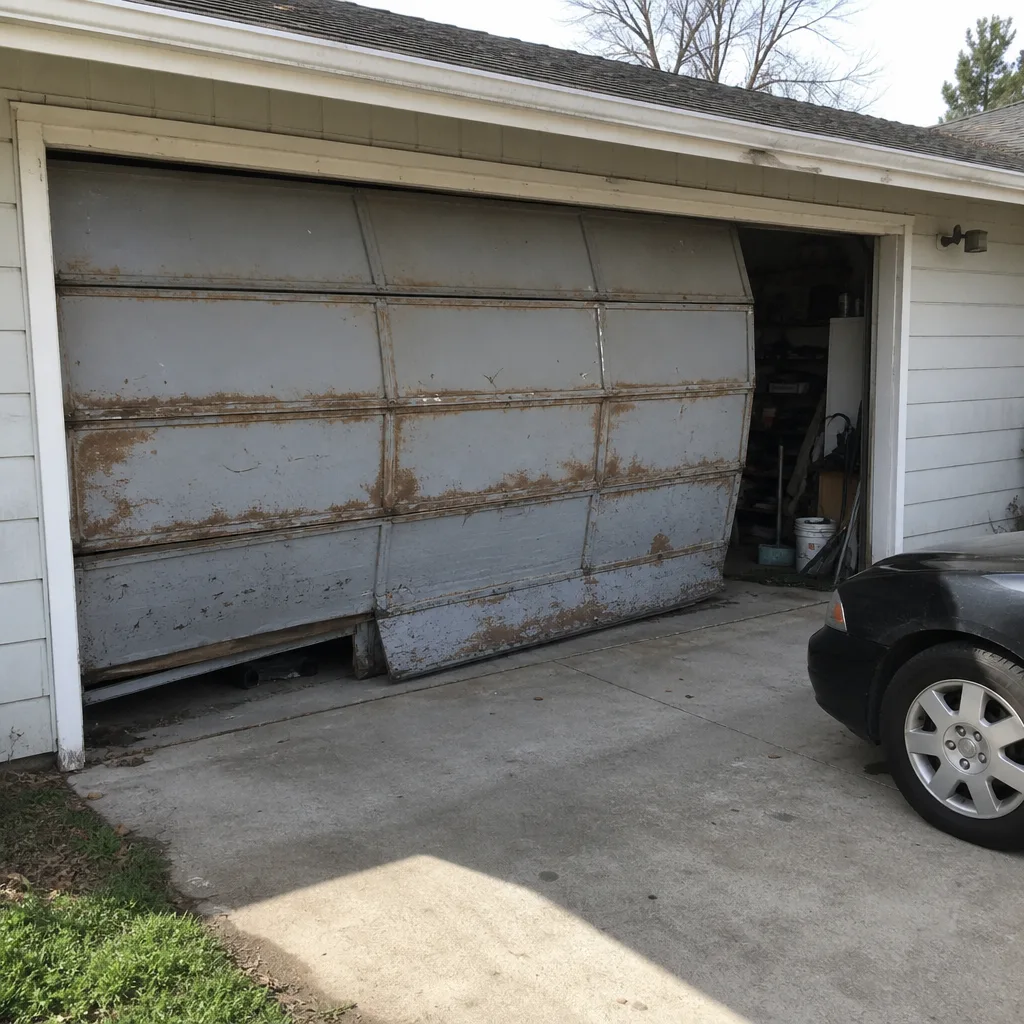 Before
 After
 Before
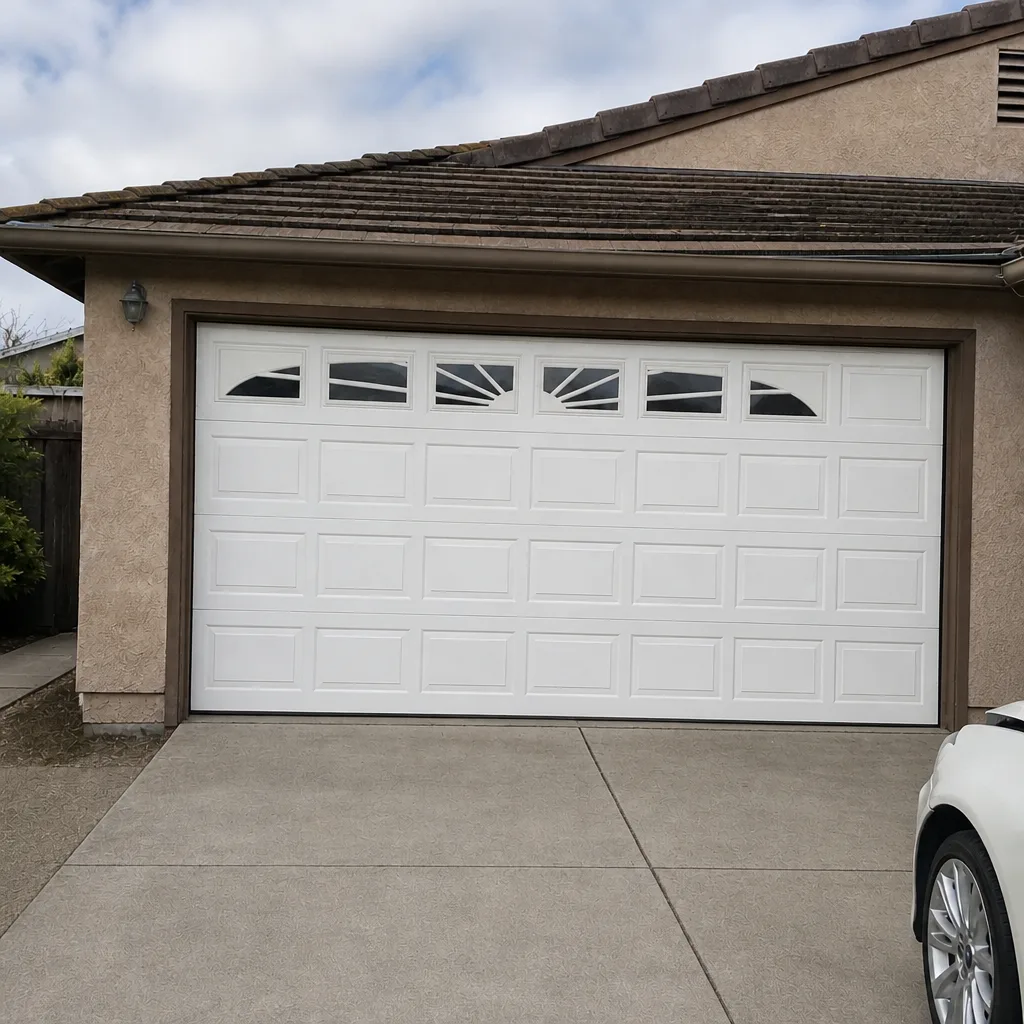 After
Your Pre-Season Garage Door Checklist for Modesto
Before summer grid stress and wildfire smoke season peak, do these three things. This is the short version, not the whole list, because three things done right beat fifteen things half-done.
1. Do the spring balance test
This is the single most important check on the list. A balanced door can be lifted by hand in an outage. An unbalanced door can’t, and no amount of preparation helps if that’s the case. Do it now, while there’s no pressure. If the door passes, mark the date and re-check at the start of the next season. If it fails, schedule a repair before summer starts.
2. Test the exterior emergency release and confirm it’s secure
Pull the key, disengage the door, confirm it works. Then look at how it’s mounted and decide whether it’s positioned securely. This one check covers both functionality (does it work when I need it?) and security (can someone else use it when they shouldn’t?). If you don’t have an exterior release at all, this is the season to add one, because the alternative during a power outage is being stuck outside your garage.
3. Confirm the opener has battery backup or a seismic disconnect
Two separate features, both worth knowing about. A battery backup opener keeps your door operating for several cycles after a power loss, which is a real advantage during Modesto grid stress. A seismic disconnect protects the door during a quake. Current LiftMaster and Chamberlain models often include one or both. Older openers may not. If your opener doesn’t have either, you’re relying entirely on the manual release, and that’s a plan that only works if the door passes the balance test.
Summer Grid Stress, Wildfire Smoke, and What the Valley Does to Your Door
Modesto’s summers stress garage doors in ways that aren’t always obvious. Heat expands metal, thins lubricant, and pushes opener motors harder than they’d work in a milder climate. When grid conditions strain and the power goes out – something Valley homeowners know well – the door has to work manually or it doesn’t work at all. When wildfire smoke settles over the region, homeowners start paying attention to how well their garage seals, which reveals gaps that were never addressed because they never had to be.
Heat and opener motor stress
An opener motor in a garage that’s been baking at Valley summer temperatures runs hotter and works harder than a cooler-climate equivalent. If your door is slightly out of balance, the motor is compensating for it every cycle, and that’s the kind of wear that shows up as an opener failing years earlier than it should. A balanced door with a well-maintained opener lasts longer here, which is why the balance test isn’t just about emergencies.
What to check if you can’t run the opener for a while
During a prolonged outage, run the door manually a few times to keep the mechanism from sitting idle. If you can’t get the door to move, that’s your signal that something needs attention before you need to get the car out. The door is the emergency exit, not just the entrance.
Sealing the garage for smoke season
Wildfire smoke gets into a garage through gaps around the door edges, at the bottom seal, and anywhere the frame has shifted with age. If your door’s weatherstripping is worn or the threshold is uneven, smoke will find it. That’s a garage door repair issue, not a general home-sealing issue, and it’s one we handle every summer. A door that seals well also insulates better, which helps with the heat too.
When your door is due for a new one
If your door is past the point where repair makes sense, or your insurance requires an upgrade after a claim, that’s a different conversation. A new door is a measured, scheduled job: we come out, measure, order the door, and install it once it arrives. Clopay doors are a common choice for our Modesto customers because they seal well and hold up in the heat. It’s worth knowing that installation is a completely different kind of service from emergency repair, and having a specialist who handles both means you don’t get handed off. Learn more about what a new door involves with Modesto as your starting point.
Common Mistakes to Avoid
- Assuming the opener is the problem. A door that won’t lift is usually a spring problem, not an opener problem. Testing the balance before you call saves you a diagnostic visit and gets the right technician out the first time.
- Pulling the manual release while the door is under tension. Pulling the release while the door is partway up and unbalanced can let it fall. Only release the door when it’s closed or when you’ve confirmed the spring is doing its job.
- Ignoring an exterior release that’s easy to operate from outside. A release that turns freely without a key is a security gap. It’s a five-minute check and a small fix, and worth doing before it becomes a problem.
- Running the opener after an earthquake without inspecting the door first. An opener triggered against a door that’s off its track can make a small repair into a bigger one. Look at the door before you press the button.
- Letting a door go years without a balance check. The check takes five minutes and catches spring fatigue before it becomes a hand-crushing moment in a power outage. Add it to your fall and spring to-do lists.
- Confusing an exterior release with a security upgrade. A properly installed exterior release is a safety and access tool. It’s not a replacement for a good garage door lock, and if it’s misinstalled it can weaken security.
- Calling a general handyman for a spring or track issue. These are the one part of the trade with real injury potential. A specialist who works on garage doors every day – and has the right tools for the spring assembly – is worth the call for anything beyond a roller or a sensor.
When to Call a Professional
Call a professional if the door won’t lift by hand, if a spring has broken, if the door is off its track, if the opener runs but the door doesn’t move, or if you feel anything binding or catching in the door’s travel. Call before you run the opener if the door failed during an earthquake, before you try to fix a spring yourself at any time, and before you force a jammed door. If your exterior release is misinstalled or your opener is missing its seismic disconnect, that’s a scheduled call rather than an emergency one, but it’s still worth doing. Frontline Garage Door Service offers free estimates in Modesto – call (855) 473-8505. We work on the mechanical door and the opener as one system, from the door to the opener, so you’re not juggling two specialists.
Frequently Asked Questions
You can open the door by hand if the springs are healthy, which you test with the balance check first. Pull the manual release cord to disconnect the opener, then lift the bottom section slowly with both hands. If the door is too heavy to lift, the spring tension has likely failed, and you should call for help rather than force it.
Look at your opener’s manual or check with the brand – current LiftMaster and Chamberlain models often build one in, and older openers may not have one at all. California requires seismic disconnect capability on openers installed here, so a newer opener should have it. If your opener is older, have a technician confirm whether it’s there and whether it’s working.
Check the panels for alignment, the tracks on both sides for visible bends, the springs for obvious gaps, and whether the door closes flush. Don’t run the opener if the door looks off its track. If anything looks wrong, call a technician for an inspection before operating the door.
It can be if it’s misinstalled. A release that turns freely without a key, or that’s mounted where someone could reach through a gap, weakens your garage’s security. A properly installed one with a quality lock cylinder is safe and useful. Test yours once a season by turning the key and confirming the disengagement works.
Not usually. A door that won’t lift by hand with the opener disconnected is almost always a spring or balance issue, not an opener issue. The opener’s motor assist can hide a weak spring for years, which is why the balance check matters. A technician can confirm what’s going on and give you a free estimate for the repair.
A mechanical emergency is a wear-out failure – broken spring, dead opener, off-track door – and preparation is about noticing signs early and testing your door regularly. A disaster-driven emergency is an event that hits a healthy door, like a grid outage or a quake, and preparation is about having a manual plan, checking the door afterward, and knowing what your door can and can’t do without power.
Yes. Call (855) 473-8505. We answer 24/7, with fast dispatch from 7am to 7pm, Sunday through Friday. If your call comes in outside dispatch hours, it’s booked into the next opening. We’ll help you figure out whether the door can be safely lifted by hand or whether it needs a technician first.
The Bottom Line
Most garage door emergencies in Modesto fall into one of two categories, and each needs its own preparation. Mechanical failures reward testing your door now – the spring balance check, the manual release test, the exterior release inspection – so you’re not finding out the door can’t be lifted when the power is out. Disaster-driven failure rewards having a plan you’ve practiced: know where the release cord is, know what your opener can do without power, check the door after a quake, and seal the garage before smoke season. Three things done right cover most of it. If anything on your door fails a check, that’s the moment to call. Frontline Garage Door Service works on the door and the opener as one system, on all the major brands, and garage doors are all we do. For a free estimate in Modesto, call (855) 473-8505. We answer 24/7. Fast dispatch from 7am to 7pm, Sunday through Friday.
Written by the team at Frontline Garage Door Service.