
Last updated November 15, 2026
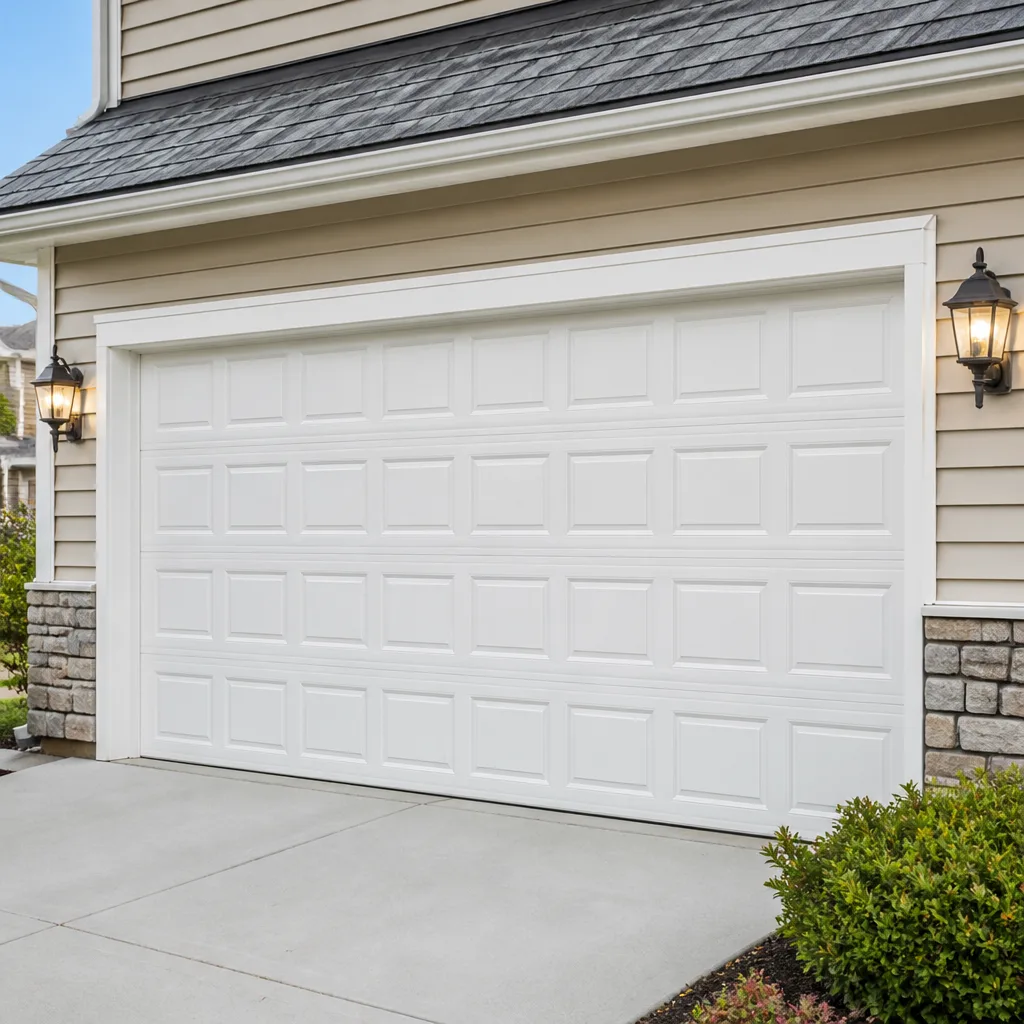 Raised-panel steel
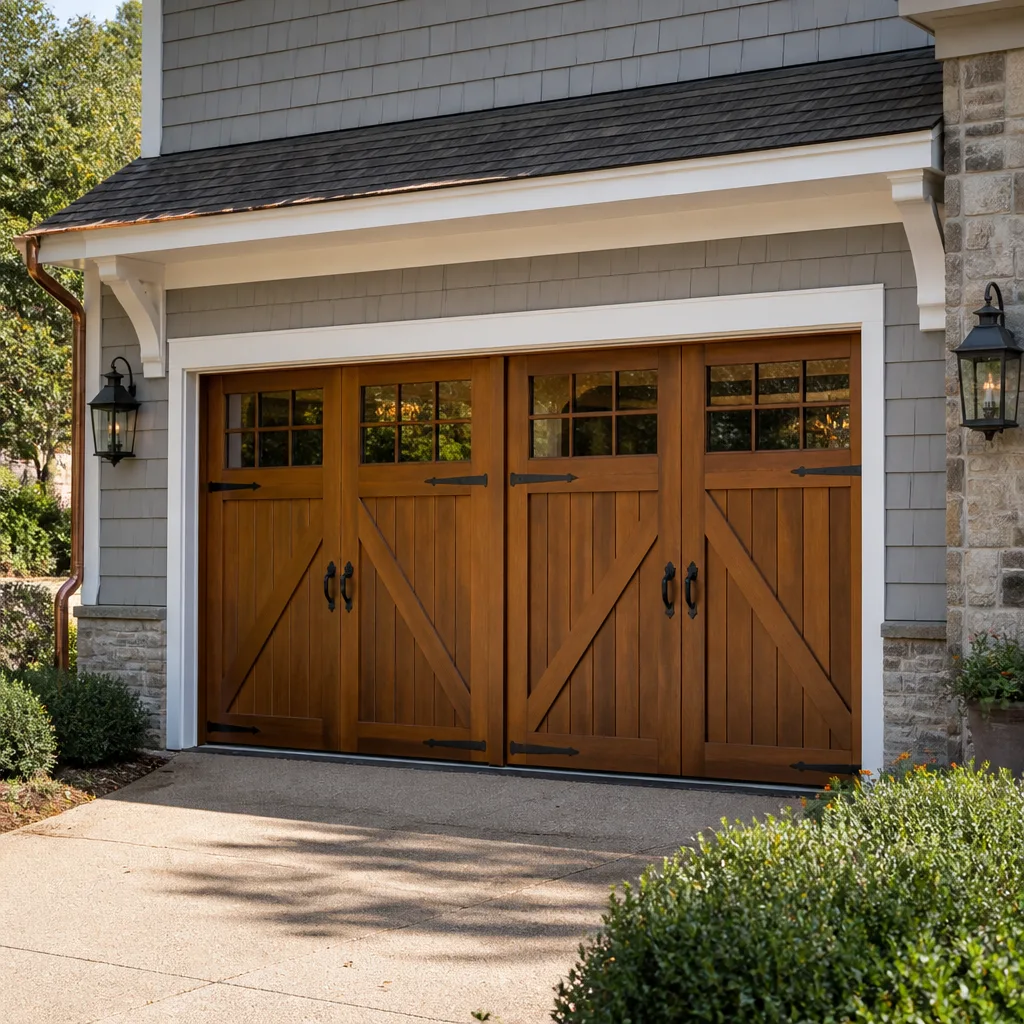 Carriage house
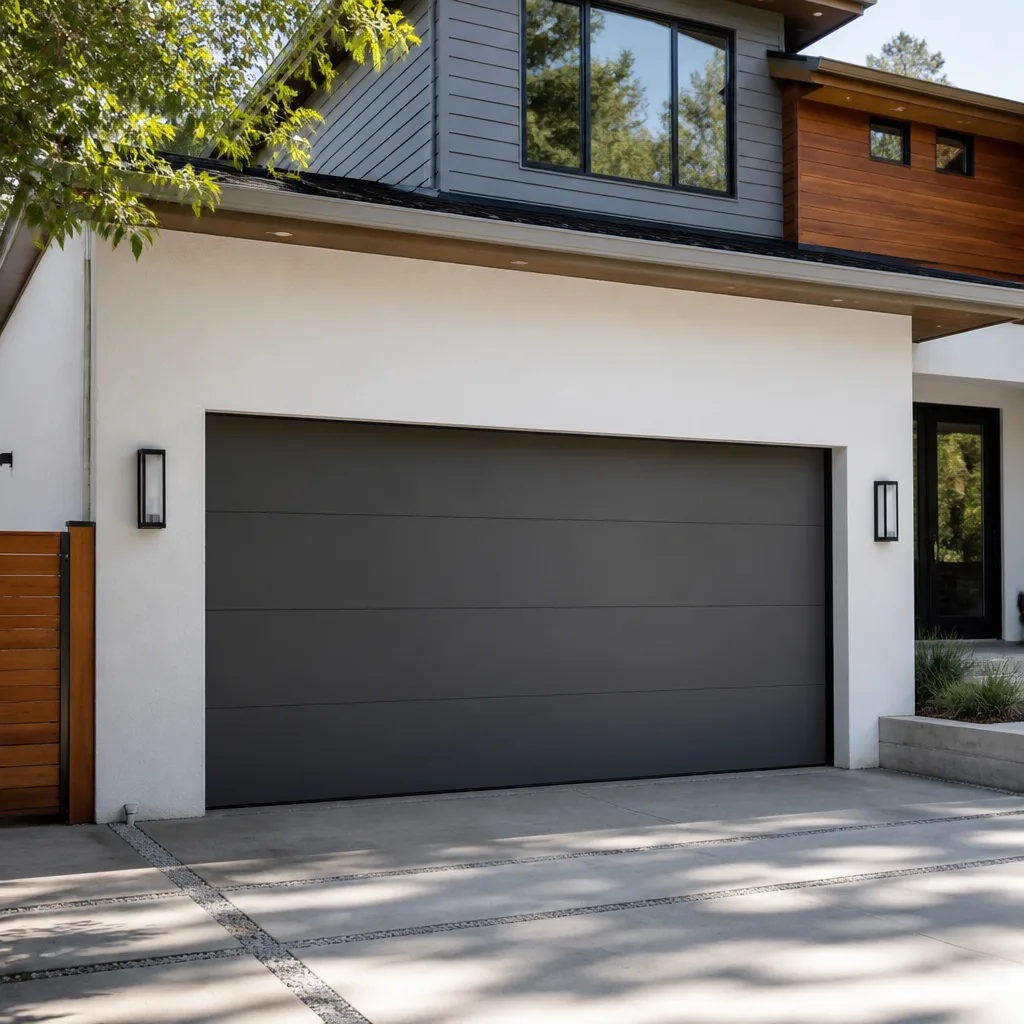 Modern flush
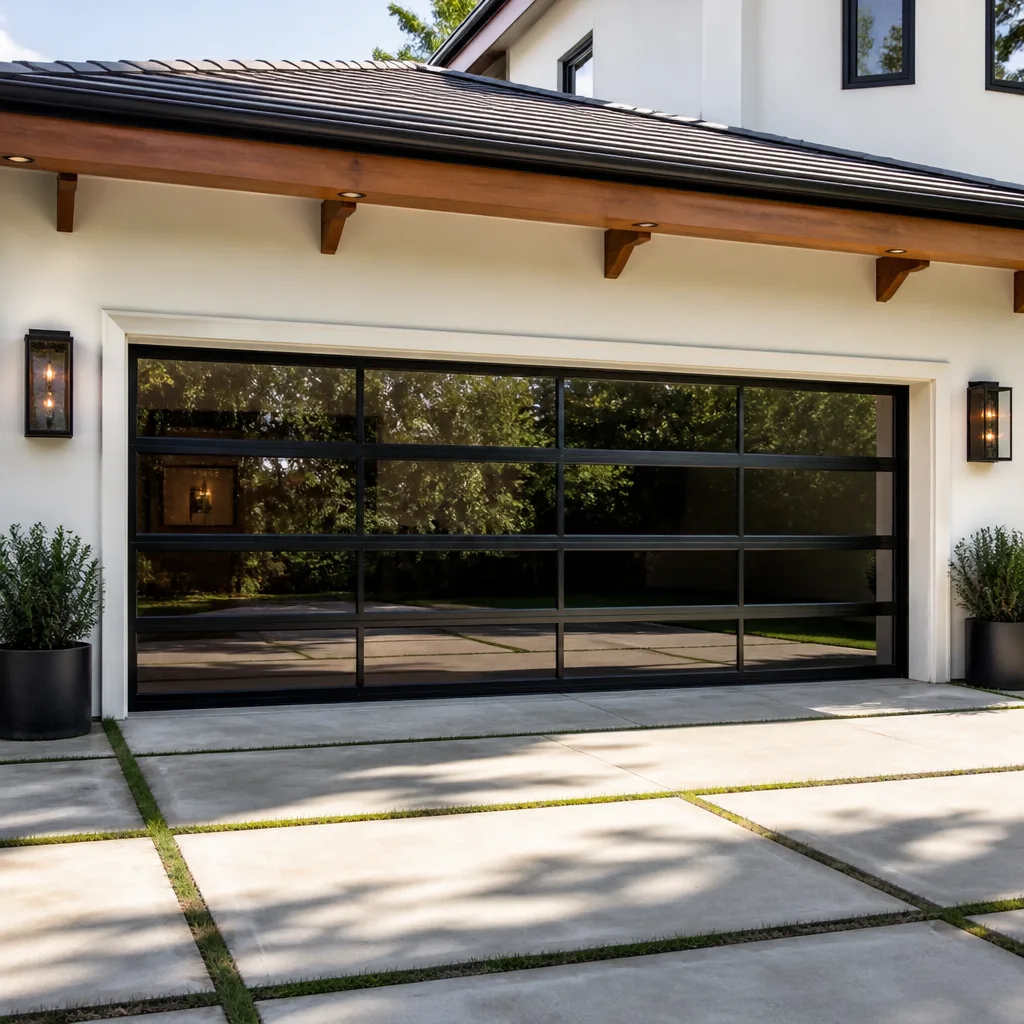 Full-view glass
 LiftMaster openers
 Chamberlain openers
Full 25-point door and opener safety check with every visit - springs, cables, rollers, tracks, and your LiftMaster or Chamberlain opener included
You get a price before we start. It does not change when the pro arrives.
Get your free estimateSeasonal Garage Door Care for Modesto: Year-Round Homeowner’s Guide
Most homeowners assume August is the danger month for a garage door. In our experience across Modesto, the worst damage happens in the six weeks when October’s 90°F afternoons collapse into 35°F Tule fog nights. That swing does more to springs, seals and opener motors than a whole summer of steady heat. Modesto doesn’t run four equal seasons. It runs a long, punishing summer, a damp foggy winter, and two short shoulder periods where hardware quietly shifts and fails. This guide walks you through the real calendar for a Central Valley garage door: what to check and when, what you can safely handle, and what belongs in the hands of a technician. By the end you’ll have a month-by-month plan built for this climate, not a generic national checklist.
Quick Answer
Garage door care in Modesto should follow the local climate, not the calendar on a national blog. That means a pre-summer tune-up in April and May before sustained 95 – 110°F heat, active monitoring through summer, a careful inspection in October and November when temperatures swing hardest, and moisture control through the Tule fog months. Springs, bottom seals and opener motors are the three components most affected. Most of the routine work is visual and lubricant-based; anything involving torsion springs or high-voltage opener wiring belongs with a trained professional.
Styles & brands we work with
- Raised-panel steel
- Carriage house
- Modern flush
- Full-view glass
- LiftMaster openers
- Chamberlain openers
Table of Contents
- Why Modesto’s Climate Is Hard on Garage Doors
- Pre-Summer Prep: April and May
- Summer Monitoring: What Heat Does Mid-Season
- Fall Transition: October and November
- Tule Fog and Winter Moisture
- Month-by-Month Task Calendar
- Brand-Specific Notes and What We Work On
- When to Call a Professional
Why Modesto’s Climate Is Hard on Garage Doors
Modesto sits in the northern San Joaquin Valley, where summer highs commonly push past 100°F and winter mornings settle into dense Tule fog. That combination asks a garage door system to do something most hardware isn’t designed for: survive wide, repeated temperature swings and long stretches of damp, cold air without moving much. Metal expands and contracts. Lubricant thins in heat and thickens in cold. Rubber seals harden, then take on moisture. None of these fail on their own, but they stack.
There are three components that carry most of the load in this climate:
- Torsion and extension springs. Steel under constant tension is sensitive to temperature. Heat relaxes tolerances; cold tightens them. The rapid swing between the two is what stresses the metal.
- Bottom seal and weatherstripping. Rubber that bakes through summer becomes brittle. When fog season arrives, that same seal needs to flex against a damp floor and can’t.
- Opener motor and drive. A Genie or LiftMaster motor working through a stiff door in summer heat draws more current. Add a dry, gritty track and you shorten its service life.
If your door was installed years ago with a builder-grade Clopay or Wayne Dalton panel, none of this is a defect. It’s just the reality of the valley. The good news is that a small amount of seasonal attention in Modesto outweighs a lot of reactive repair later. That’s the whole premise of this guide.
Pre-Summer Prep: April and May
April and May are the highest-value months on the calendar. Temperatures in Modesto are still mild, work is comfortable, and you’re getting ahead of the six-month stretch where the door runs hard. This is the window for the once-a-year tasks.
Here’s the sequence we recommend:
- Lubricate the moving parts. Rollers, hinges, and the torsion bar bearings need a garage-door-specific lubricant, not WD-40. Spray the pivot points at each hinge and the roller stems. Don’t lubricate the track itself; that attracts grit.
- Inspect the springs visually. Look at the torsion spring above the door. Any visible gap in the coil, or a door that feels unusually heavy when you lift it (with the opener disconnected), is a signal. Never adjust a torsion spring yourself. The stored energy in one can cause serious injury.
- Check the bottom seal contact. With the door closed, look at where the rubber meets the floor. Daylight under the seal, or a seal that leaves a gap at one end, is common as concrete settles. Replacing a bottom seal before summer keeps dust and heat out and protects the rubber from UV stress.
- Test the safety reverse. Place a small object in the door’s path and close it. The door should reverse. If it doesn’t, the opener’s safety sensors or limit settings need attention before summer.
- Clean and align the tracks. Use a damp cloth on the inside of the vertical and horizontal tracks. Check for dents or bends; a bent track will wear rollers fast.
- Test the balance. Disconnect the opener and lift the door halfway. It should stay where you put it. If it drops or rises on its own, spring tension is off.
Do this in April and it’ll pay back through August. If anything feels off during the check, that’s a good moment to schedule a service call rather than pushing the door harder and hoping.
Summer Monitoring: What Heat Does Mid-Season
Once Modesto settles into sustained 95 – 110°F days, the door is in its hardest stretch. A metal garage door in direct sun can heat well past ambient. What that does to the system is specific:
- Lubricant breaks down. The grease on the torsion bar and rollers thins and can migrate. Rollers start to squeal. This is one of the most common mid-summer complaints we hear.
- Seals harden. The bottom rubber loses flexibility. It stops conforming to the floor. You get daylight gaps and, later, water intrusion when fog season arrives.
- Opener performance changes. A door that was smooth in March may drag in July. If your LiftMaster or Chamberlain opener’s motor runs louder or hotter than usual, it’s often the door’s drag, not the opener itself.
- Panels expand. Metal panels shift slightly at the seams. You may hear a new rattle or notice a small gap at a joint. Usually cosmetic, but worth watching.
What’s Safe to Do Yourself in Summer
A quick visual inspection on a Saturday, a light re-lubrication at hinges and rollers, wiping down the tracks, and cleaning the safety sensor lenses. That’s the safe list. Anything involving the torsion spring, the cables, or opening up the opener housing is not.
What to Call On
A door that suddenly sounds different, a seal that’s clearly separated, a motor that clicks off mid-cycle, or a door that only opens partway. Those are the calls that a technician should look at while the problem is small. In our experience, a dragging door caught in July is a two-hour job. Caught in October after months of running against increased resistance, it’s often a spring replacement and a new opener.
Fall Transition: October and November
This is the section we hope you read twice. The swing from October’s 90°F afternoons to 35°F Tule fog nights is the single most demanding transition on a Modesto garage door system. Temperature changes of 50 to 60 degrees within a few hours, repeated across weeks, do more cumulative damage to springs and seals than a full summer of heat.
The failure mechanisms are predictable:
- Springs. Steel under tension at 100°F and then at 35°F within the same day is being pulled in two directions. Cracks can start at the coil ends and spread. A spring that held all summer can snap in October without any obvious warning. This is why we tell Modesto homeowners not to skip a fall inspection even if the door is running fine.
- Bottom seals. Rubber that hardened over summer is now asked to seal against a cold, damp floor. It often can’t. You get drafts, water intrusion, and pest entry.
- Weatherstripping around the perimeter. Same story. The vinyl or rubber trim on the sides and top can separate from the frame as the wood or metal frame expands and contracts.
- Opener limit settings. A door that’s slightly heavier in the cold may not fully close on the opener’s current limit. If your door “bounces back” when closing in November, the limit needs adjusting, or the door is binding.
October is the right month to schedule an inspection for a garage door in Modesto. It’s also the right month to have your opener’s force and travel limits checked, especially on a Wi-Fi enabled system where the app will log a reverse that you might otherwise miss.
Tule Fog and Winter Moisture
Through December, January and February, Modesto’s Tule fog delivers days of near-100% relative humidity and cool temperatures. If your garage is attached, that moisture doesn’t stay outside. It condenses on the coldest surfaces: the steel door interior, the concrete floor, and the underside of the door panels.
The results to watch for:
- Bottom seal contact points. Condensation collects on the concrete where the seal meets the floor. If the seal is stiff or separated, moisture wicks under it and into the garage.
- Steel door corrosion. Any coating damage on a steel Clopay or Amarr panel becomes a rust start point in fog season. Touch-up paint matters here. A chip the size of a pea in October can be a rust spot by February.
- Hinge and roller corrosion. Metal-on-metal contact with humidity present will oxidize. This is why the fall lubrication matters even more in a fog climate.
- Track alignment shifts. Damp wood framing around the door opening can swell slightly, throwing off the track alignment. A door that worked in September may bind in December.
- Opener electronics. Smart openers with circuit boards don’t love condensation, though modern Genie and LiftMaster units are sealed reasonably well. The main risk is a door dragging hard enough to force the motor.
The countermeasure is basic but effective: keep the bottom seal in good contact, keep the door’s mechanicals lubricated, and don’t let small chips or dents go unaddressed through the wet months. If you can, open the garage for a few minutes on clear winter afternoons to let it dry out.
Month-by-Month Task Calendar
Here’s the practical version. This is built for Modesto’s actual weather pattern, not a generic four-season template.
- January (fog and damp). Check for condensation at the bottom seal. Look for rust starting on steel panels. Wipe down tracks and hinges if you see moisture.
- February (still wet, slightly warmer). Test the safety reverse. Check the weatherstripping around the perimeter. Listen for new sounds from the opener.
- March (shoulder season, high-risk). The swing from cool mornings to warm afternoons is real. Watch for door balance issues and any new noise. This is a good month for a technician inspection.
- April (pre-summer prep). Full lubrication, spring visual, seal contact check, opener limit test. The most important maintenance month of the year.
- May (finish the prep). Clean and align tracks. Replace any seal that showed wear. Confirm safety sensor function before heat hits.
- June through August (summer monitoring). Monthly visual checks. Re-lubricate hinges and rollers every 6 to 8 weeks. Watch for seal hardening and opener drag.
- September (last hot month). Same monitoring. If the door is loud or slow, get it looked at before the October swing.
- October (highest-risk transition). Full inspection. Spring, seal, limit settings, weatherstripping. This month matters most.
- November (cooling down). Second inspection after temps settle. Verify bottom seal contact on cold mornings. Touch up any steel panel chips.
- December (fog season). Check for condensation. Watch for rust. Confirm safety reverse works.
Key Takeaways
- April through May is the highest-value maintenance window.
- October is the highest-risk month for spring and seal failures.
- Summer and winter are mostly about monitoring and lubrication.
- Never adjust torsion springs yourself; the stored energy is dangerous.
- Small problems in October are cheap; the same problems in December are not.
Brand-Specific Notes and What We Work On
The brand of your door and opener matters for maintenance details but not for the fundamentals. We work on eight of the most widely installed brands – LiftMaster, Chamberlain, Genie, Clopay, Amarr, Wayne Dalton, Craftsman and Raynor – so most Modesto homes are covered without a handoff. Garage doors are all we do, which means the specifics below are the same things our technicians look at every day.
A few brand-specific observations worth knowing:
- Wayne Dalton doors with TorqueMaster springs. These are the enclosed torsion systems common on newer builds. Regular lubrication on the torsion tube and bearings is important, but the spring itself is not user-serviceable. Treat it like any other torsion spring.
- Clopay and Amarr steel panels. Both use similar coating systems. In fog season, touching up chips on the panel’s lower edge matters more than anywhere else because that’s where condensation collects.
- Genie and LiftMaster openers. These are the two most common smart opener families we work with. Both rely on safety reverse sensors that need clean lenses. On foggy mornings the lenses can fog over; wipe them down.
If you need a hand with any of the work in this guide, our garage door repair service covers everything from a seal replacement to a full spring and opener overhaul. If the opener specifically is the problem, garage door opener repair addresses motors, sensors, boards and remotes. And if you’re a homeowner in Modesto weighing a new door versus a repair, our Frontline Garage Door Service page walks through what to consider before you spend. All of it falls under the same single-trade focus.
See the difference
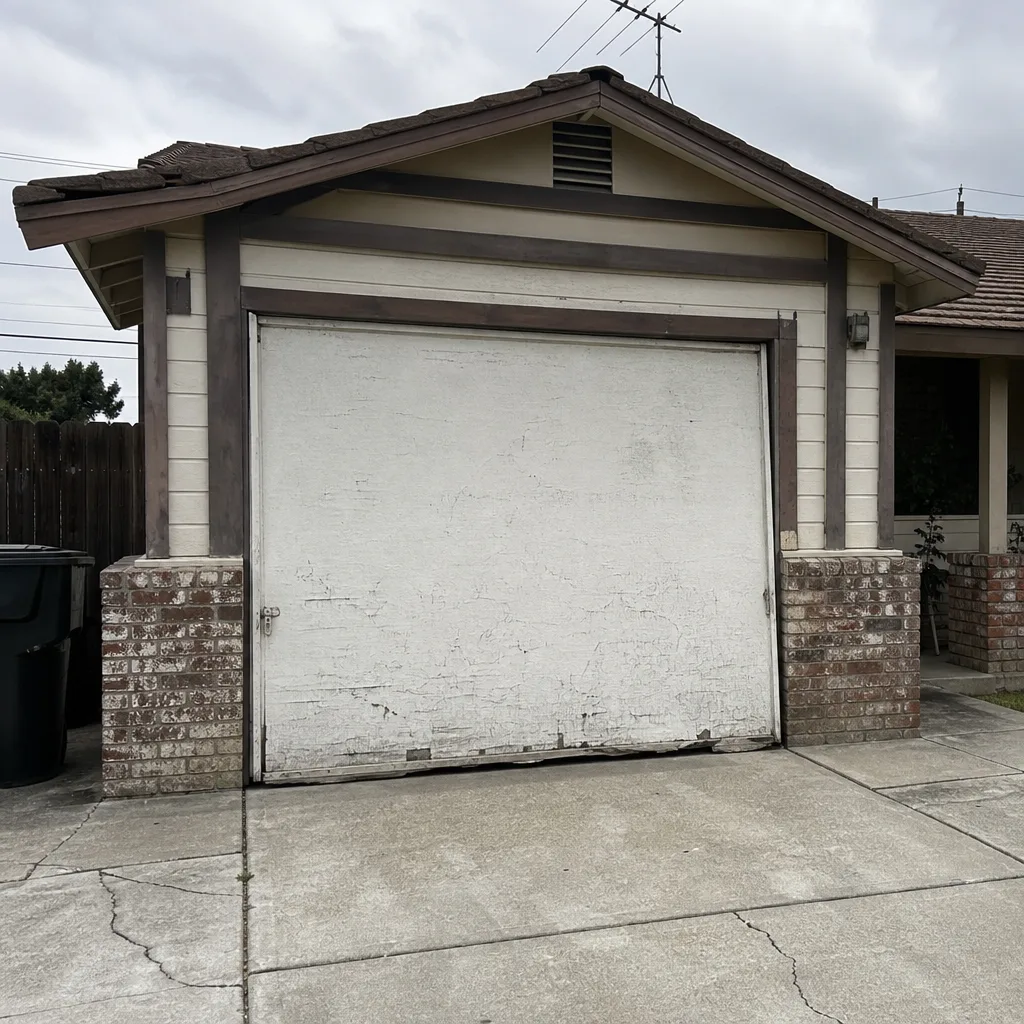 Before
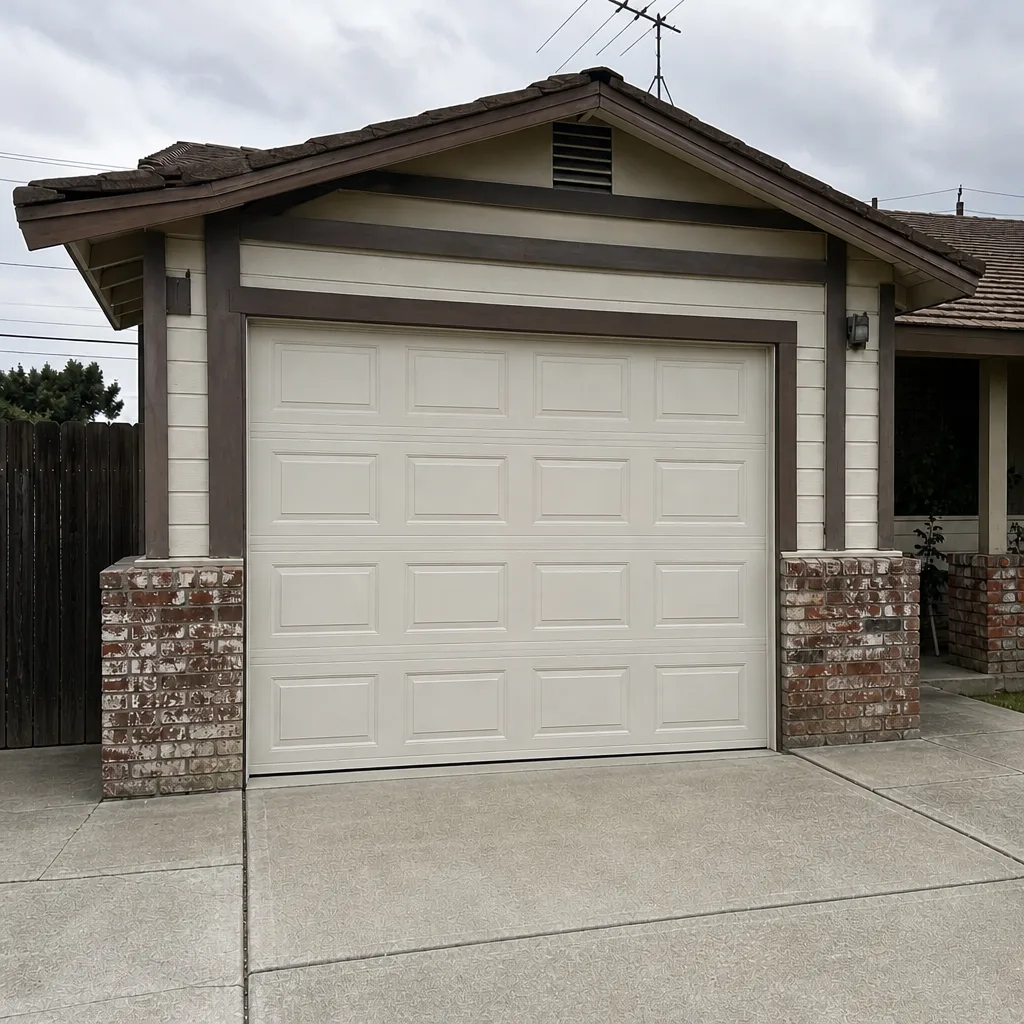 After
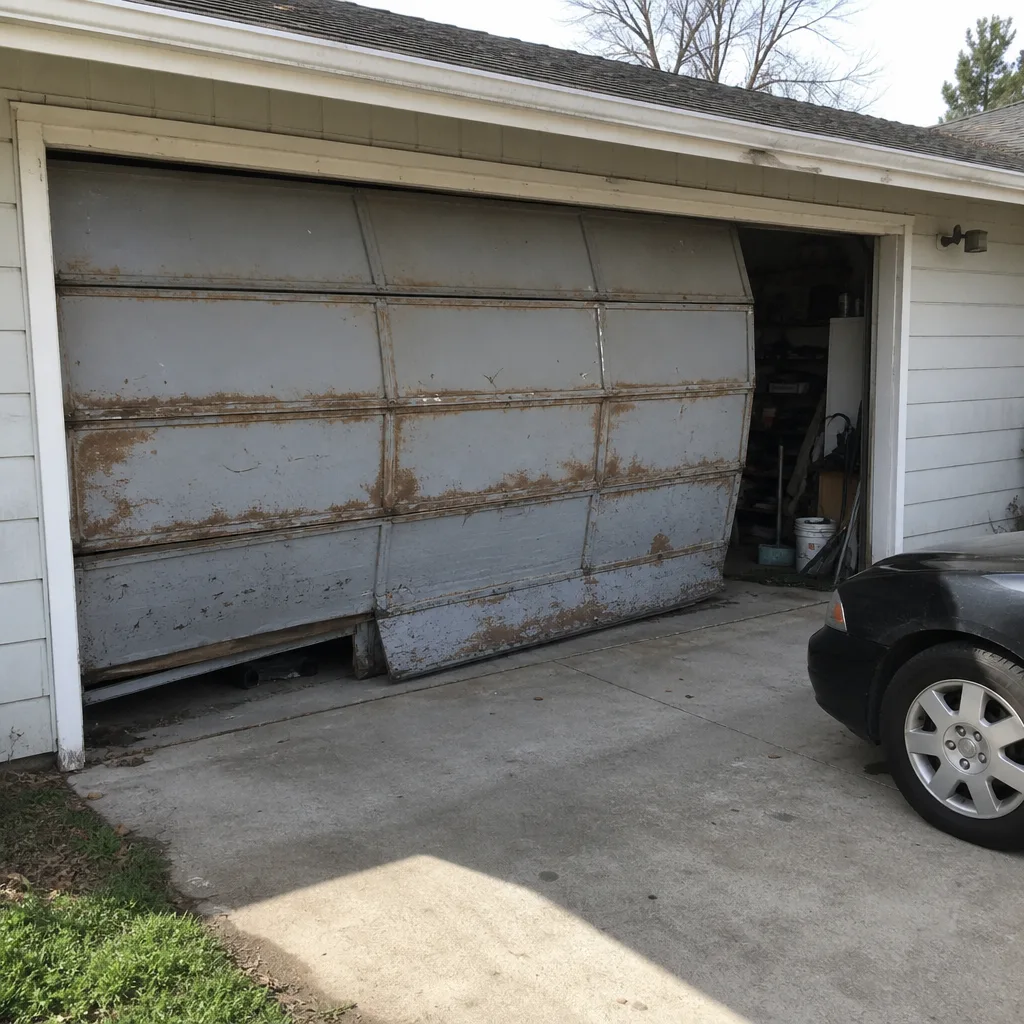 Before
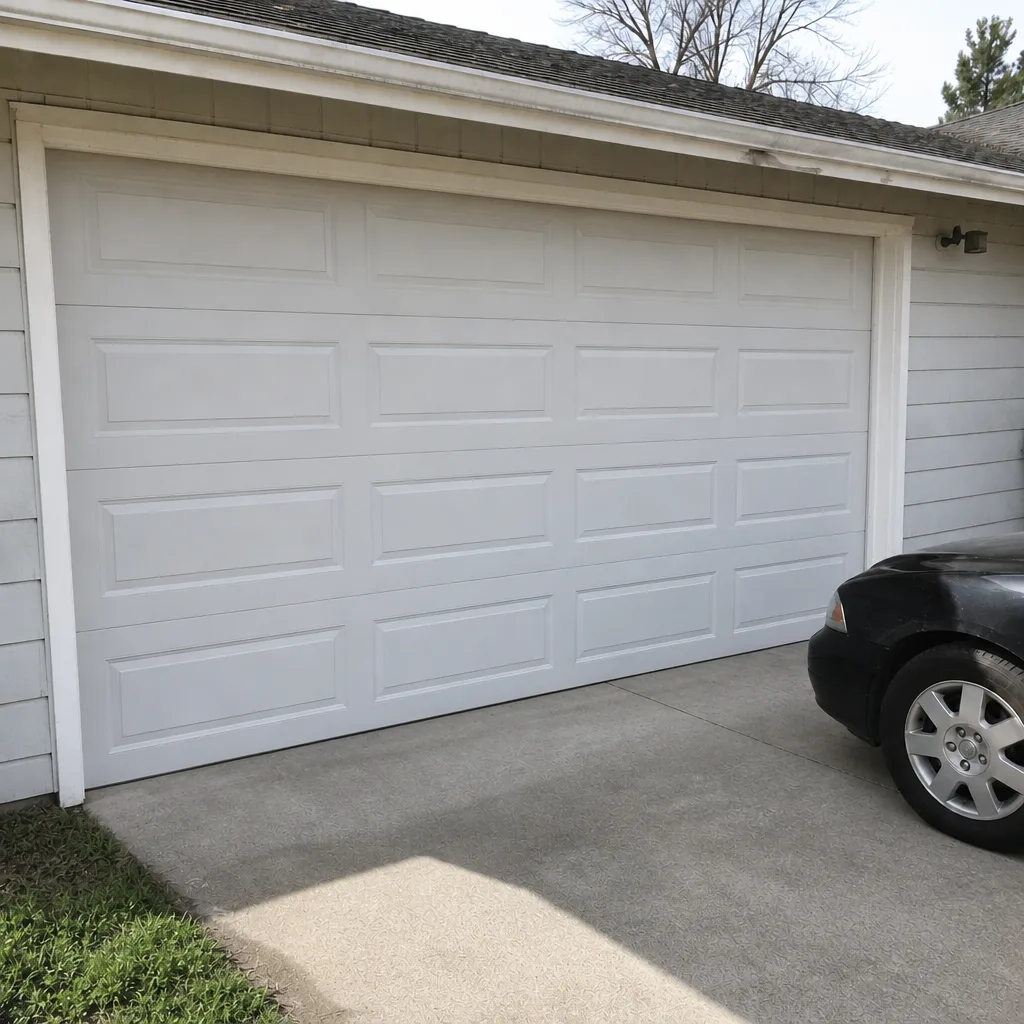 After
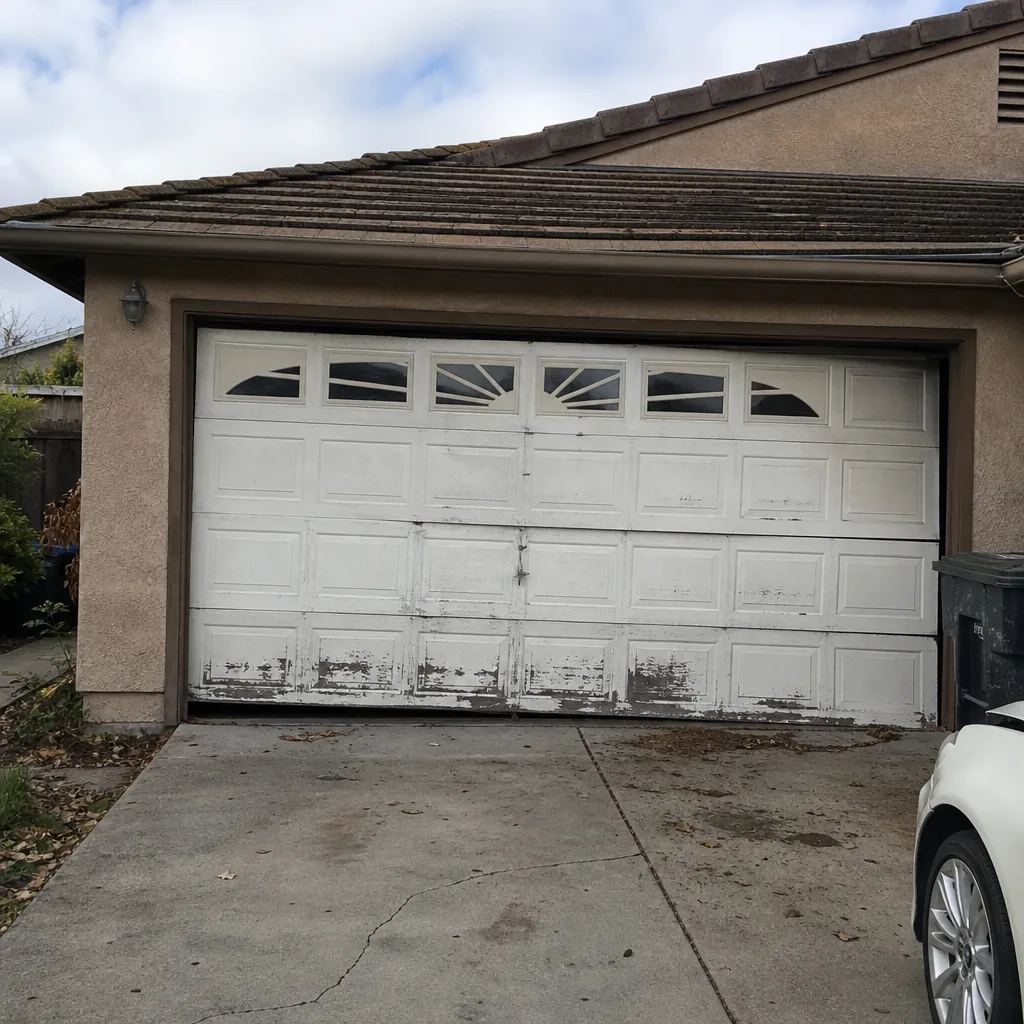 Before
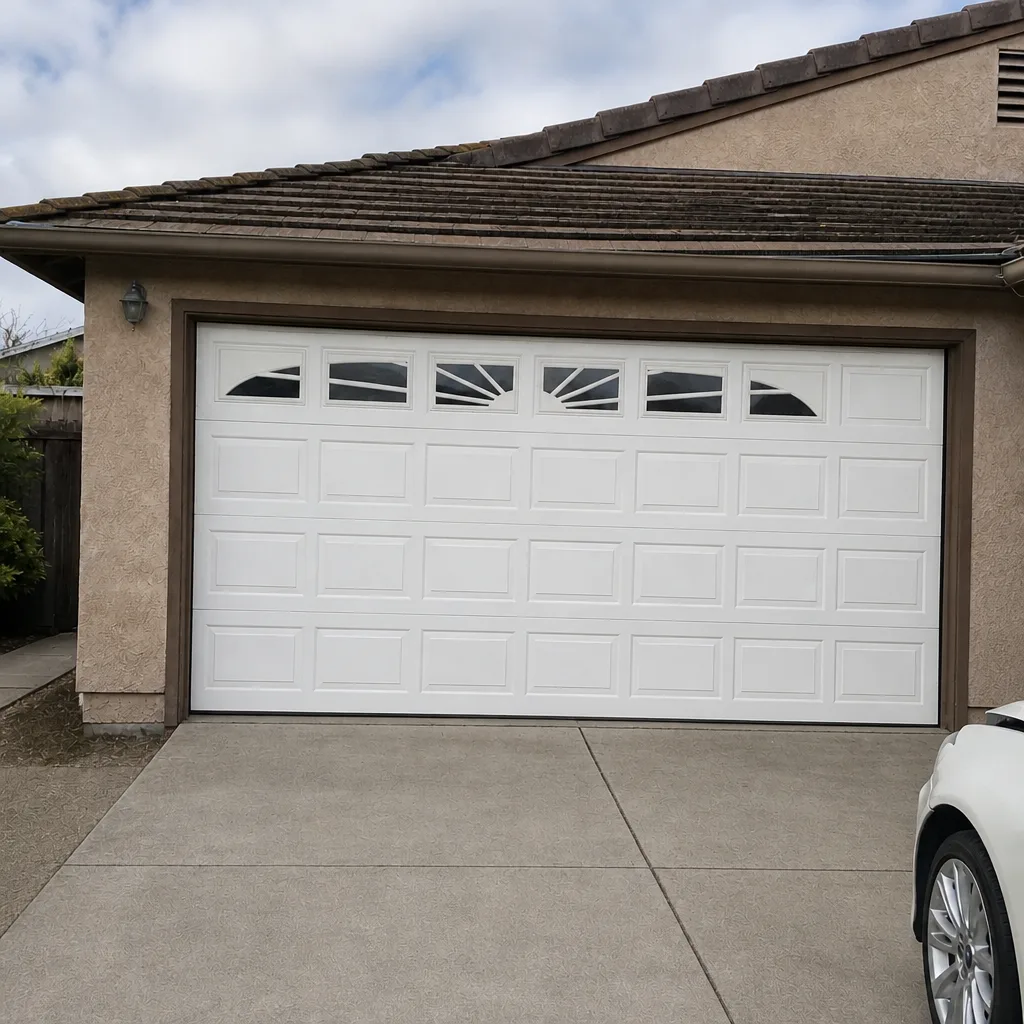 After
Common Mistakes to Avoid
These come up repeatedly in the trade, and each one costs more than it saves.
- Using WD-40 or household oil on hinges and rollers. These attract grit and gunk over time. Garage-door-specific lubricant is white or clear and doesn’t collect dust. Two cans a year cost less than a roller replacement.
- Skipping October because the door “feels fine.” In Modesto’s climate, the swing from 90°F to 35°F can start a spring crack with no audible warning. The door runs fine until it doesn’t.
- Ignoring a small chip on a steel panel. That chip is a rust start point in fog season. A dab of touch-up paint in November is easy. A panel replacement in March is not.
- Forcing a jammed door with the opener. If the door binds, disconnect the opener and inspect. The motor has plenty of force and will happily bend a track or snap a cable while you keep pressing the button.
- Adjusting torsion springs as a DIY project. This is the mistake that puts people in the hospital. Torsion springs hold enough energy to break bones. A trained technician should handle any spring work. The garage door repair page on our site covers which repairs qualify.
- Assuming fog months mean you can skip summer maintenance. Damage often happens in the dry stretch and shows up in the wet one. By the time you see the problem, it started months earlier.
- Not testing the safety reverse. It’s the feature that protects anyone standing under the door. Test it monthly. It takes ten seconds.
When to Call a Professional
Some of this guide is yours to handle. The rest isn’t. Call a trained technician for any of the following: a torsion or extension spring that has broken or looks damaged, a door that comes off its track, an opener motor that runs but doesn’t lift the door, a door that reverses unexpectedly during close, visible dents or bends in a track, a bottom seal that’s separated across most of its width, or any electrical issue with the opener’s wiring. Torsion springs and opener wiring are the two categories where the safety margin for DIY is genuinely thin – trained technicians know how to handle both safely, and that’s a large part of why the trade exists.
Frontline Garage Door Service offers free estimates in Modesto – call (855) 473-8505. We work on the eight major brands, we cover both the door and the opener, and our technicians have up to 10 years of experience. Estimates are free, and we quote and agree on the price before any work starts.
Frequently Asked Questions
The best time is April and May for pre-summer prep, and October for the fall inspection. Those two windows sit on either side of the extreme months and let you catch problems before they compound. A spring found in April is a spring replacement; the same spring left alone through summer and fall can become a broken spring, a dragged opener and a skewed track by January. If you can only schedule one service call a year, October is the one we’d pick for a Modesto home. Book it before temperatures start to swing.
Every 6 to 8 weeks during summer, and every 2 to 3 months the rest of the year. Modesto’s sustained 95 – 110°F days break down lubricant faster than most climates, so an April lubrication isn’t enough to carry through August. Use a garage-door-specific lubricant on hinges, rollers and torsion bearings, and skip the track entirely since lubricant there collects dirt. Call (855) 473-8505 for a free estimate if the door has started to squeal despite regular lubrication – that usually means a roller or bearing is failing.
Because fall is the transition season. The 50 to 60 degree swing from October’s hot afternoons to cool Tule fog nights stresses the spring metal more than steady heat or steady cold. Cracks that started over summer can propagate in a few weeks of temperature cycling. A broken torsion spring is a same-day repair for a trained technician, and it’s not a DIY job. If you hear a loud snap from the garage, don’t run the opener – call us for a free estimate first.
Tule fog brings days of high humidity to Modesto, and if your garage is attached, condensation builds on the coldest surfaces – the door panels, the concrete, the bottom seal contact points. The main effects are rust starting at any panel chips, stiff bottom seals that leave gaps, and damp hinges that grind. The countermeasure is pretty simple: keep the bottom seal in good contact, touch up steel chips before fog season, and wipe down the tracks and hinges when you see moisture building up. A fall inspection catches most of the problems before they start.
It depends on the door. Many newer Clopay, Amarr and Wayne Dalton doors use a slide-in seal that a homeowner can replace with basic tools. Older doors with retaining channels, doors where the seal is glued on, and doors with rusted or bent retainers are better handled by a technician. The tricky part is confirming the seal actually contacts the floor evenly across the width of the door; if the floor is uneven, a plain seal replacement won’t do the job and you need a threshold or a thicker seal. A free estimate will tell you which side of that line you’re on.
Not really, with one addition. The mechanical care – lubrication, seal checks, spring inspection – is identical. What’s different on a LiftMaster, Chamberlain or Genie smart opener is that the app logs door events, including reversals and force errors. In fall and winter, when temperature swings can make a door heavier, that log will often show a pattern before the door fails outright. Read it once a month and treat repeated reversals as a signal to get an inspection. Call (855) 473-8505 for a free estimate if you see odd patterns in the app.
The Bottom Line
Seasonal care for a Modesto garage door comes down to a few things. Respect the shoulder seasons – April and May for prep, October and November for inspection – because those are where the real damage happens. Monitor through summer with regular lubrication and seal checks, since heat is the slow-burn problem. Control moisture through fog season and you’ll stretch the life of the door’s rubber and steel. Never touch a torsion spring yourself; that’s a trained-professional item even in mild climates. Get the safety reverse tested regularly. Do those things and the door you have today is likely the door you’ll have in five years.
If any part of your door or opener needs attention, or if you’d just rather not climb the ladder, call (855) 473-8505 for a free estimate from Frontline Garage Door Service. Fast dispatch from 7am to 7pm, Sunday through Friday, and we answer 24/7. Our technicians have up to 10 years of experience, and we quote and agree on the price before any work starts.
Written by the team at Frontline Garage Door Service.