
Last updated November 15, 2026
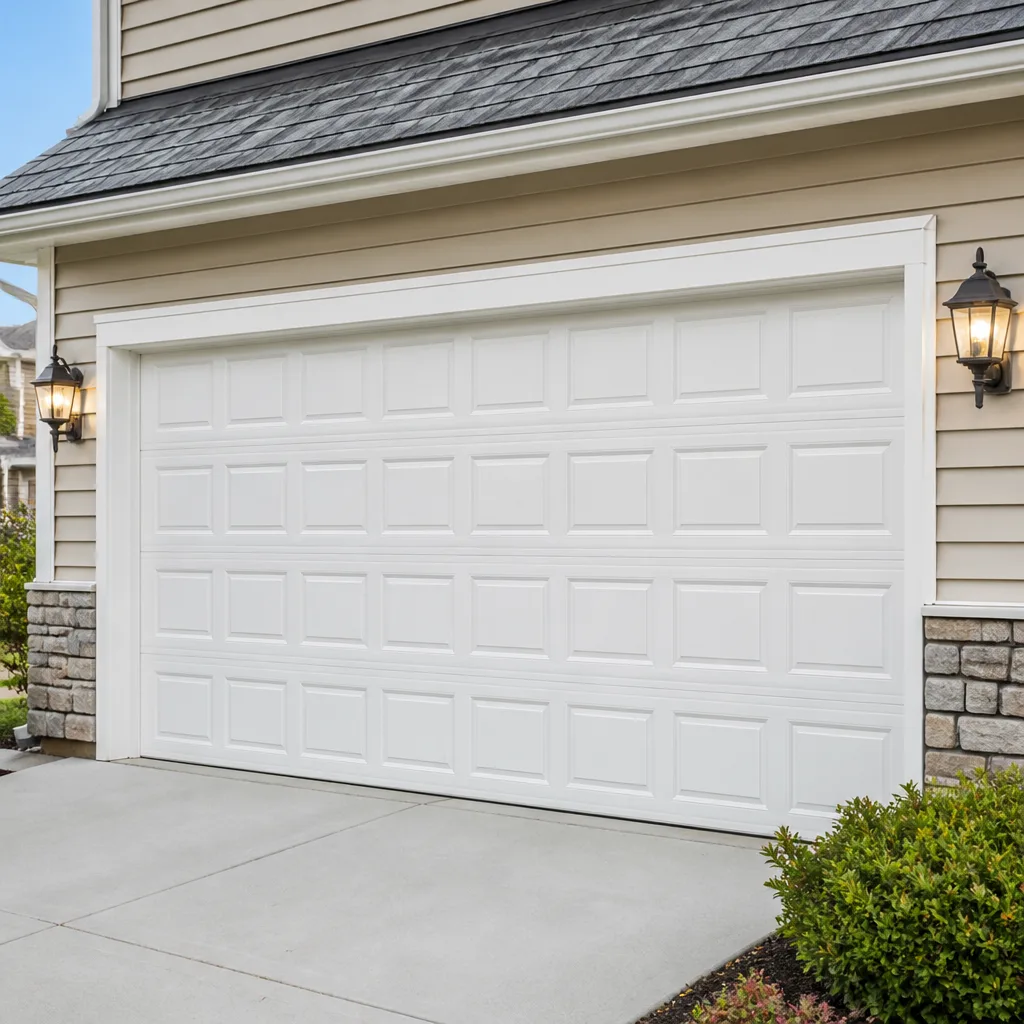 Raised-panel steel
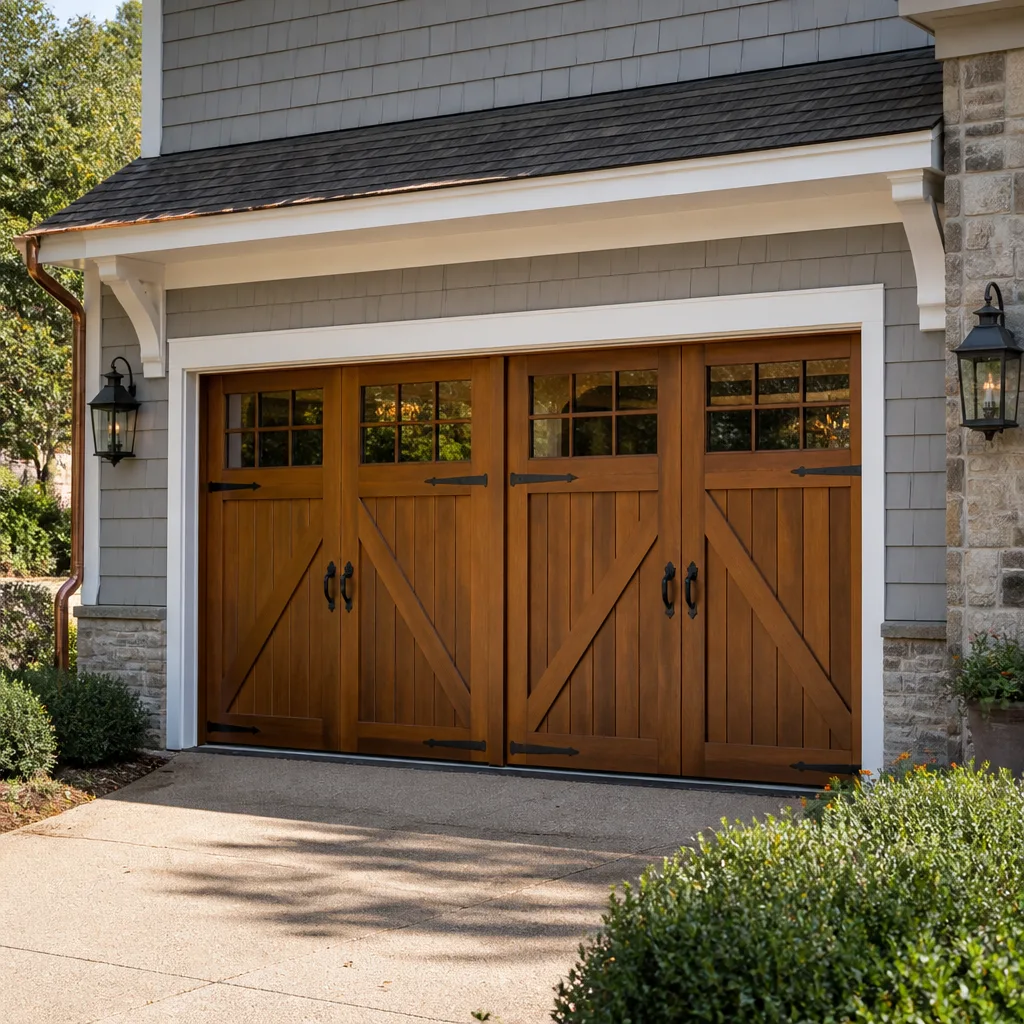 Carriage house
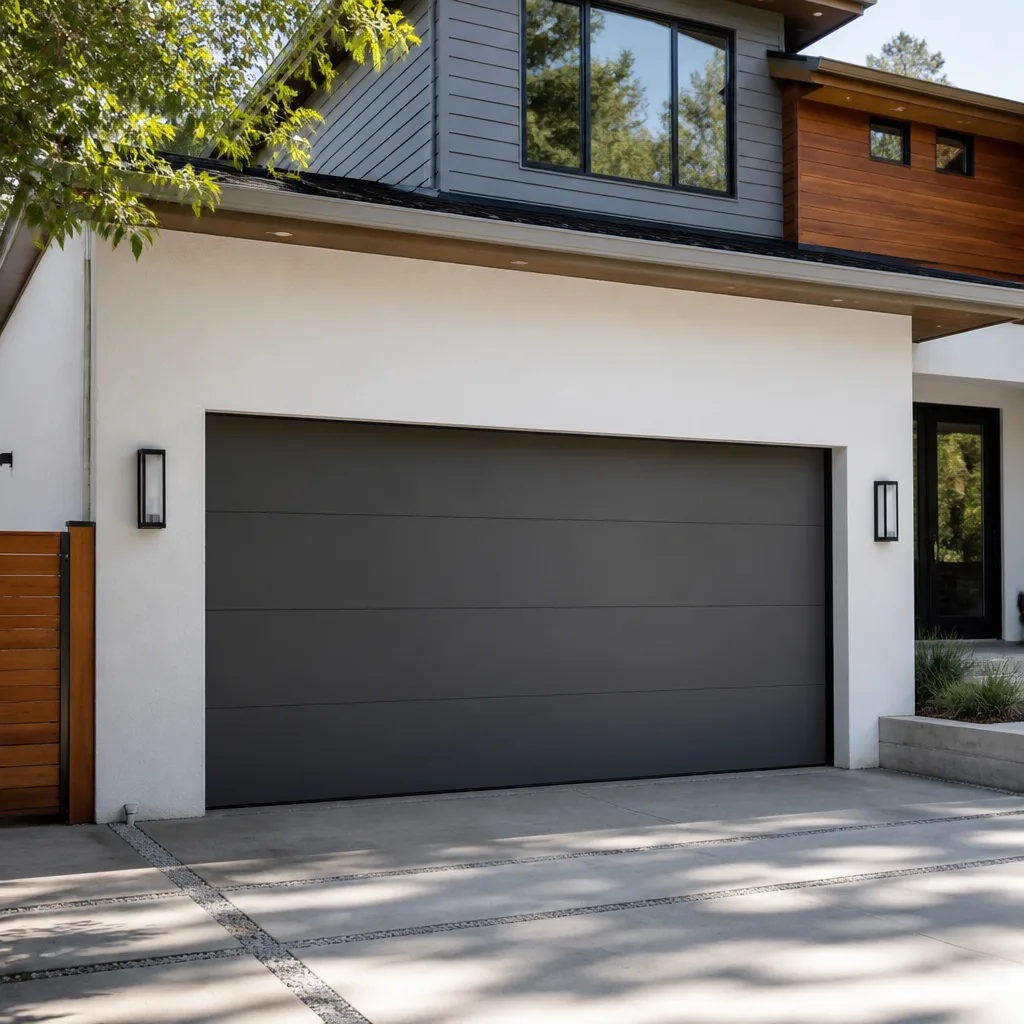 Modern flush
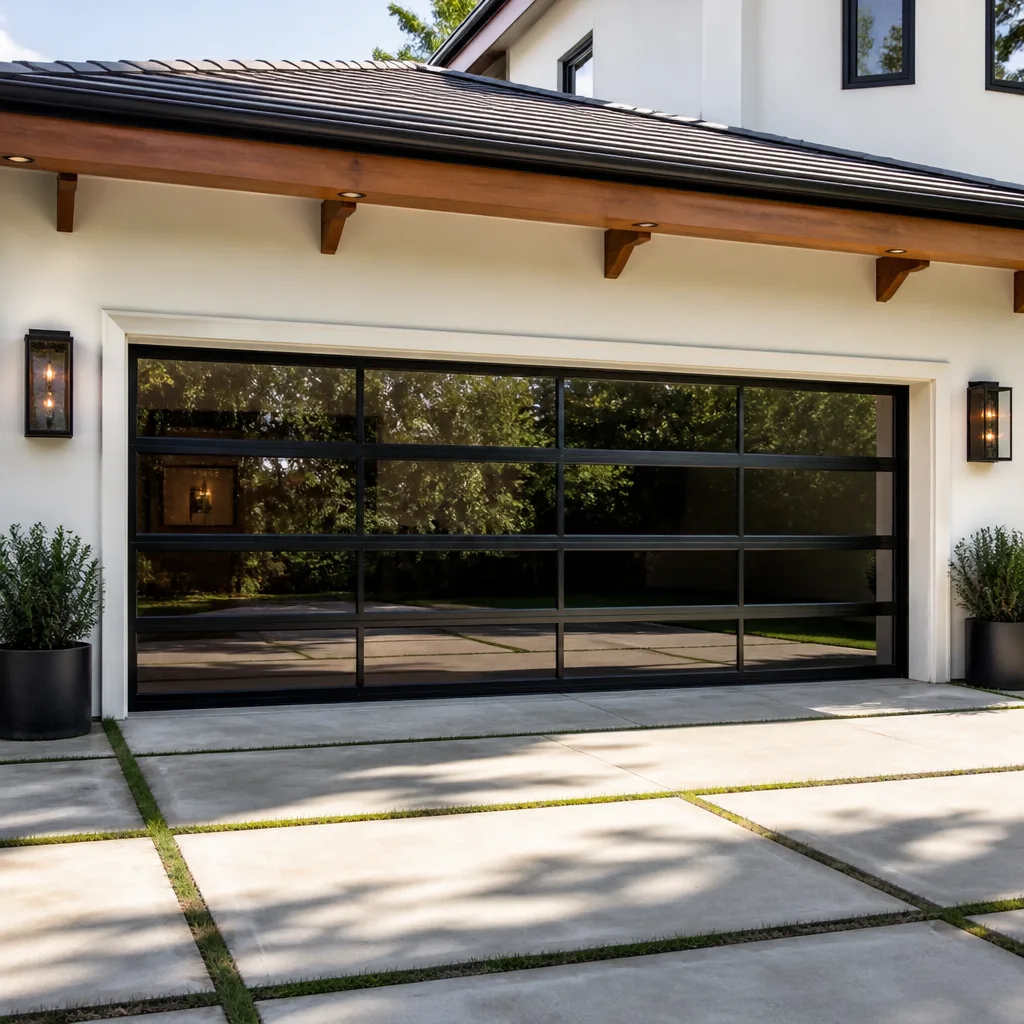 Full-view glass
 LiftMaster openers
 Chamberlain openers
Full 25-point door and opener safety check with every visit - springs, cables, rollers, tracks, and your LiftMaster or Chamberlain opener included
You get a price before we start. It does not change when the pro arrives.
Get your free estimateHow to Hire a Garage Door Contractor in Modesto: A Step-by-Step Guide
Most homeowners in Modesto screen a garage door contractor the same way they’d pick a restaurant: a quick look at the website, a phone call, and whoever sounds friendliest gets the job. That’s backwards. Garage door work is licensed contracting in California, and a garage door is a heavy, spring-loaded machine that can injure someone badly when it’s adjusted wrong. The friendliest voice on the phone tells you nothing about whether that person can legally pull a permit or knows how a Clopay door pairs with a LiftMaster opener. This guide walks you through the actual screening process: how to check a license in under a minute, what a real written estimate itemizes, which questions expose a generalist, and which red flags mean you walk away.
Quick Answer
To hire a garage door contractor in Modesto, verify the contractor’s C-61/D28 or B license through the California Contractors State License Board before anything else, ask what brands they’re certified to service, and insist on a written estimate that itemizes parts by model number, labor, and warranty. Skip anyone who quotes a firm price over the phone without seeing the door, demands cash, or can’t produce a physical address. The written estimate is what you hold them to.
Styles & brands we work with
- Raised-panel steel
- Carriage house
- Modern flush
- Full-view glass
- LiftMaster openers
- Chamberlain openers
Table of Contents
- Why California Licensing Changes Everything About This Hire
- How to Verify a Contractor’s License in Under 60 Seconds
- Specialist vs. Handyman: Why the Difference Shows Up Later
- What a Real Written Estimate Should Itemize
- Red Flags of Low-Bid Garage Door Operators
- Questions to Ask About Brand Certifications and Parts
- What’s Different About Hiring in Modesto
- Common Mistakes to Avoid
Why California Licensing Changes Everything About This Hire
In California, a contractor performing garage door work on a job priced over $500 is legally required to hold either a C-61/D28 license (the specialty classification that covers garage door installation and repair) or a general B license. That’s not a technicality. It’s the single fastest filter you have, and most homeowners never use it. Plenty of operators working across Modesto don’t hold either license, and the door they install still looks fine on day one.
The license matters because it’s attached to a legal entity that can be held accountable. A licensed contractor carries a bond and workers’ compensation coverage as a condition of licensure, and the CSLB maintains a complaint and discipline record you can look up. When something goes wrong six months after a spring swap, the license is what gives you a path forward beyond a phone number that stops working.
Specialty classification matters too. A C-61/D28 contractor’s entire licensed scope is garage doors and similar installations. A general B contractor can legally take the job but may not specialize in it. Neither is automatically better for your situation, but you should know which you’re hiring and why. If a contractor can’t tell you their classification without looking it up, that’s information.
The license requirement applies to almost every meaningful garage door job. A full new door for a Modesto home, a torsion spring replacement on a double-wide, a smart opener installation with new wiring: all of these clear the $500 threshold. The exception is small repairs, so a homeowner with a bent hinge might see unlicensed operators working legally. That doesn’t make them a good choice for anything bigger, and the same operator will happily quote a full job tomorrow.
How to Verify a Contractor’s License in Under 60 Seconds
The CSLB runs a free public license lookup at cslb.ca.gov, and checking a Modesto contractor through it takes less time than reading their reviews. Here’s the exact sequence.
- Ask for the license number in writing. Any licensed contractor gives it without hesitation. Get it in a text or email so you have a record.
- Open the CSLB license lookup. Search by license number, not by business name. Names get reused; numbers don’t.
- Check that the status reads “Active.” Suspended, expired, or “licensee not found” means stop. That’s the whole test.
- Confirm the classification. Look for C-61/D28 or B, and check that the classification matches the work you’re asking for.
- Read the complaint history. A single old complaint isn’t disqualifying. A pattern of them, or an unresolved one, deserves a hard look.
- Confirm the business name and address match. The license should list the same business entity that’s quoting you. If the name on the license is different from the name on the truck and the estimate, ask why.
While you’re in there, confirm the contractor carries the bond and workers’ compensation coverage required for licensure. If they’re exempt from workers’ comp because they have no employees, the record will say so. That’s a legitimate status, but it means anyone helping on your job is either the owner or an uncovered worker, which is worth knowing before someone gets hurt on your property.
This step also weeds out the operators who claim to be “licensed and insured” without specifying either. Ask for the license number and a certificate of insurance separately. Any contractor who’s genuinely covered sends both without a fuss.
Specialist vs. Handyman: Why the Difference Shows Up Later
A handyman with a garage door on their service list and a garage door specialist can both replace a spring. The difference shows up a month later, when the door is out of balance, the opener is straining against a drum wound to the wrong tension, and the handyman’s number is going to voicemail. Garage doors are a system, and the parts within that system are matched to each other.
Here’s what a specialist brings to a Modesto driveway that a generalist usually doesn’t:
- Correct tensioning on the first visit. Torsion springs are wound by the number of turns to match door weight. Getting it close isn’t the same as getting it right, and a mismatched spring accelerates wear on the rest of the system.
- Parts sourcing from the manufacturer. A certified Clopay or Amarr dealer orders from the brand’s parts network, which means the replacement matches original specs. A handyman sources what’s available, and compatibility gaps show up in noise, balance, and premature failure.
- Opener expertise alongside door expertise. A modern Chamberlain or Genie opener has force limits, travel limits, and safety sensor alignment that have to be set specifically for the door hanging on them. Someone who installs both sides of the system sets them together.
- A warranty that means something. Manufacturer warranties on doors and openers often depend on professional installation and correct setup. A skilled install holds that coverage intact.
There’s also a diagnostic angle. When a door won’t close, a specialist hears the problem and knows the likely culprit in the first thirty seconds of looking. A generalist troubleshoots from the ground up. Both eventually find it, but one charges you for the search.
The practical test is simple. Ask what brands they’re certified to service and what they’d check first on a door that reverses before it hits the floor. A specialist answers both quickly and specifically. Given that Frontline Garage Door Service works on LiftMaster, Chamberlain, Genie, Clopay, Amarr, Wayne Dalton, Craftsman, and Raynor systems, we can speak to this directly. Garage doors are all we do, and that single-trade focus is the whole reason we can answer those questions without looking them up.
What a Real Written Estimate Should Itemize
A vague quote is not an estimate. A firm number handed over before anyone has looked at your door isn’t one either. A legitimate written estimate in Modesto should show you exactly what you’re buying before you agree to anything, and it should be the price you’re held to. Pricing is set per job, in writing, before work starts.
Here’s what a real estimate itemizes:
- Parts by model number and quantity. Two torsion springs should read as two specific springs with a part number, not “springs.” A new Clopay door should name the model and size. An opener should name the model and note whether rail and hardware are included.
- Labor as a line item. Whether it’s a flat labor charge or an hourly rate, it should be separate from parts so you can see what you’re paying for what.
- Disposal and haul-away. A new door job produces a large amount of old steel, and whether that’s included or extra should be spelled out.
- Any needing-ordered items and lead times. Custom-size doors and some opener models have to be ordered. The estimate should say so, along with the expected timeframe.
- Warranty terms on parts and labor separately. Manufacturer warranty on parts, contractor warranty on installation. Both should be in writing, with durations stated.
- What triggers a price change. Some jobs reveal rotted framing or damaged tracks once the old door comes down. A good estimate says what happens if the job turns out to be bigger than it looked, so you’re not surprised by a renegotiation mid-job.
What a designed-to-obscure quote looks like: a single all-in number with no breakdown, one line that says “repair garage door,” or a quote that expands substantially once the technician is in your driveway. The last pattern is the classic bait-and-switch. If the written estimate has no itemization and no warranty terms, keep looking.
Free estimates are the norm for this trade, and you should get the estimate before work starts, not after. That’s the process here: we look at the door, write the estimate, you agree or you don’t, and the price in writing is the price.
Red Flags of Low-Bid Garage Door Operators
Low-bid operators survive on one thing: the homeowner compares numbers instead of comparing terms. A price that looks like a deal in the asking often isn’t one once you compare what’s actually included. These are the red flags we’d want a family member to walk away from.
Firm phone quotes with no visit. A door’s spring size, track condition, and opener capability can’t be assessed over the phone. A contractor who names a firm price without seeing the door either plans to revise it upward on site or is guessing. Neither is your problem to solve.
No physical address. A legitimate licensed contractor has a business address listed with the CSLB. An operator who gives only a mobile number and a first name has no storefront, no license record to check, and nowhere to go if the work fails.
Cash-only demands. This is a red flag for both tax avoidance and the absence of a paper trail. Licensed contractors take checks and cards, write receipts, and invoice. If cash is requested and the operator won’t produce a written estimate, there’s no record of the transaction to hold them to.
Spring pricing that changes on site. The classic pattern: a very low quote to get in the driveway, then “the springs are worse than we thought” and a much larger invoice. Springs are cheap and predictable. A legitimate estimate names them upfront.
Pressure to decide now. “This price is only good today” is a sales tactic, not a service policy. Legitimate contractors don’t need manufactured urgency to win a job.
No answer on warranty. “We guarantee our work” without specifics isn’t a warranty. Ask for the durations in writing, and if the contractor can’t produce them, there’s nothing to hold up.
Questions to Ask About Brand Certifications and Parts
Brand certification sounds like marketing until you understand what it does. A certified dealer or authorized servicer has access to the manufacturer’s parts network, technical bulletins, and warranty procedures that a generalist doesn’t. It’s the difference between ordering the right part the first time and calling around for a compatible replacement.
Ask these questions on the initial call:
- Which garage door and opener brands are you certified or authorized to service? You want specifics, not “all of them.” A certified LiftMaster service provider has different access and accountability than a company that “works on LiftMaster.”
- Do you handle both the door and the opener? This matters beyond convenience. Door and opener are tuned to each other during installation and repair, and a company handling both sides avoids the handoff to a second specialist.
- Where do replacement parts come from? Original manufacturer or aftermarket? Both can be legitimate answers, but you should know which one is being installed on your door and why.
- Which brands are covered under warranty? If a manufacturer warranty applies to the parts being installed, confirm what it covers and for how long.
- Are you certified for modern smart opener platforms? A Wi-Fi-enabled opener works differently than a legacy unit, and setup involves more than pairing a phone.
The practical angle is compatibility. If your door is a Clopay and your opener is a Chamberlain, you want a contractor who knows both systems and how they interact. Frontline Garage Door Service handles eight major brands spanning both the door (Clopay, Amarr, Wayne Dalton, Raynor) and the opener (LiftMaster, Chamberlain, Genie, Craftsman), which means a single call covers garage door repair and opener work on the same visit. From the door to the opener, the whole system is on us.
What’s Different About Hiring in Modesto
Modesto’s garage door market has shape that affects how you hire. The city’s housing stock runs older than the state average, and a lot of the doors on homes around the older neighborhoods are decades past their original hardware. That means repairs are more likely to reveal a second problem, and it means the contractor should confirm spring size, track condition, and opener capability before assuming a single swap will fix it.
The climate matters in a smaller way. The Central Valley’s summers are brutally hot and dry, and the winter rain is mild but real. Heat accelerates wear on opener motors and on rubber seals and rollers, and it can dry out springs. Modesto homeowners sometimes find that a spring they replaced a few years back failed again because of how the door’s been used in the hot season. Ask how the contractor handles heat-related wear on older doors, and ask how it affects their estimate of what’s likely wrong.
Modesto is also a market where the general contractor exists alongside the specialist. A homeowner renovating a kitchen may have a general contractor on site who offers to handle the garage door too. That’s fine for a light cosmetic job, but a full door replacement has spring tensioning, track alignment, and calibrated opener force limits to get right, and the generalist on site may not have the tools or the experience for it.
One more local factor: the city’s permit process. Most work on a garage door structure itself, especially a new door on a new opening, needs a permit. The rules vary by project, and asking your city’s building department what applies to your job before signing an estimate is worth the phone call. A licensed contractor can pull the permit if one is needed, and if they can’t or won’t, that’s a signal.
Our team works across Modesto regularly, and we see the same patterns: older springs, heat-worn openers, doors that haven’t been serviced in many years. If you’re looking for the Modesto service side of this guide, we offer free estimates and honest assessments.
Common Mistakes to Avoid
- Comparing quotes without comparing terms. A $300 quote that doesn’t itemize parts or warranty isn’t cheaper than a $500 quote that does. Read both line by line before deciding which one is lower.
- Hiring on price alone. In a city this size, the low bid is often the operator who will call you back mid-job with a bigger number. The written estimate is what protects you, and it’s worth paying a bit more for one that itemizes.
- Skipping the CSLB check. Even homeowners who get a license number often don’t look it up. Sixty seconds at cslb.ca.gov verifies license status and classification, and it’s the most efficient filter available.
- Letting a handyman handle a spring repair. A garage door spring holds dangerous tension. A technician who installs doors regularly knows how to manage it safely. A handyman who mostly does gutters may not.
- Accepting a verbal estimate on a job over $500. California law requires a written contract for most home improvement work over $500, and you want the itemized one anyway. If the contractor won’t put it in writing, don’t proceed.
- Forgetting to ask about warranty terms. “Lifetime warranty” without specifics means nothing. Ask for part warranty, labor warranty, and what happens if the same part fails twice.
- Signing before confirming what needs a permit. Ask your city’s building department directly. A licensed contractor who talks permits openly is a licensed contractor worth hiring.
See the difference
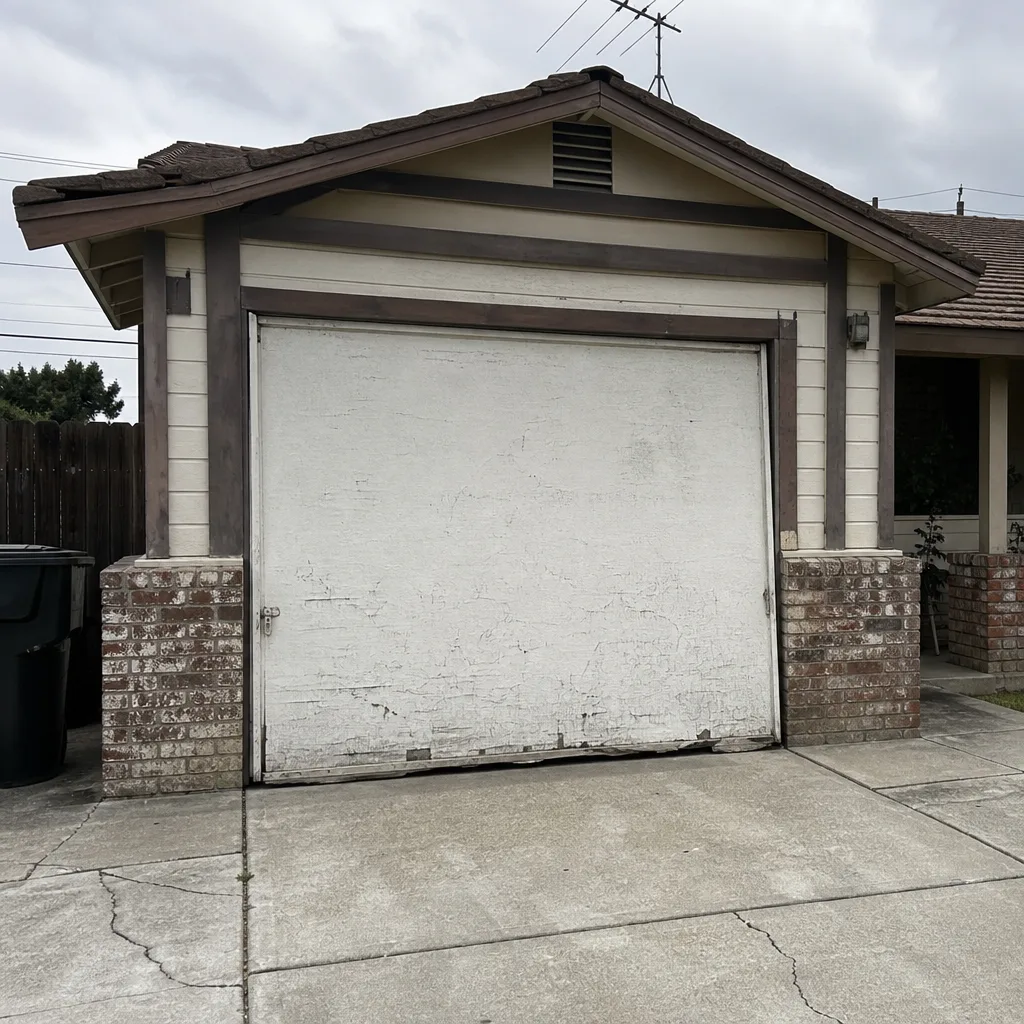 Before
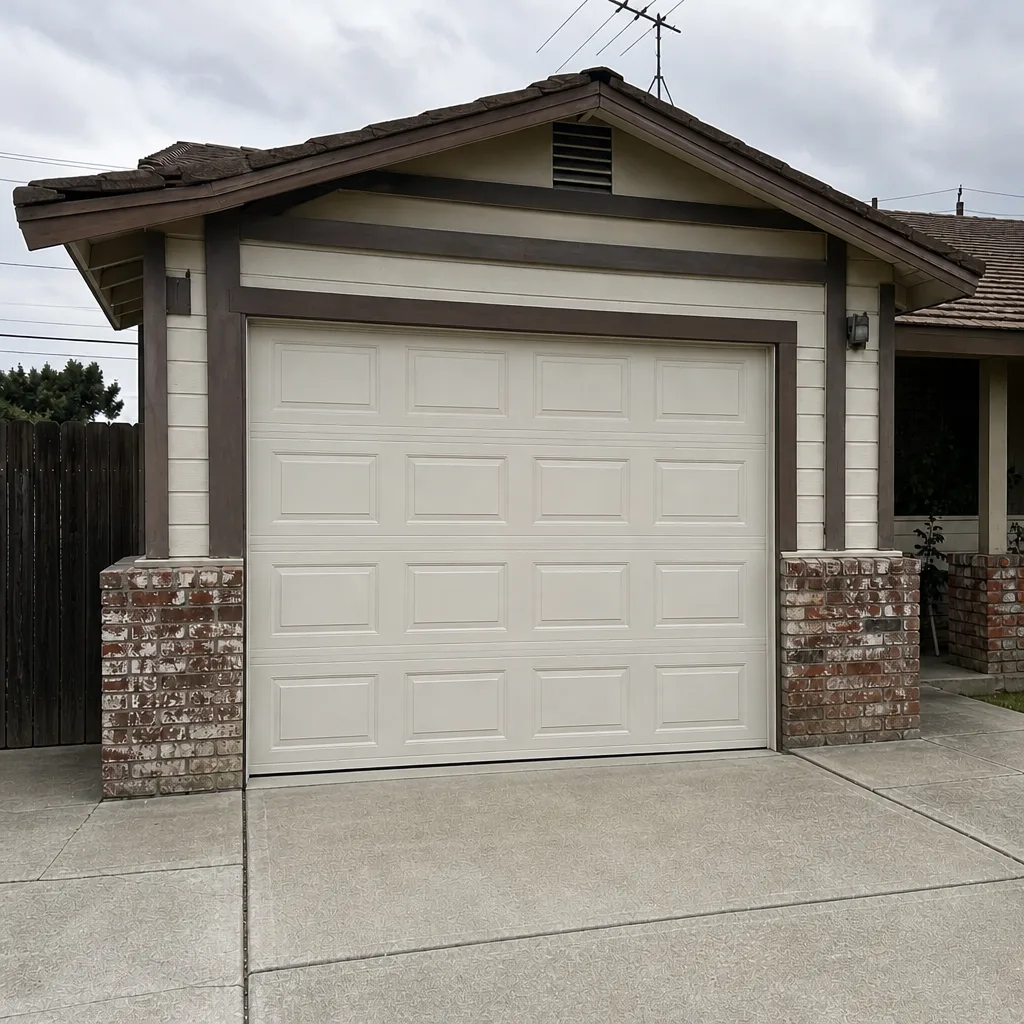 After
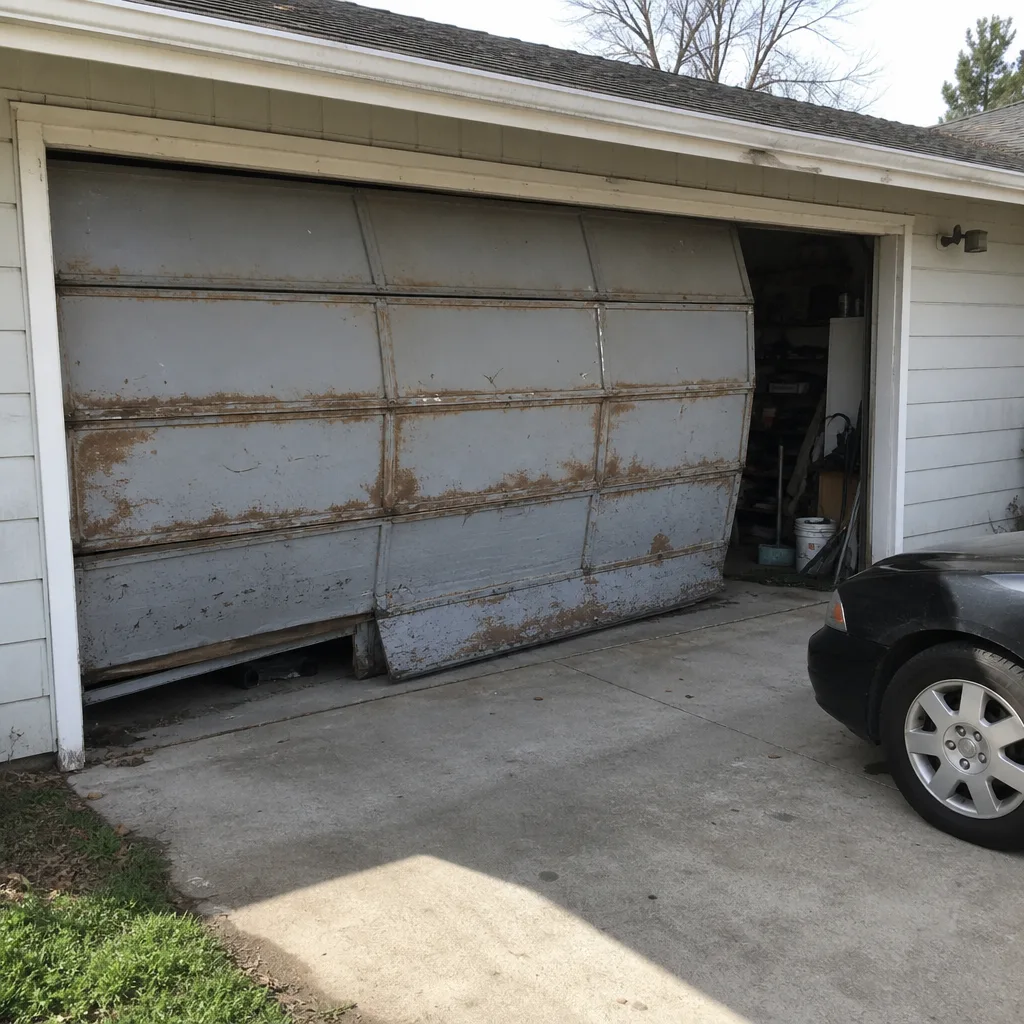 Before
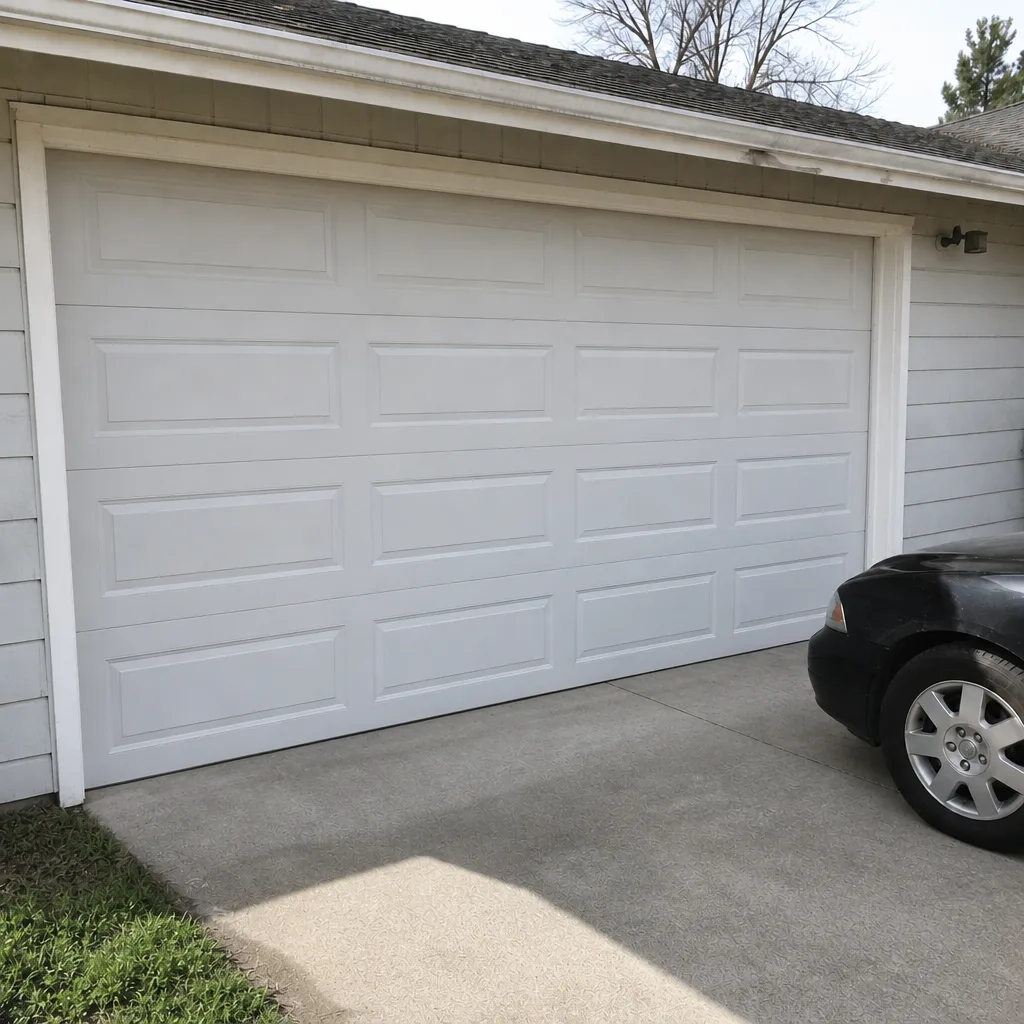 After
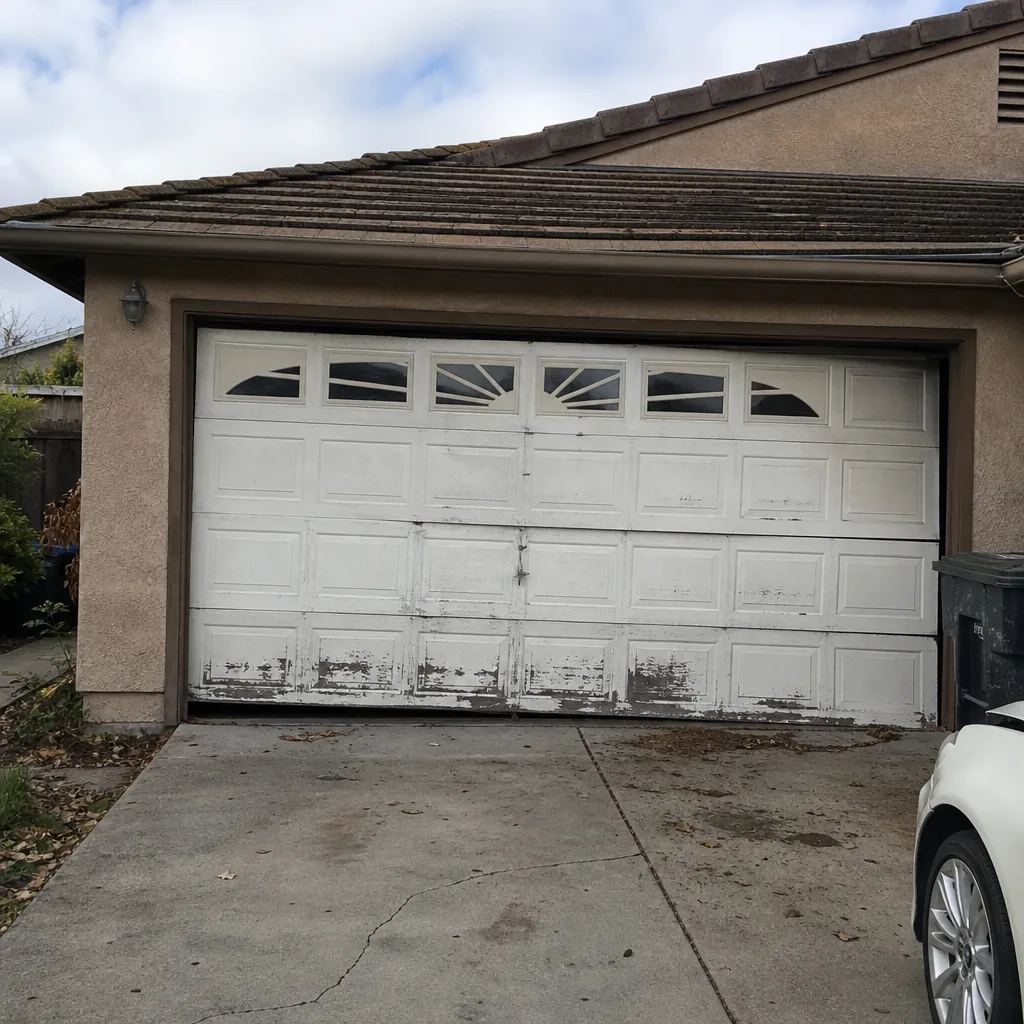 Before
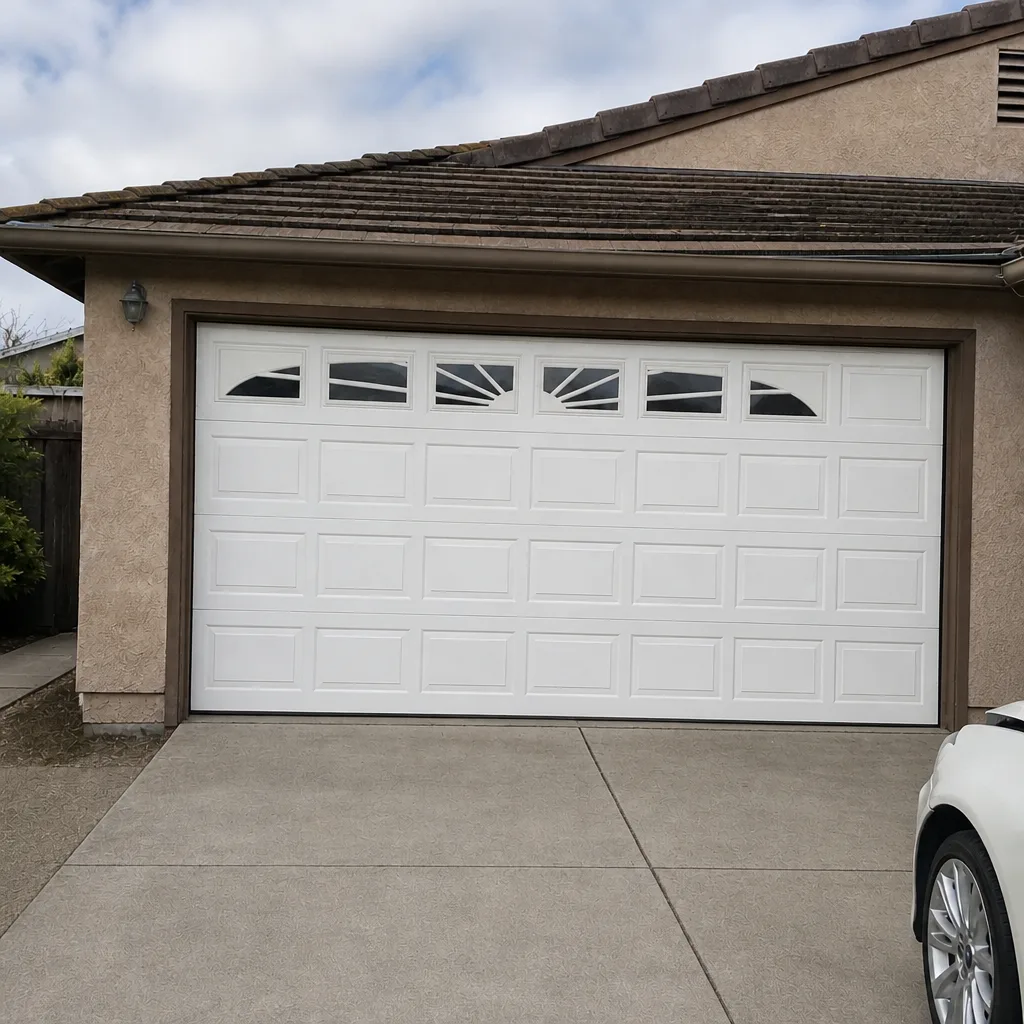 After
When to Call a Professional
Some garage door problems are a nuisance. Others are dangerous or will turn into bigger problems if you leave them. Call a trained technician when a spring snaps or makes a sharp crack, when a door reverses or won’t close all the way, when the opener runs but the door doesn’t move, or when a door comes off its tracks. Springs and cables are under serious tension and aren’t something to handle without training and the right tools. Call us when you need help with the opener side too; garage door opener repair covers everything from force limits to sensor alignment and smart platform setup.
Frontline Garage Door Service offers free estimates in Modesto, and our technicians have up to 10 years of experience. We answer 24/7, and fast dispatch from 7am to 7pm runs Sunday through Friday. Call (855) 473-8505 and we’ll get a technician scheduled.
Frequently Asked Questions
Most repairs fall within a typical range depending on what’s replaced, with spring and opener work usually the highest cost and small fixes like rollers or sensor alignment the lowest. The written estimate is the final price, and a legitimate contractor doesn’t quote a firm number without seeing the door. Call (855) 473-8505 for an exact quote; estimates are free.
Yes. A garage door job priced over $500 requires a licensed contractor holding a C-61/D28 or general B license from the California Contractors State License Board, or a licensed operator working under one. You can verify the license in under a minute at cslb.ca.gov. Any contractor who can’t produce a number should be skipped.
A legitimate written estimate itemizes parts by model number, separates labor, lists warranty terms on parts and labor separately, and states what happens if the job reveals more damage. The price you agree to before work starts is the price you pay. Call us to get an itemized estimate before deciding.
Sometimes. A handyman can handle a bent hinge or a cosmetic issue. Spring replacements, cable work, and opener calibration are a different category: they require knowledge of the door’s tensioning and the opener’s force limits, and getting it wrong is dangerous or damaging. Skip the handyman for anything structural. Call a specialist.
Look for a firm phone quote, cash-only demands, and a single all-in number on the estimate with no breakdown. Those are the markers of an operator who’s planning to charge more on site. A legitimate contractor visits, itemizes in writing, and lets you decide. Call us for a transparent written estimate.
The main differences are housing age and heat wear. Modesto’s housing stock runs older than much of the state, and older doors often reveal more than one issue when work starts. A contractor who confirms spring size and track condition before quoting is the right hire. Call us if you want an estimate that accounts for both.
The Bottom Line
The right way to hire a garage door contractor in Modesto comes down to three checks: verify the CSLB license in under a minute, confirm the contractor specializes in garage doors rather than treating them as a side line, and insist on an itemized written estimate that names parts, labor, warranty terms, and what triggers a price change. Those three steps filter out nearly every problem operator and leave you with a specialist who knows how to set a door and an opener to work together. The written price is the price. If the estimate is itemized and the license checks out, you’re ready to hire. If either one is missing, keep looking.
When you’re ready to talk through your door, our team is here: Frontline Garage Door Service handles repair, opener work, and full new installation, and the phone is always answered. Call (855) 473-8505 for a free estimate. We answer 24/7, and fast dispatch runs 7am to 7pm, Sunday through Friday.
Written by the team at Frontline Garage Door Service.