
Last updated November 15, 2026
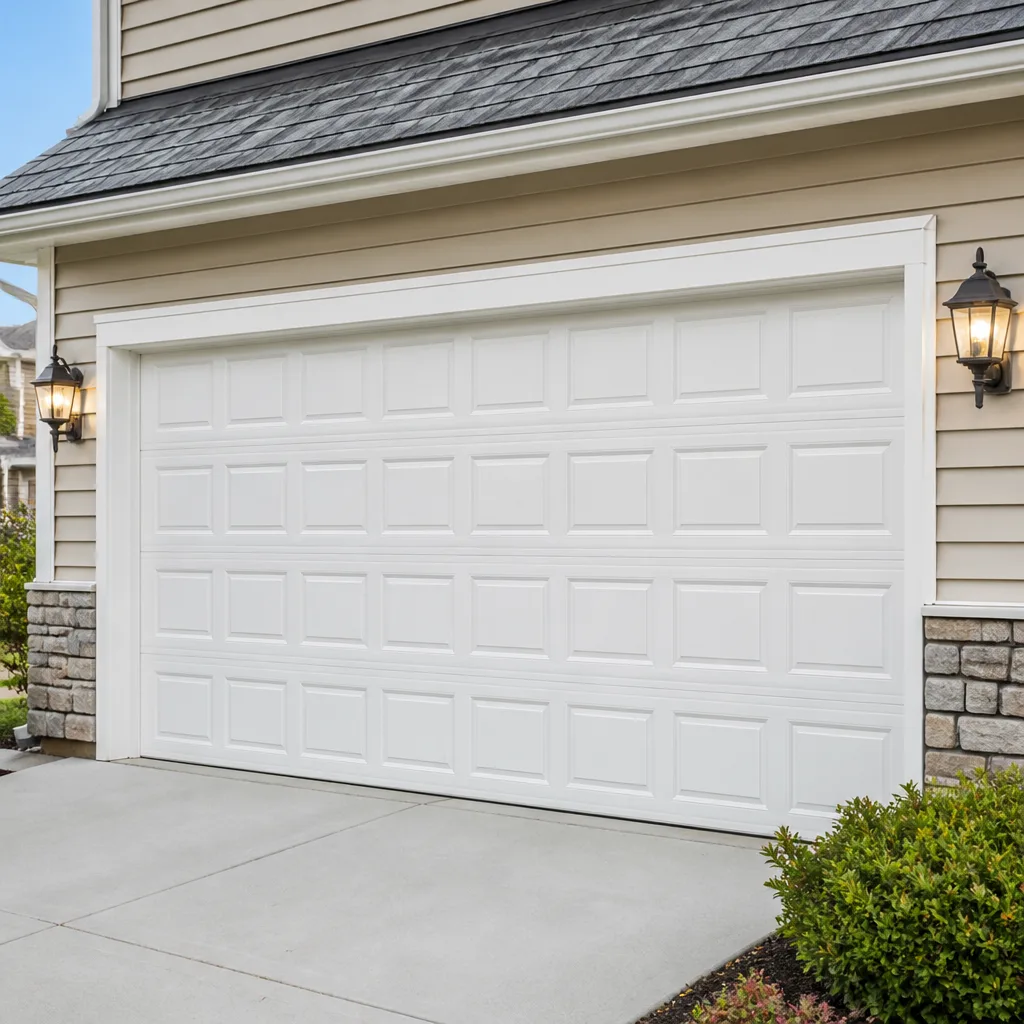 Raised-panel steel
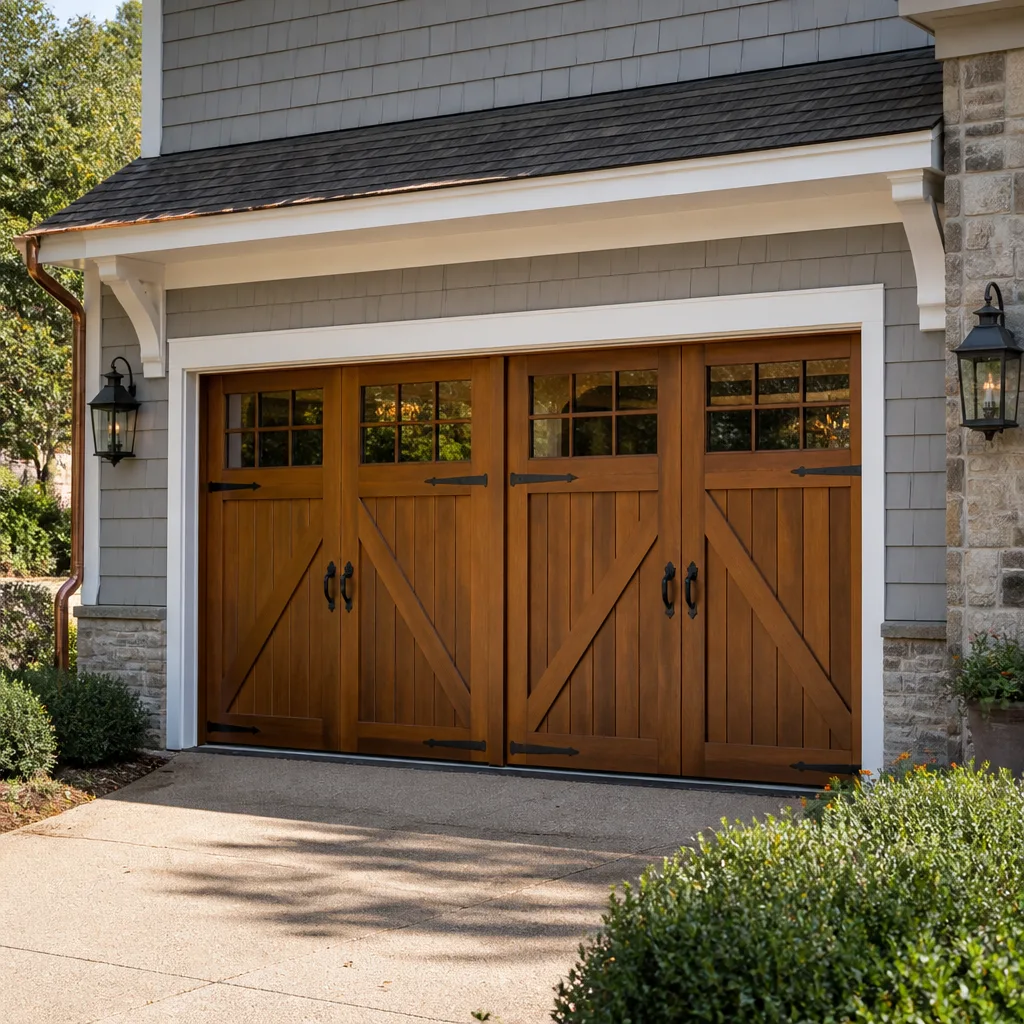 Carriage house
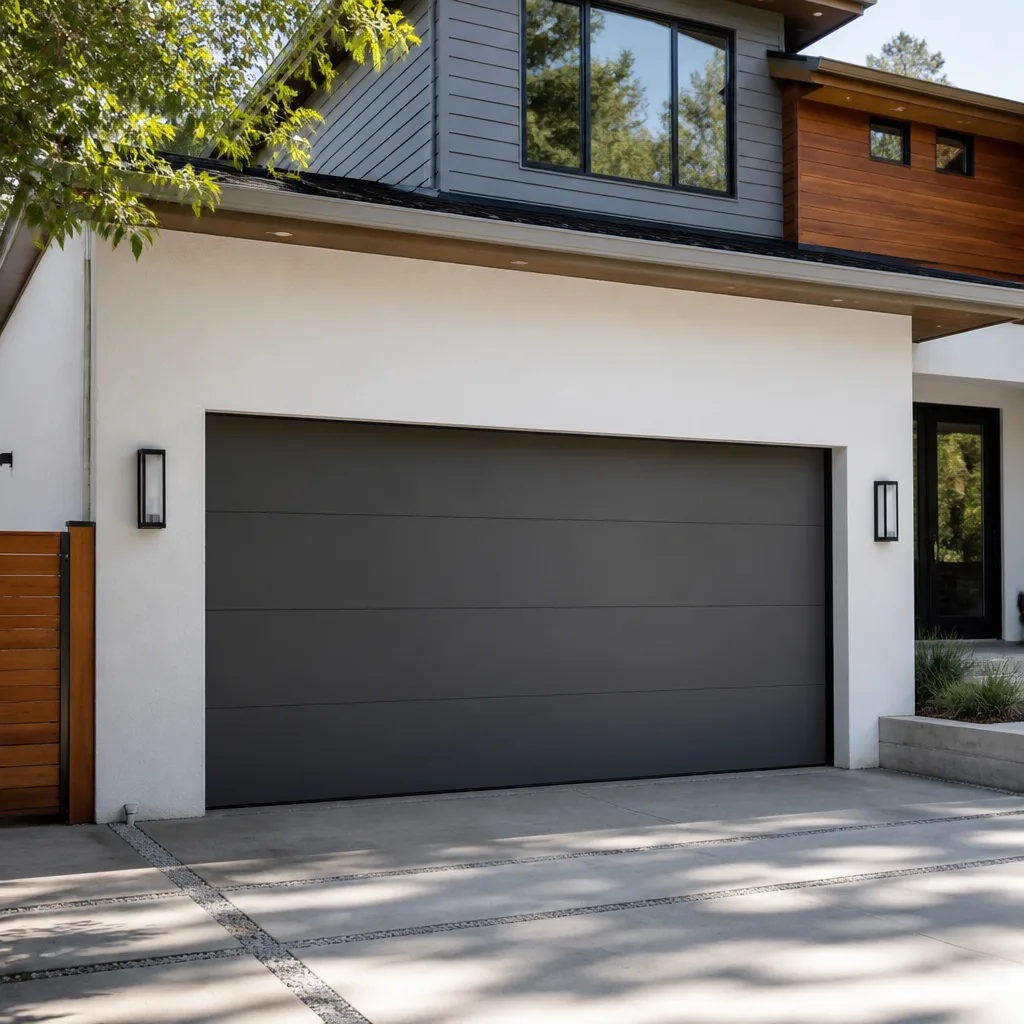 Modern flush
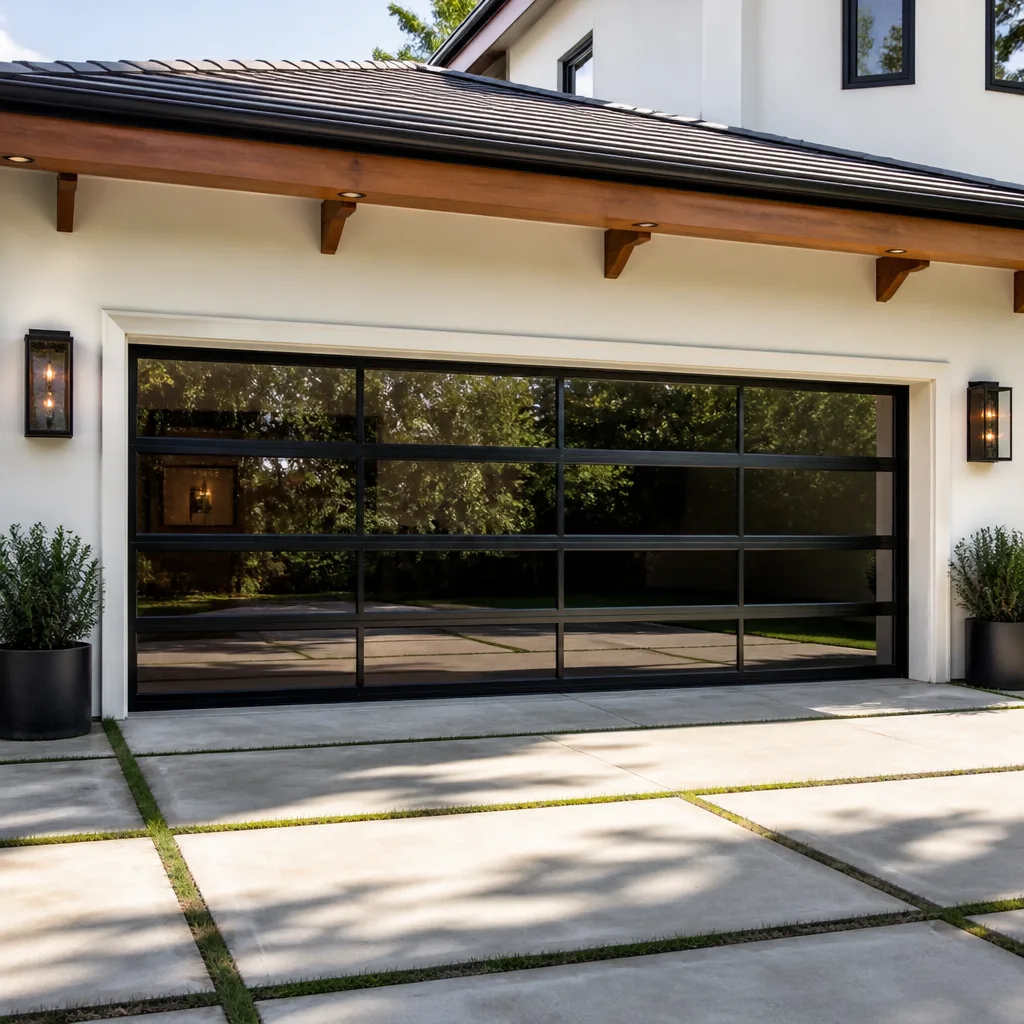 Full-view glass
 LiftMaster openers
 Chamberlain openers
Full 25-point door and opener safety check with every visit - springs, cables, rollers, tracks, and your LiftMaster or Chamberlain opener included
You get a price before we start. It does not change when the pro arrives.
Get your free estimateGarage Door Repair Maintenance Checklist for Modesto Homeowners
Most garage door checklists float around the internet with the same ten tasks in alphabetical order, written as if every door sits in the same climate. That’s not how failure works. On a Modesto door, the parts that give out first are the ones fighting dry heat, dust, and a sun that bakes the west-facing side of a house every afternoon from May through September. Ask any homeowner here what broke and you rarely hear about a random part; it’s the same handful of components, in roughly the same order. This guide ranks the maintenance tasks by how often they actually cause a breakdown in Modesto, so you spend your twenty minutes on the things that matter. We’ll cover the balance test most people skip, which lubricants survive 100°F summers, how to read a weather seal, and what you should never touch yourself.
Quick Answer
The single most valuable maintenance task for a Modesto garage door is the balance test, not lubrication. An unbalanced door forces the opener motor to lift weight the springs should be carrying, and that extra load is the fastest way to burn out a motor. Run the balance test first, lubricate the moving parts with a high-temp lubricant second, and inspect the weather seal and hardware third. Everything else is lower priority.
Styles & brands we work with
- Raised-panel steel
- Carriage house
- Modern flush
- Full-view glass
- LiftMaster openers
- Chamberlain openers
Table of Contents
- Why the Order of Your Checklist Matters in Modesto
- The Balance Test: The Task Most Homeowners Skip
- Lubrication That Survives a Modesto Summer
- Weather Seal Inspection: Reading the Wear
- Hardware, Rollers, and Track: The Monthly Walk-Around
- Opener and Safety Reverse Testing
- What to Log and Hand Off to a Technician
- What You Should Never Attempt Yourself
Why the Order of Your Checklist Matters in Modesto
A garage door is a system of counterbalanced weight, and every part loads the next one. Springs carry the door. The opener moves it. Rollers and hinges guide it. When springs lose tension, the opener absorbs the weight it wasn’t built to carry. When rollers seize, the motor works harder to push the door along the track. When a weather seal fails, dust and grit work their way into the hinges and accelerate wear. The chain reaction runs one direction, and maintenance that follows the chain catches problems before they cascade.
Modesto’s climate accelerates specific links in that chain. Summer afternoons regularly push past 100°F, and a garage facing west can sit hotter than the outside air for hours after sunset because the concrete slab and the door itself hold heat. That sustained heat does two things: it dries out lubricant faster than a mild climate would, and it stresses the torsion springs that do the heavy lifting. Springs under constant heat cycling lose tension gradually, which is why an unbalanced door is often the first symptom of a spring on its way out. The dry air matters too. Wood door panels on older Clopay and Wayne Dalton installations can shrink and crack in low humidity, and steel panels expand and contract enough to loosen fasteners over a few seasons.
That’s why this checklist starts with balance and works outward. Ranked by real failure frequency on Modesto doors, the order looks like this:
- Balance test (catches spring wear before it kills the opener)
- Lubrication of hinges, rollers, and springs (heat dries these out fast)
- Weather seal and bottom astragal inspection (dust intrusion and heat cracking)
- Hardware torque check (loosens with thermal movement)
- Roller and track inspection (seized rollers strain everything upstream)
- Opener safety reverse test (safety, and it flags opener strain)
- Panel and finish inspection (cosmetic and structural)
Work top to bottom and you catch the most expensive failures first. Skip to the bottom and you fix cosmetics while the real problem builds. On a Modesto door, that order saves real money.
The Balance Test: The Task Most Homeowners Skip
The balance test checks whether your springs are still carrying the door’s weight. It takes about two minutes and tells you more about the remaining life of your springs than any visual inspection. Here’s how to run it correctly:
- Close the door fully and pull the red manual release cord to disconnect the opener. The door should now move by hand.
- Lift the door to about waist height (roughly halfway open) and let go. Don’t push it up or down; just release it.
- Watch what happens. A balanced door holds its position or drifts only slightly. A door that sinks to the floor has springs that have lost tension. A door that rises on its own has springs that are too tight.
- Reconnect the opener by running it until the trolley clicks back into the carriage. Then run the door through a full open and close cycle to confirm it re-engages.
What the result tells you depends on which way the door drifts. Sinking to the floor means the springs are no longer lifting their share. The opener is now doing work it wasn’t designed to do, and it will run hotter and wear faster on every cycle. A door that sinks to half or three-quarter closed has springs that still have some life but are losing tension, which is the point where scheduling a spring replacement makes sense. A door that rises on its own means the springs are over-tensioned, and that puts strain on the cables and the top section. In our experience, a door that fails the balance test on a Modesto summer schedule is often within a season of a spring break.
Safety note: the balance test itself is safe because you’re moving the door by hand, not touching the springs. Never try to adjust spring tension yourself to correct an unbalanced door. Torsion springs are under extreme load and can cause serious injury if handled wrong. That job belongs to a trained technician with the right winding bars. If your door fails the balance test, we can take a look and quote a spring replacement before it snaps.
Lubrication That Survives a Modesto Summer
The lubricant that works in a mild climate is not the lubricant that works in a 105°F garage. Light general-purpose oils and thin silicone sprays are easy to apply, but they evaporate or run off under sustained heat, and they leave the metal dry within weeks. Worse, some products break down into a gummy residue that attracts dust and grit, which is the opposite of what you want on a roller or hinge. In our experience servicing doors across Modesto, gummed-up hinges from the wrong lubricant are common, and they’re harder to fix than dry ones because the old product has to be cleaned out before the new lubricant goes on.
What holds up is a heavier lubricant formulated for high temperature. Look for these traits:
- Lithium grease or a high-temp synthetic grease for hinges, rollers (the wheel end, not the roller shaft), and the torsion spring coils. These hold their film at 100°F and don’t run off.
- A silicone-based spray for the track itself, wiped on with a rag rather than sprayed wet. You want a thin film, not a wet coat that collects dust.
- Avoid WD-40 on the door’s moving parts. It’s a solvent and light oil that’s useful for loosening a stuck bolt, but it doesn’t hold up as a door lubricant in heat and it will need reapplying constantly.
- Avoid greases with a low drop point. If the label doesn’t list a temperature rating near or above 200°F, it isn’t built for a Modesto garage.
Apply lubricant to each hinge at the pivot point, to the wheel ends of the rollers, to the torsion spring coils, and to the lock mechanism (if you have one). Wipe the track with a rag and a light silicone film. Don’t oil the track itself with grease; grease on the track collects grit. In summer, a lubrication pass every three months keeps the film intact. In cooler months, twice a year is enough. If your door sits in a garage that gets full afternoon sun on a Genie or Chamberlain opener, you’ll want to keep the opener’s rail and chain lubricated as well, using the grease the opener brand specifies.
If you’re not sure what’s already on your hinges, wipe a hinge with a clean rag and look at what comes off. A clear film or a light-colored grease is fine to top off. A dark, sticky, or grainy residue means it’s time to clean and replace.
Weather Seal Inspection: Reading the Wear
The weather seal is the rubber or vinyl strip along the bottom of the door (the bottom astragal) plus the seals around the sides and top of the frame. In Modesto, the seal faces a specific set of enemies: dry summer heat that cracks the rubber, dust and grit that wear the contact surfaces, and the occasional cold snap in winter that makes the rubber rigid and prone to cracking. When a seal reaches the end of its life, it does more than leak air. It lets dust and grit into the track and hinges, and it lets pests in.
“Worn enough to replace” looks different than you might expect. Here’s what to check:
- Cracks and splits along the contact edge. Small surface cracks are fine; deep splits that go through the rubber mean it’s time.
- Flattened or compressed lip. A seal that’s been pressed against the floor for years loses its spring. If the lip stays flat when you lift the door, it’s not sealing anymore.
- Gaps at the corners or along the sides. Daylight visible around a closed door means air and dust are getting in.
- Tears at the hinge points. A seal that has torn where it meets the door’s hinge sections is failing even if the rest looks fine.
- Stiffness. Bend the seal. If it’s rigid instead of pliable, heat and age have cured it, and it will crack within a season.
The bottom astragal is the most common replacement. On most residential doors it’s a slide-in piece that comes out of a track in the bottom section and slides back in, which makes it a reasonable homeowner task. Side and top seals vary by door, and some Clopay and Amarr doors have integrated seals that are easier to replace with the door off the track, which is a technician job. If you see dust streaks inside the garage along a wall, that’s a good sign the side seal has failed and needs a look. Keep a note of which seal failed and when, because it’s a useful clue for your technician on the next visit.
Hardware, Rollers, and Track: The Monthly Walk-Around
Modesto’s temperature swings tighten and loosen hardware over time. Steel panels expand in the heat and contract in the cool of a winter morning, and every hinge bolt works a little. A quick walk-around once a month catches loose hardware before it becomes a misaligned panel or a jumped track. Here’s the routine:
- With the door closed, walk the inside perimeter and check the hinge bolts and the bolts holding the track brackets. Snug any that feel loose by hand. Don’t over-torque; just bring them up to snug.
- Check each roller. Rollers should spin freely in their brackets. A roller that wobbles, is cracked, or won’t spin is seized and should be replaced.
- Look at the track. It should be straight and level. Look for bends, dents, or areas where the door rubs the track as it moves.
- Look at the cables. They should run cleanly from the drums to the bottom brackets with even tension. Frayed strands, kinks, or a slack cable are a stop-work sign; call a technician before running the door.
- Look at the bottom brackets and the bottom section. Cracks in the panel, bent brackets, or rust at the bottom are common on older doors that face a lot of sun.
Rollers are the most under-noticed wear item. Steel rollers last longer but are noisier. Nylon rollers are quieter and more common on newer installations, but nylon becomes brittle with age and heat, and a brittle roller can shatter. In summer heat, a nylon roller on a west-facing door gets a lot of heat soak. If you hear rattling or grinding as the door moves, check the rollers first. Track alignment is a homeowner check, not a homeowner fix: if a track is bent or the door is rubbing, the fix is a track adjustment by a technician. Trying to straighten a track with a hammer or a pair of pliers usually makes the alignment worse.
Opener and Safety Reverse Testing
The opener is the part most homeowners think about first, and it’s the part that most often pays the price for an unbalanced door. An opener working against heavy spring resistance runs hotter, uses more current, and wears its motor and gear assembly faster. That’s why an opener failure often traces back to a spring problem that was ignored for months. Testing the opener monthly keeps you ahead of that.
Here’s the safety reverse test. This should be done once a month:
- Photo-eye test. With the door open, wave an object (a broom handle works) across the path of the two small sensors near the floor. The door should reverse or refuse to close. If it doesn’t, the sensors need cleaning, alignment, or replacement.
- Contact reverse test. Place a piece of 2×4 flat on the floor in the door’s path. Run the door down. It should contact the board and reverse within about two seconds. If it presses down on the board before reversing, the force setting is too high, which is a safety issue and a call-a-technician item.
- Manual release test. Pull the red cord and confirm the door releases cleanly and slides by hand. Reconnect it and run a full cycle.
Opener maintenance also covers the smart features on modern LiftMaster and Chamberlain openers. If your opener has Wi-Fi connectivity, a battery backup, or an app, check the app’s diagnostics on a monthly basis. Many openers log cycle counts and error codes, and a warning code is easier to act on than a jammed door. If the opener’s light flickers, the remote’s range drops, or the opener makes a strained sound at the start of a lift, note it. Those symptoms usually point to a failing capacitor, a worn gear, or a door that’s out of balance. Our garage door opener repair team sees this exact pattern often: a well-maintained door with a dying opener, and the cause is almost always the door’s weight, not the opener itself.
What to Log and Hand Off to a Technician
A written log turns vague “it’s been acting weird” reports into useful information a technician can act on before the first wrench turn. Keep a simple notebook in the garage, or a note on your phone, with these entries:
- Balance test date and result. Note whether the door held, sank, or rose.
- Lubrication date and product. Brand matters if you want a technician to recommend the same product next time.
- Weather seal condition. Note any cracks, tears, or compression.
- Roller and hardware notes. Any loose bolts, noisy rollers, or track rub.
- Opener events. Any error codes, unusual sounds, light flicker, or remote issues.
- Repairs and replacements. Date, part, and what brand of door or opener was involved.
Hand the log to your technician when they arrive. It’s a shortcut for diagnosis, and it helps them spot a pattern across visits. For a Modesto door, a log spanning a full summer tells a technician more than a visual inspection on a cool morning, because the log captures the door’s behavior under heat. If you don’t have a log yet, start one today. Even a few weeks of notes is better than none.
The line between what you log and what you hand off is simple: anything involving spring tension, cables, or track alignment gets handed off. Everything else you can log, inspect, and maintain. If you’re unsure whether a noise or symptom is a “log and watch” or a “call now”, the safe answer is to call. It’s cheaper to have a trained eye catch a failing spring before it breaks than to have a snapped spring take out a cable and a panel.
What You Should Never Attempt Yourself
Some garage door jobs are genuinely dangerous and belong to a trained technician. These are the ones we won’t walk a homeowner through, and it’s not because we want the work. It’s because torsion springs and cables store an enormous amount of energy, and a mistake can cause serious injury.
- Spring adjustment or replacement. Torsion springs under load can cause severe injury or worse. They require winding bars, proper technique, and a controlled release. Never try to adjust tension on a torsion spring yourself.
- Cable replacement. Cables are under tension wherever there’s a spring, and a cable that lets go can whip and cause injury. Cable work is a technician job.
- Track alignment with a bent track. If the track is bent enough to interfere with the door’s movement, the safe fix is a trained adjustment. Homeowner fixes with a hammer or a pry bar tend to make it worse.
- Opener force setting adjustment. Loosening the force limit to get a door to close over an issue is a safety shortcut. The force must match the door’s actual weight, and if you need to raise it to get the door to close, the door has a weight problem a technician should look at.
- Replacement of a bottom bracket on a tensioned door. Even a bottom bracket at rest can carry cable tension. This is a call-the-technician item.
If you’re mid-task and unsure whether a component is under tension, stop and call. No homeowner task is worth a trip to the emergency room.
Common Mistakes to Avoid
- Skipping the balance test because lubrication feels productive. Lubricating a door that’s out of balance is like changing the oil on an engine with a blown head gasket. Test balance first.
- Using WD-40 or a light silicone spray as a general-purpose lubricant on the hinges and rollers. These don’t hold up in Modesto heat, and they leave a residue that hastens wear.
- Raising the opener’s force limit when the door starts to strain. If the door struggles to lift, the correct fix is a spring or balance adjustment, not raising the force. High force is a safety hazard for anyone under the door.
- Waiting for a spring to snap before replacing it. If the balance test shows a sinking door and your log shows that trend over a season, replacing the springs on your schedule avoids a same-day emergency. Spring replacement is a scheduled job, not a same-day emergency.
- Using generic grease on the door’s track. Greased tracks collect grit, and grit wears rollers. The track gets a thin silicone film, not a grease coat.
- Buying a new opener when the door is out of balance. The opener may be fine. If the balance test shows the door is struggling, fixing the springs can save the opener and delay a new purchase by years.
- Letting a small weather seal crack go through a summer. A cracked seal lets in dust and pests, and a dry Modesto summer makes the crack spread along the seal.
See the difference
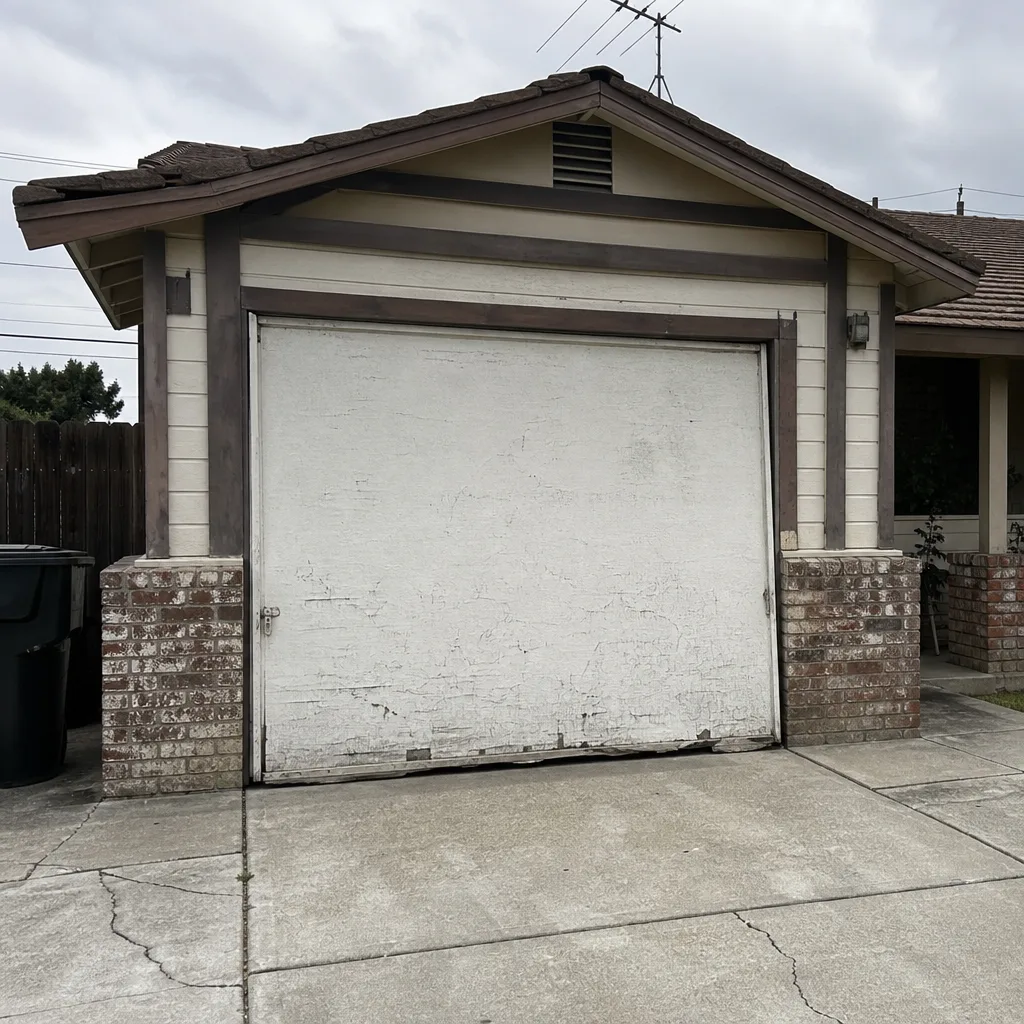 Before
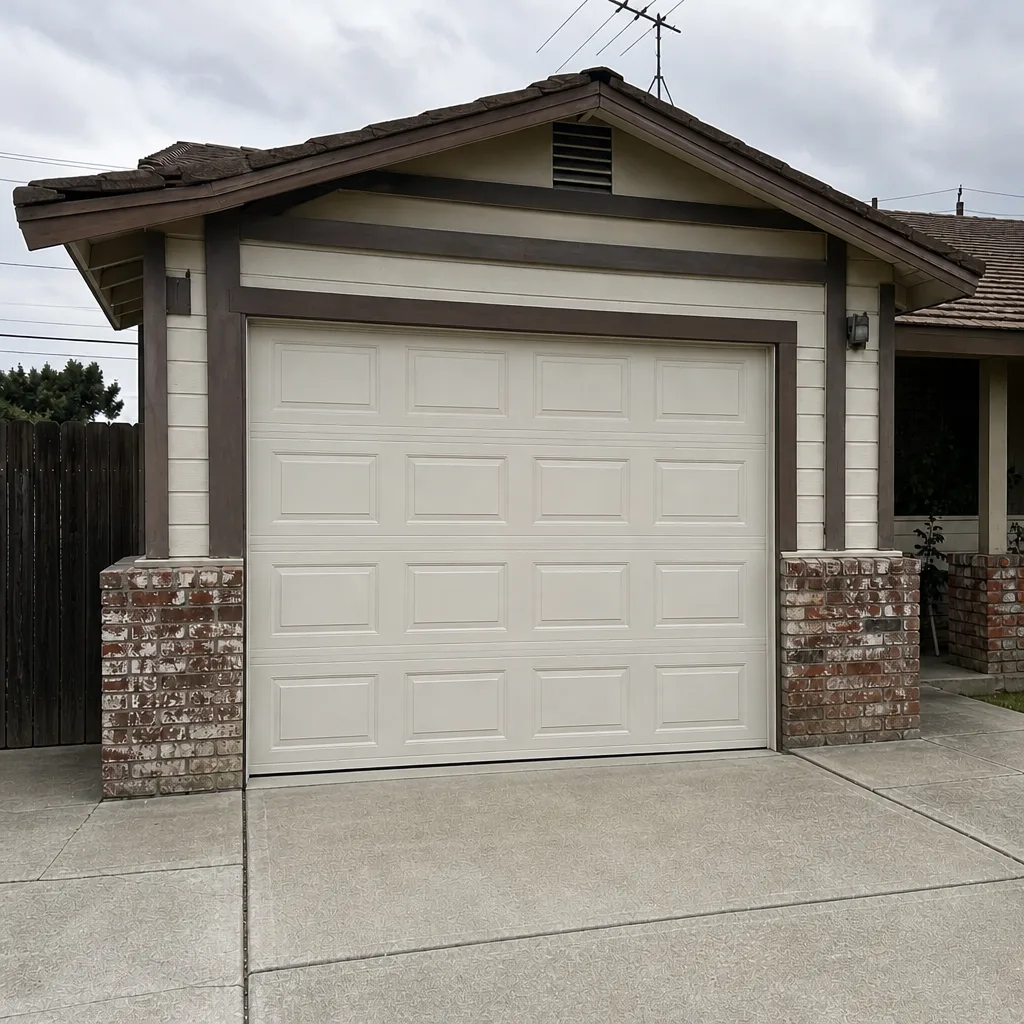 After
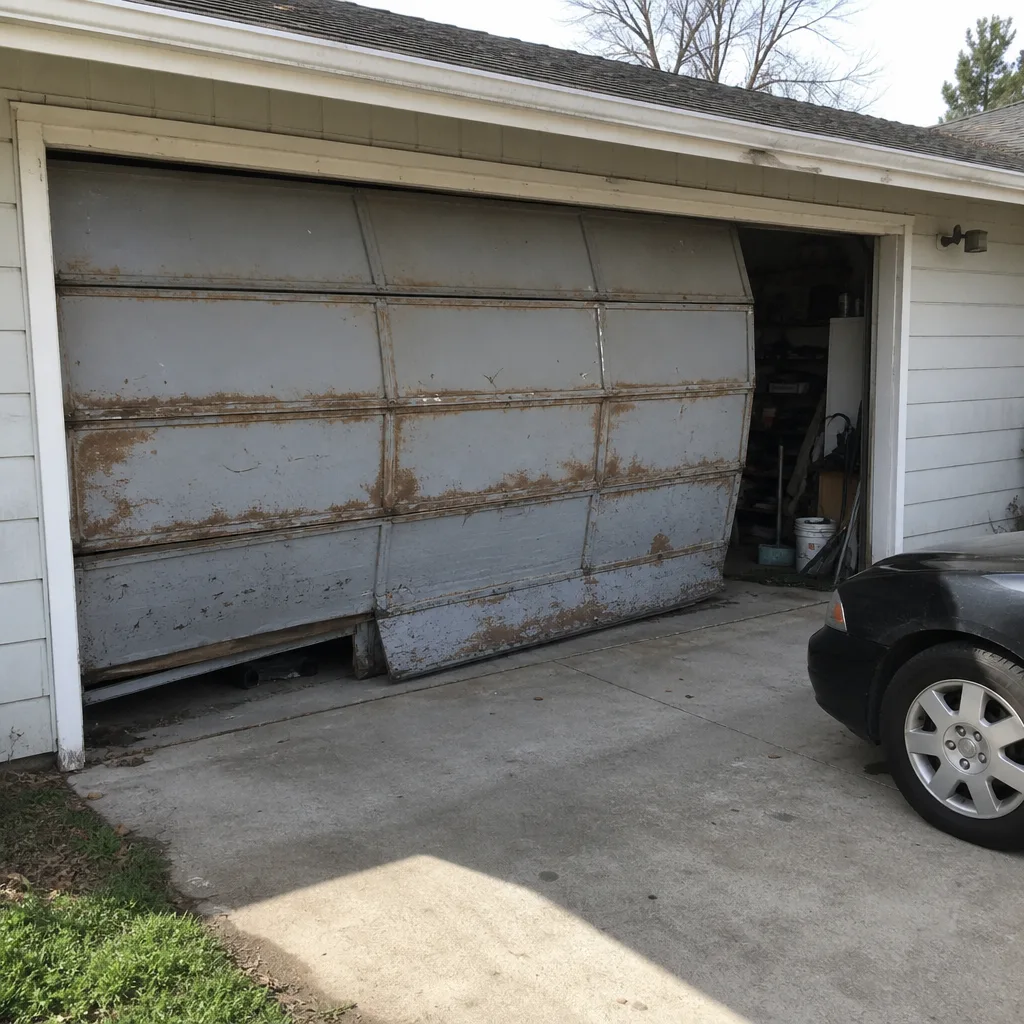 Before
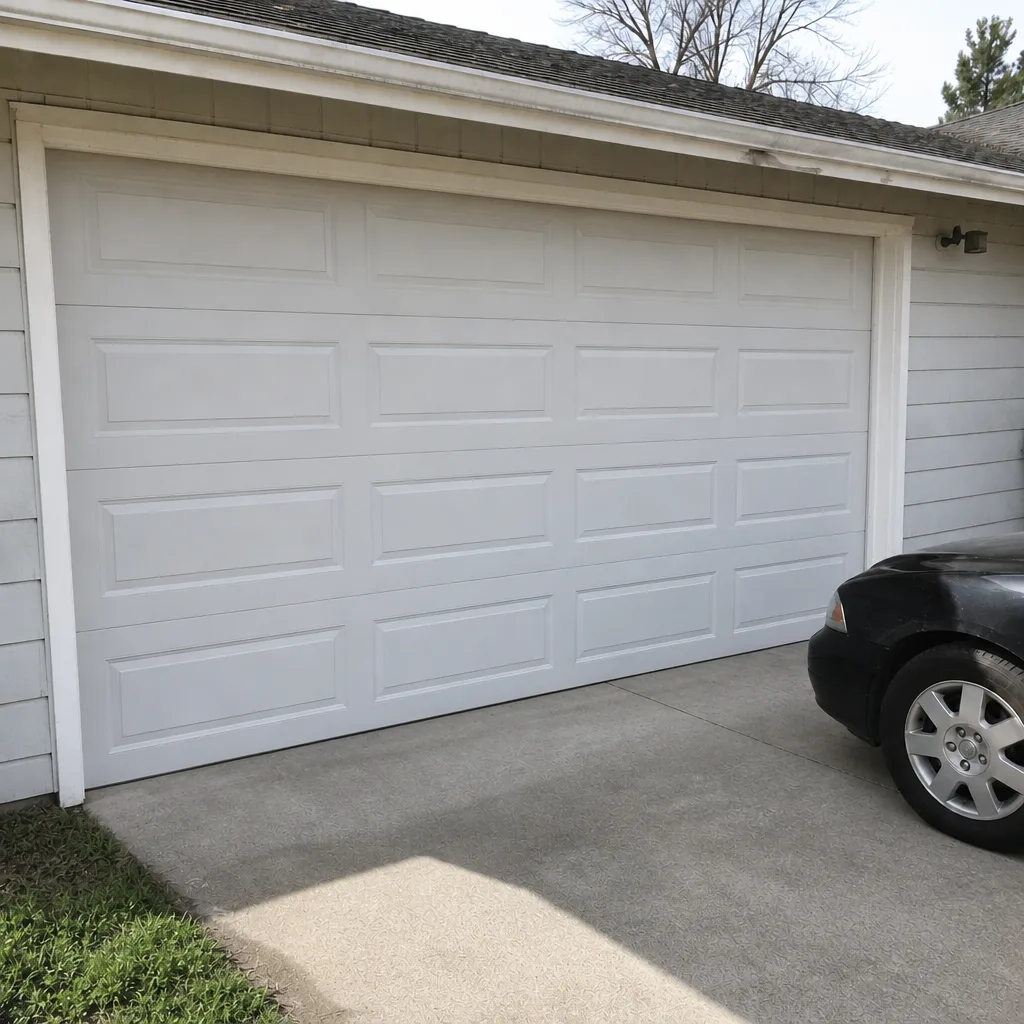 After
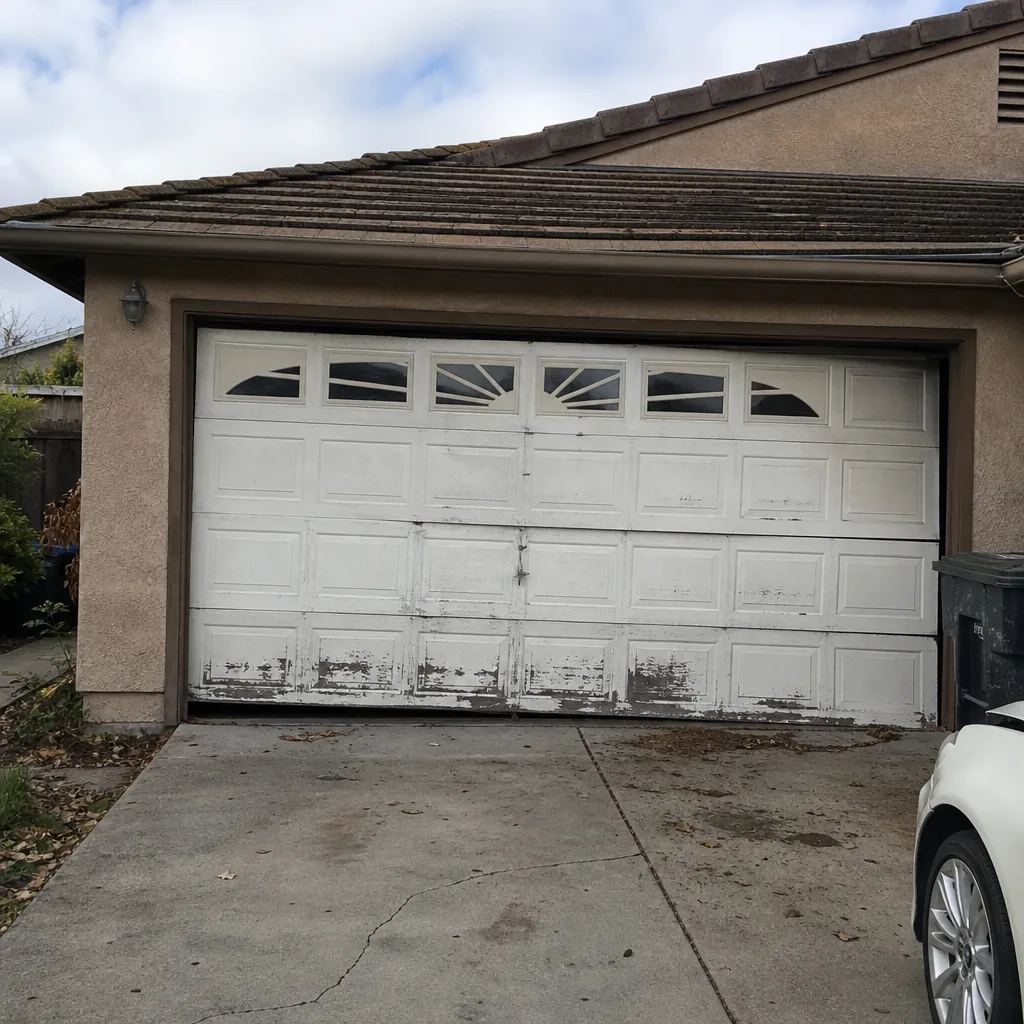 Before
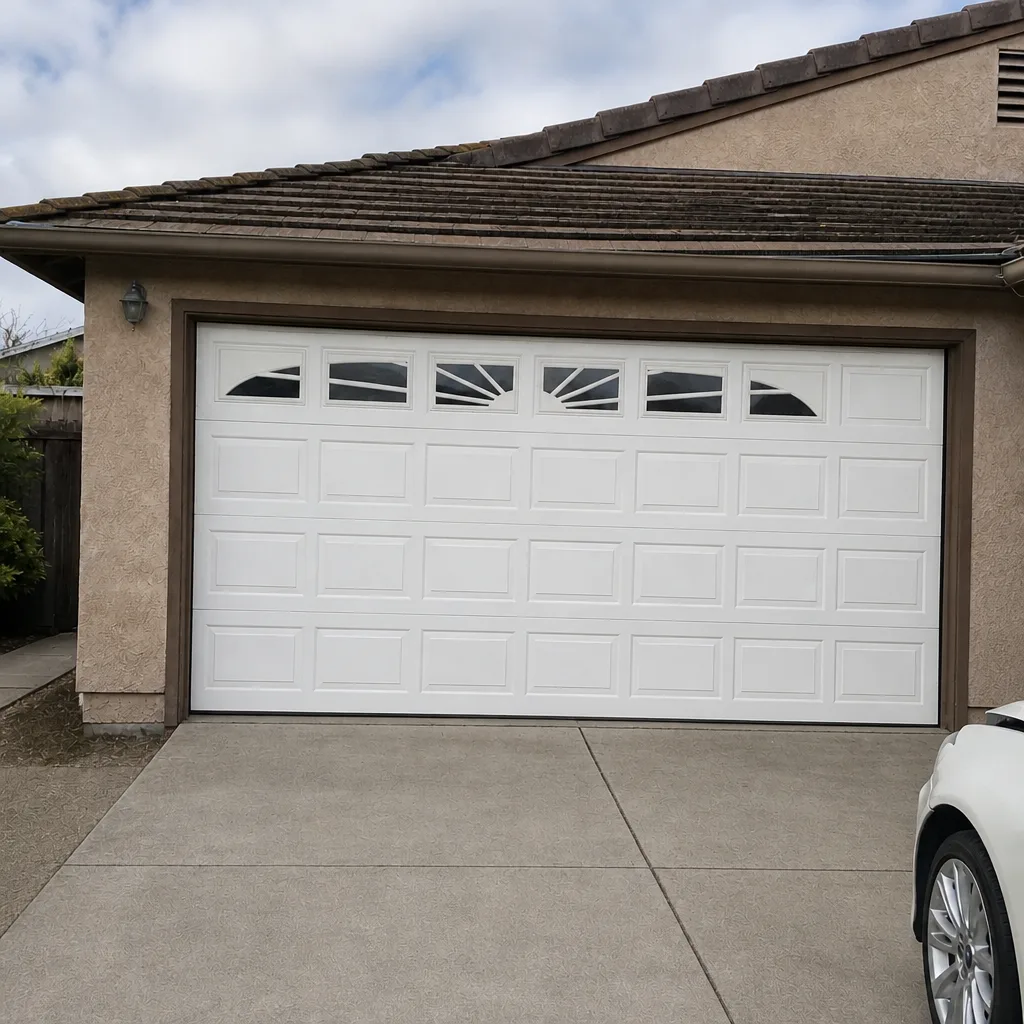 After
When to Call a Professional
Some jobs are yours; some belong to a trained technician. Call a professional if the door fails the balance test and the trend is downward, if you see or hear a frayed or slack cable, if the door has come off its track, if the safety reverse test fails, if the door is making a grinding or rattling sound that doesn’t clear up after lubrication, or if the opener runs weakly or won’t lift the door. Call before the door breaks, not after. Frontline Garage Door Service offers free estimates in Modesto, and our technicians work on both sides of the system: the door itself on Clopay, Amarr, Wayne Dalton, and Raynor installations, and the opener on LiftMaster, Chamberlain, Genie, and Craftsman platforms. Garage doors are all we do, so from the garage door repair to the opener, you’re not calling two companies. Our technicians have up to 10 years of experience. Call (855) 473-8505.
Frequently Asked Questions
Run the balance test monthly, and always after a stretch of hot weather. Springs lose tension gradually under heat cycling, and a monthly test catches the drift early. Call (855) 473-8505 for a free estimate if the door sinks during the test.
Use a high-temp lithium grease or synthetic grease on the hinges, rollers, and spring coils, and a thin silicone film on the track. Avoid WD-40 and light oils, which dry out and gum up in Modesto summers. If you’re unsure what’s already on the door, wipe a hinge and check. Call (855) 473-8505 with questions about your door or opener.
No. Torsion springs under load can cause serious injury and should only be replaced by a trained technician. If your balance test fails or you hear a bang from the garage, don’t run the door. Call (855) 473-8505 for a free estimate.
Usually because the door is out of balance. When springs lose tension, the opener carries weight it wasn’t designed to lift, and it wears faster. Fixing the springs often saves a newer opener for years. Call (855) 473-8505 for a free balance check.
Yes. Sustained 100°F+ afternoons accelerate spring fatigue, dry out lubricants, and crack weather seals. That’s why a maintenance routine here should prioritize balance and lubrication over cosmetic tasks. Call (855) 473-8505 to schedule a check.
Replace the seal if it’s cracked through, flat and compressed, or torn at the hinge points. A pliable seal that springs back when compressed is still good; a stiff one will crack within a season. Call (855) 473-8505 for an inspection and quote.
The Bottom Line
Maintenance on a Modesto garage door works best when you prioritize by real failure frequency. Start with the balance test, because an unbalanced door kills openers and is the first sign of spring wear. Lubricate with a high-temp product that holds up in summer heat, not a light oil. Inspect the weather seal and hardware monthly. Test the opener’s safety reverse. Log everything, and hand off spring, cable, and track work to a trained technician. Twenty minutes a month, prioritized in the right order, keeps a door running year after year. Need a second opinion? Call (855) 473-8505 for a free estimate.
Get a Free Estimate from Frontline Garage Door Service
If your checklist turns up a fix you’d rather not tackle, or you just want a trained eye on a door that’s been acting up, we’re ready. Frontline Garage Door Service works on all the major door and opener brands, and garage doors are all we do. We answer 24/7, with fast dispatch from 7am to 7pm, Sunday through Friday. Call (855) 473-8505 for a free estimate. The price is quoted and agreed before any work starts, so there are no surprises when the job is done.
Written by the team at Frontline Garage Door Service.