
Last updated November 15, 2026
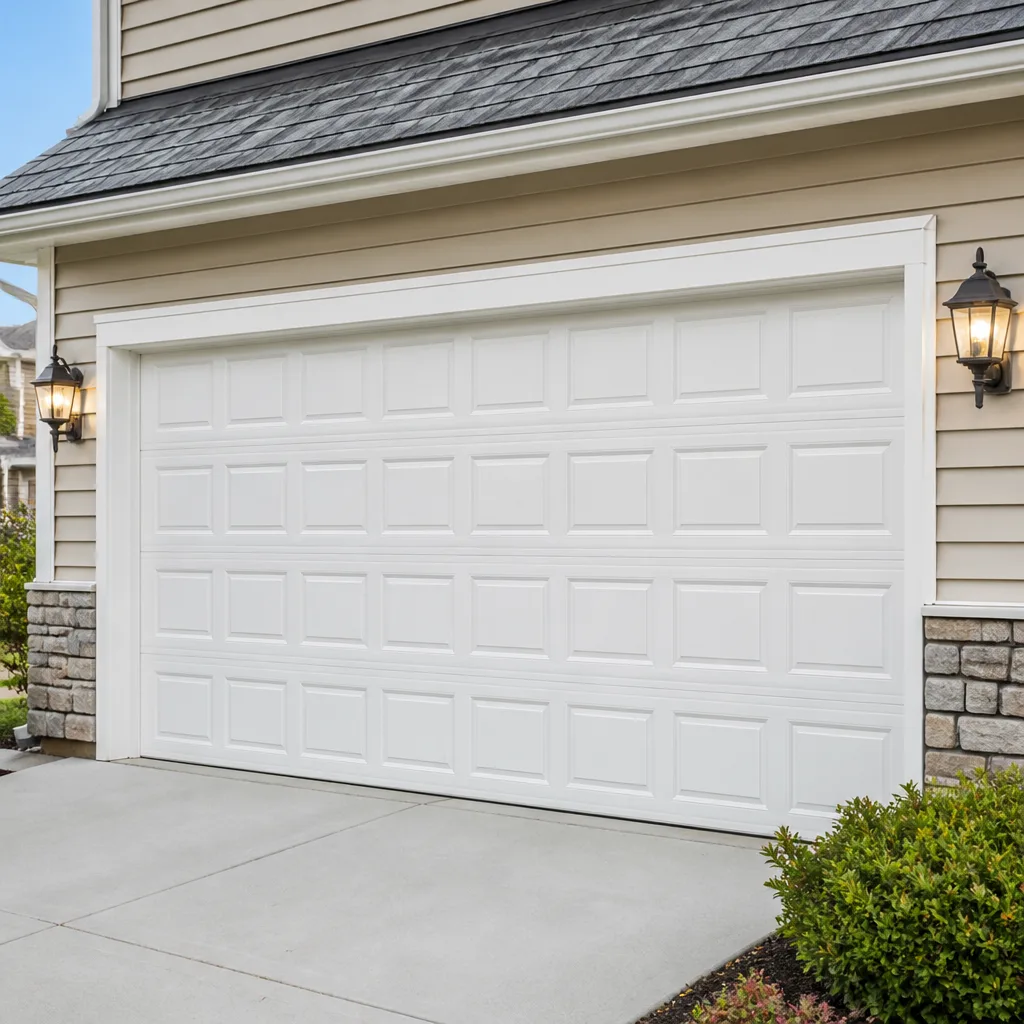 Raised-panel steel
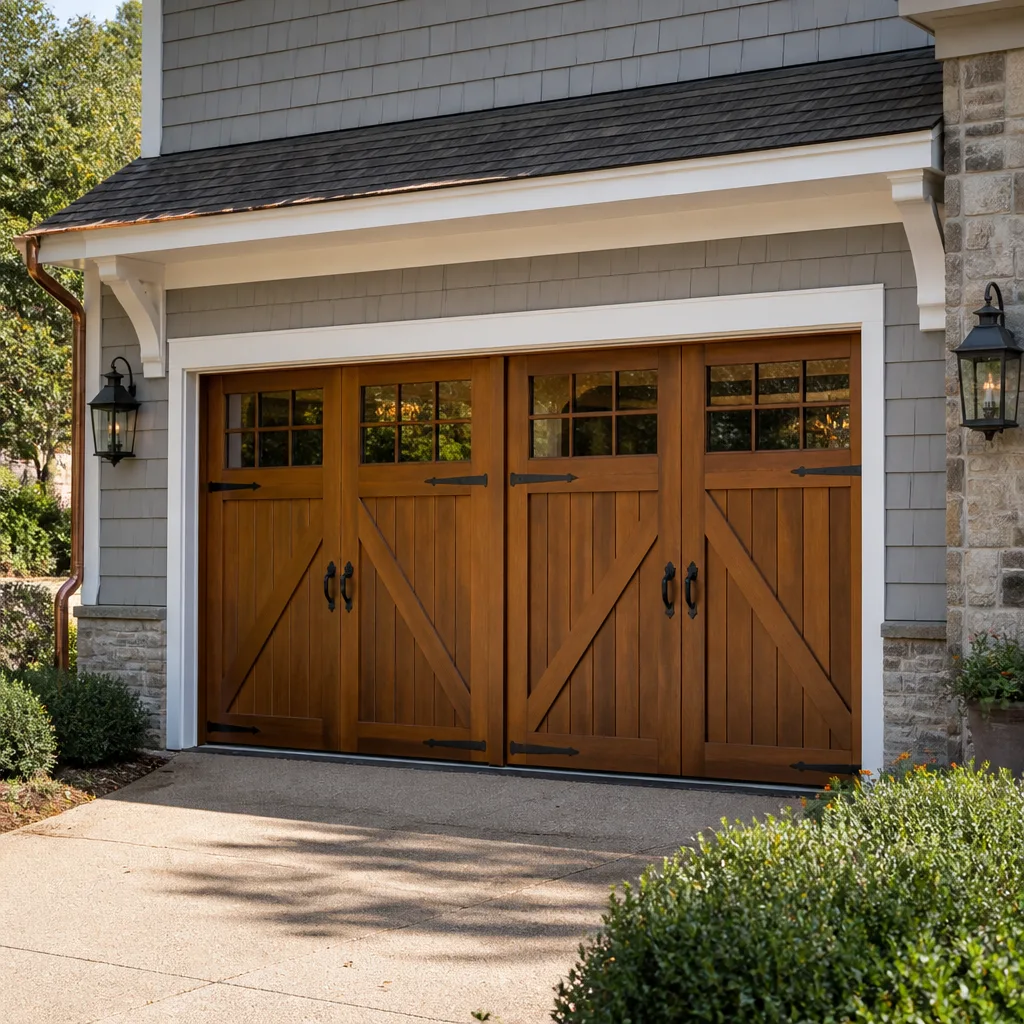 Carriage house
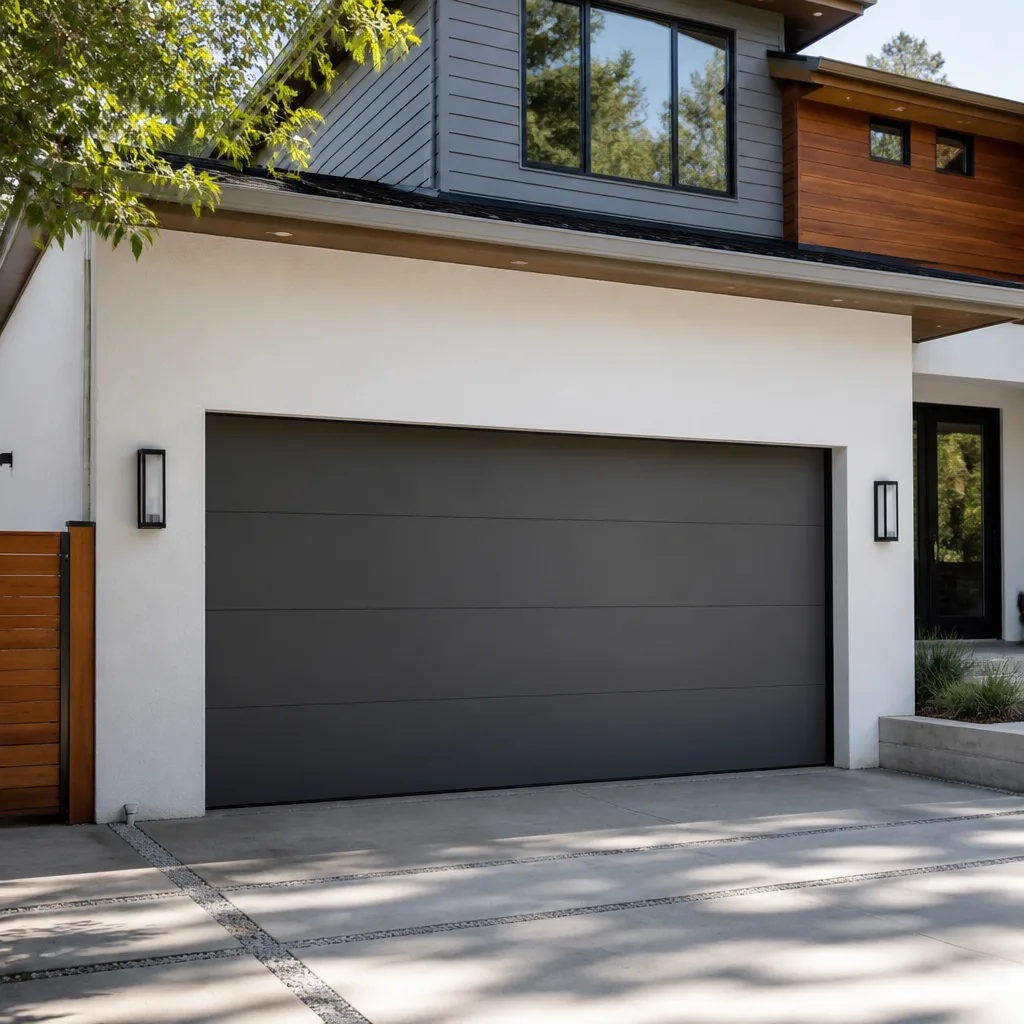 Modern flush
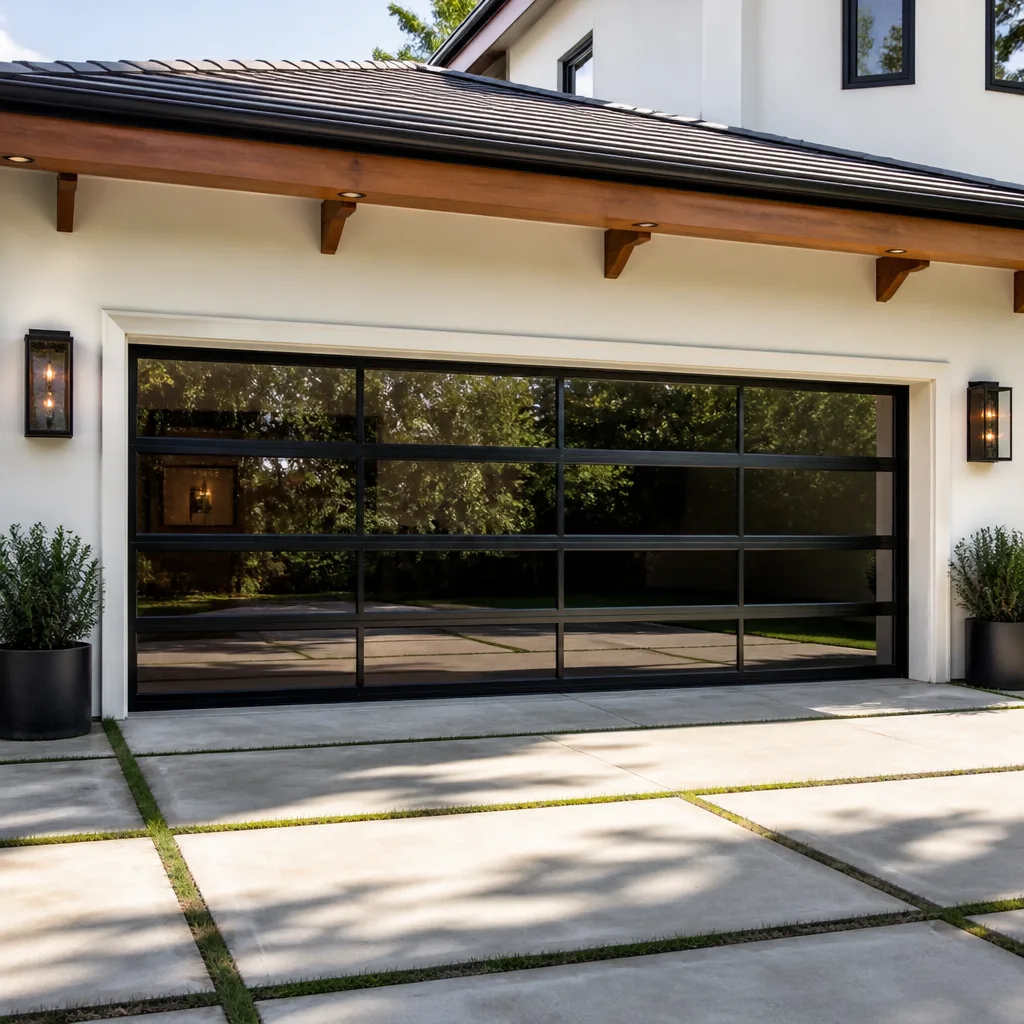 Full-view glass
 LiftMaster openers
 Chamberlain openers
Full 25-point door and opener safety check with every visit - springs, cables, rollers, tracks, and your LiftMaster or Chamberlain opener included
You get a price before we start. It does not change when the pro arrives.
Get your free estimateGarage Door Repair Troubleshooting in Modesto: Common Problems and How to Fix Them
Most garage door problems in Modesto get misdiagnosed. Homeowners hear a grinding noise or watch the door crawl upward and assume the opener is dying. They buy a new opener. The door still drags. The real culprit was a failing roller or a track that swelled in the July heat. Chasing the symptom instead of the system failure is how one repair turns into two. This guide maps symptoms to root causes, tells you what is genuinely safe to check yourself and what is not, and shows you the sequence a technician runs on arrival so you can narrow the diagnosis before anyone knocks. Garage doors are all we do, and in Modesto the heat writes its own rulebook.
Quick Answer
Garage door trouble in Modesto is usually one of six things: a spring losing tension, a track warped by heat, a sensor knocked out of alignment by dust or debris, a worn roller, a stripped opener gear, or a door that has come out of balance. Fix it once by identifying which system is failing before touching a repair. Spring and cable work is dangerous and belongs to a trained technician. Sensors, tracks, and balance checks are safe to inspect yourself.
Styles & brands we work with
- Raised-panel steel
- Carriage house
- Modern flush
- Full-view glass
- LiftMaster openers
- Chamberlain openers
Table of Contents
- The Symptom-to-Cause Map for Modesto Doors
- Why Modesto Heat Changes How Your Door Behaves
- Testing the Three Systems: Opener, Door Mechanics, or Sensors?
- Safe to Check Yourself vs. When to Step Back
- The Check Sequence a Technician Runs on Arrival
- When a Small Symptom Signals a Full Failure
- Repair or Replace? How to Tell the Difference
- What Garage Door Repairs Cost in Modesto
The Symptom-to-Cause Map for Modesto Doors
A garage door is a system, not a single part. When something goes wrong, the symptom usually points to one of four subsystems: the torsion system (springs and cables), the track and roller system, the balance of the door panels, or the opener electronics. Here is how the most common Modesto symptoms map back to the failure behind them.
- Door slows or hesitates near the top. Almost always spring tension, not the opener. In Modesto’s summer heat, the steel in a torsion spring expands and the wire loses tension faster than the calendar would suggest.
- Loud grinding or scraping. Worn rollers or a dry torsion bar. A grinding noise rarely means a dead opener; it usually means friction that is eating the hardware.
- Door reverses before it touches the floor. Sensor misalignment or a garage floor that has settled. Dust is a common trigger in valley towns where dry-season winds move it freely.
- Door opens a few inches and stops. Either a stripped opener gear or a broken spring. A broken torsion spring often makes one loud crack and then leaves the door effectively welded shut.
- Door is crooked or binds on one side. A track out of plumb. In Modesto, summer heat can warp a steel track enough to pinch the rollers, especially on a west-facing garage.
- Opener runs but the door does not move. A stripped drive gear or a disconnected trolley. Common on older openers with worn internal gears.
Notice how often the opener gets blamed for something the door mechanics or the track are doing. That is the single most expensive misdiagnosis in this trade. When we show up, we look at the door first, then the opener, then the sensors, in that order.
Why Modesto Heat Changes How Your Door Behaves
Modesto’s summer afternoons regularly climb past 100°F. That heat is not a background detail for a garage door; it is a working variable. Metal expands. Torsion springs made of oil-tempered wire behave differently at 105°F than at 65°F. And the garage itself holds heat in a way a shaded driveway does not, so the door hardware lives in a hotter environment than the outdoor temperature suggests.
What this means in practice:
- Springs fatigue faster. A spring that would last many years in a cooler climate can lose tension earlier in Modesto because it spends more of its life under heat stress. The door starts to feel heavy by hand, or the opener strains to lift it.
- Tracks swell and twist. A steel track mounted on a west- or south-facing wall takes the direct afternoon sun. As the metal warms, the channel can bow just enough to drag a roller. Once the evening cools, the door may run fine again, which is why the problem feels intermittent.
- Dust and dry-season grit reach the sensor eyes. Modesto’s dry months move a lot of fine dust. The safety sensor lenses fog with dust and the door reverses for no obvious reason. A quick wipe often clears it, and if it does, that was the whole problem.
- Seals and weatherstripping harden. The bottom rubber seal dries and stiffens, so the door may hesitate on the last few inches or fail to seat cleanly against the floor.
The counterintuitive part: a door that “just slows down” in summer is not aging out on a schedule. It is telling you the spring tension margin has tightened, and the heat is making that margin unforgiving. Catching it now is far cheaper than replacing a burned-out opener later.
Testing the Three Systems: Opener, Door Mechanics, or Sensors?
Before you call anyone, you can narrow the problem to one of three systems yourself with about ten minutes and a set of eyes. This is the test that saves the most money, because it tells you what to say on the phone.
- Disconnect the opener with the manual release. Pull the red emergency release handle (usually hanging from the trolley). This frees the door from the opener entirely.
- Lift the door by hand. A properly balanced door opens with modest effort. If it feels heavy, or it slams down when you let go, the spring or balance is failing. If it lifts easily, your door mechanics are probably fine and the opener is suspect.
- Check the safety sensors. Look at the two sensor eyes near the bottom of the tracks. Most sensors have a small indicator light. If the light is off or flickering on one side, the beam is blocked or misaligned. Wipe the lenses and check for anything in the path.
- Run the opener with the door disconnected. Reconnect the trolley and press the wall control. If the opener motor runs but the trolley does not travel, the problem is inside the opener head. If the trolley travels but the door struggles, the problem is the door.
- Look and listen at the tracks. A bowed track, a roller sitting cockeyed, or a hinge with a visible gap points you to the door mechanics.
In our experience across Modesto, the split runs roughly this way: opener electronics fail less often than people expect, and the door’s own hardware accounts for the majority of “the opener is broken” complaints. A Genie or LiftMaster unit that gets blamed for a hard lift is usually fine; the spring behind it was the real problem.
Safe to Check Yourself vs. When to Step Back
Some garage door troubleshooting is a good idea for any homeowner. Some of it can seriously injure or kill you. The line between the two is narrower than most online guides admit, and getting it wrong is how people end up in the emergency room.
Safe to check or do yourself
- Wipe and realign the safety sensor lenses.
- Clear debris, leaves, or stored items from the sensor path and the door’s travel.
- Lubricate rollers, hinges, and the torsion bar with a garage-door-rated lubricant (not a general-purpose oil).
- Tighten the bolts on the hinges and track brackets with a socket wrench.
- Test the balance by hand with the opener disconnected, as described above.
- Replace the opener’s remote batteries and check the wall control wiring for obvious damage.
Step back and call a technician
- Torsion springs. These store enormous energy under tension. Never attempt to adjust, wind, or replace one yourself. A torsion spring that lets go can cause severe injury. This is the single most important safety line in this entire guide.
- Cables and drums. The lift cables run under high tension alongside the springs. A loose or frayed cable can snap with force. Do not touch it.
- Track straightening under load. Bending a bent track back into place with the door attached is a physical and injury risk. The door can come off its rollers.
- Anything involving the opener’s electrical line or the wall outlet. Treat it as live wiring. A licensed electrician or technician handles it.
We are not telling you this to sell a service call. We are telling you because spring and cable work genuinely carries injury risk that most troubleshooting articles understate. If you are unsure which category a problem falls into, err toward the second list. Our technicians have up to 10 years of experience, and even they treat torsion springs with respect.
The Check Sequence a Technician Runs on Arrival
Knowing the sequence a technician follows helps you describe your problem accurately and understand what you are paying for. It also tells you whether a company is doing the job right. Here is the order we run for any garage door repair call in Modesto, and the order any competent technician should follow.
- Visual inspection of the whole system first. Springs, cables, drums, rollers, hinges, tracks, panels, and the opener head. Before touching anything, we look for the obvious failures: a broken spring with a visible gap, a frayed cable, a roller jumped out of its track.
- Manual balance test. Disconnect the opener and lift the door by hand to feel the balance and hear the hardware. This single step catches most of what went wrong.
- Sensor and safety reversal test. Check the sensor alignment and confirm the door reverses properly when the beam is broken.
- Opener function and force settings. Run the opener with the door attached and listen for strain, grinding, or hesitation. Check the opener’s force adjustment and travel limits.
- Track and roller inspection under load. Look for bows, twists, and roller wear with the door in motion.
- Written diagnosis and price before any work. You get the findings and a written price before anything is repaired. The price is quoted and agreed before work starts.
That last step matters more than any of the others. A company that skips the written estimate and starts winding springs is a company to walk away from. We give you the diagnosis and the price in writing, and you decide from there.
When a Small Symptom Signals a Full Failure
Some symptoms are safe to live with for a while. Others are the last warning before a much bigger repair. The difference between catching a failure early and catching it late is usually the difference between a modest repair and a full hardware replacement.
The grinding noise is the clearest example. A door that grinds is telling you the rollers, torsion bar, or hinges have lost lubrication or a component is worn. Left alone, that friction wears the torsion bar, wears the rollers faster, and puts extra load on the opener. What started as a loud noise becomes a strained opener motor, and now you are replacing two systems instead of one. The same logic applies to a door that hesitates: hesitation is a spring doing less of the work, and an opener doing more. Opener motors are not built to lift a door on their own for long.
- Grinding noise: catch it now, and it is usually a lubrication and roller job. Ignore it, and you may add opener strain to the list.
- Door hesitates near the top: catch it now, and it is spring adjustment or replacement. Ignore it, and the opener motor fails too.
- Door reverses before closing: often just a dirty sensor. Ignore a genuine safety failure and the door can come down on a person or a vehicle.
- One side of the door is higher than the other: a track or cable problem. Left alone, a door can come off its rollers.
We work on both sides of the system, from the door itself (Amarr, Wayne Dalton, Clopay, Raynor, and more) to the opener (LiftMaster, Chamberlain, Genie, Craftsman). If a grinding symptom turns out to be opener strain as well, we handle the garage door opener repair without sending you to a second company.
Repair or Replace? How to Tell the Difference
Not every problem means a new door. Most troubleshooting ends in a repair. But some symptoms point to a door that has reached the end of its service life, and there it makes more sense to replace than to keep patching.
Repair is usually the right call when the failure is isolated: a broken spring, a bent track, a failed opener, a worn roller, a sensor. These are components, and components get replaced. A door with good panels and a solid structure is worth repairing, especially since the rest of the door is likely fine.
Replacement starts to make sense when the panels themselves are failing. A door that has warped across multiple panels, has rusted through the frame, or is out of balance even after new springs is a candidate for replacement rather than repair. The door’s physical condition, not its age, is what matters here. A garage door in a Modesto neighborhood can be structurally sound after many years if it has been maintained, or it can be warped after a shorter time if it has taken years of direct summer heat without care.
If you are weighing it, get a diagnosis first. We give a free estimate for both repair and full installation, so you can compare the written price of a repair against the written price of a new door without pressure. From the door to the opener, it stays one job with one company.
What Garage Door Repairs Cost in Modesto
Cost is the second question behind “what’s wrong with it.” Here are typical estimated ranges for common repairs, so you can budget before you call. These are estimates, not fixed prices; the written estimate you receive sets the final price.
| Repair | Typical estimated range |
|---|---|
| Torsion spring replacement (one spring) | Commonly quoted per spring; a matched pair is usually replaced together and runs about twice a single spring |
| Off-track or bent track repair | Modest single-component repair |
| Roller replacement (set) | Low-cost component repair |
| Safety sensor replacement or realignment | Among the lowest-cost fixes |
| Opener gear or drive replacement | Mid-range repair depending on opener brand |
| Opener unit replacement | Higher, since it includes a new opener and installation |
A single spring is one spring. A matched pair is replaced together and costs roughly double a single spring, because it is two springs. When people see a spring price and then hear a pair price, they assume a markup. It is not; it is twice the hardware and twice the work. We would rather explain that on the phone than surprise you after the fact.
Two things to keep in mind on price. First, the estimate is free, and nothing gets repaired until you have agreed to the written price. Second, we do not pad a job because it is urgent. The price is set per job by the written estimate, same-day or not. Call Frontline Garage Door Service for a free estimate and a flat answer on cost before anyone picks up a wrench.
Common Mistakes to Avoid
- Replacing the opener when the door is the problem. If the door is heavy by hand, the opener was never the failure. Buying a new opener fixes nothing and the new unit strains the same way.
- Touching a torsion spring or cable. This is the top injury risk in garage door repair and no troubleshooting article should talk you into it. Leave spring and cable work to a trained technician.
- Ignoring a grinding noise because the door still works. Grinding is friction, friction is wear, and wear migrates to the opener. Catch it early.
- Assuming intermittent problems are not real. In Modesto, a door that runs fine in the cool morning and binds in the hot afternoon is telling you the track or spring reacts to heat. Intermittent is still a failure.
- Overlooking dust in the sensor eyes during dry season. A door that reverses for no reason is often a dirty lens. Wipe it before you buy parts.
- Skipping the balance test before calling. Ten minutes with the manual release tells a technician half of what they need, and it helps the dispatcher send the right parts on the first visit.
- Accepting a verbal price with no written estimate. The written estimate is your protection. Get it before work begins.
See the difference
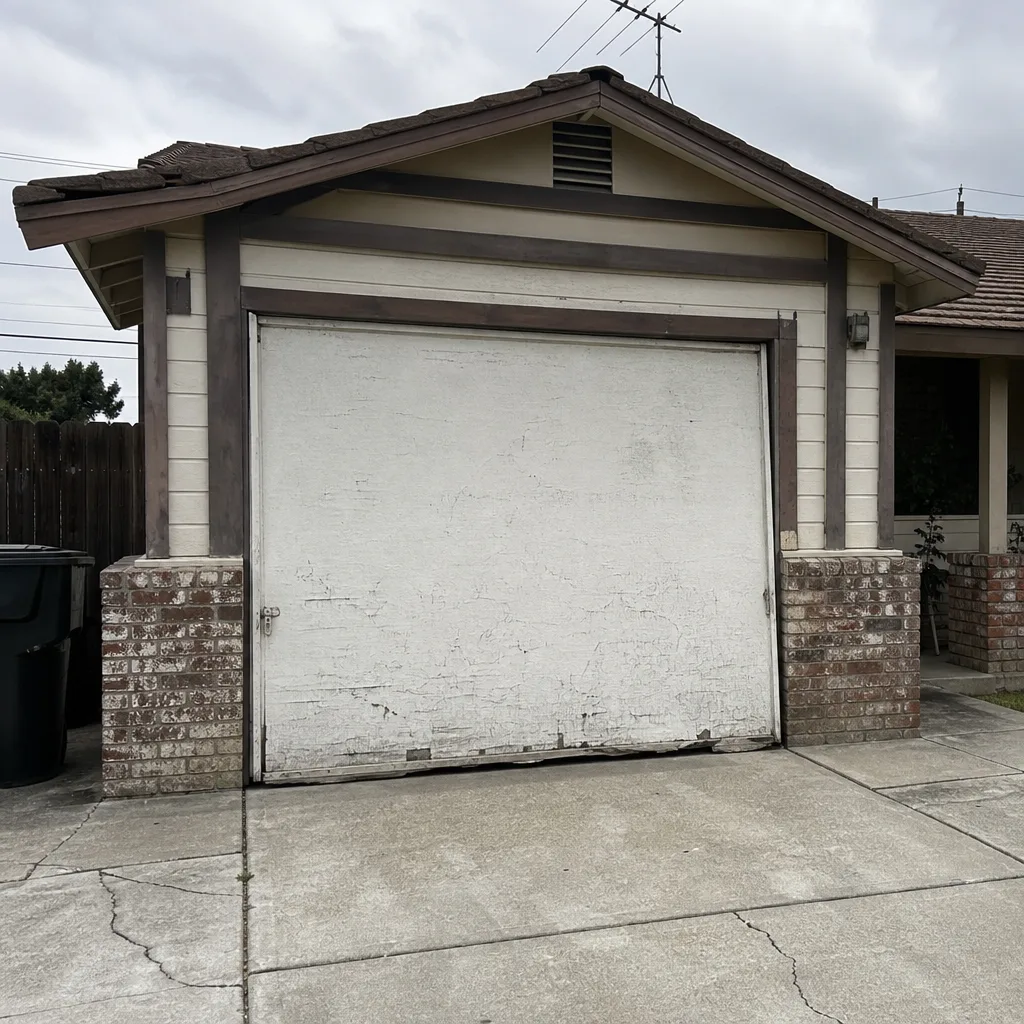 Before
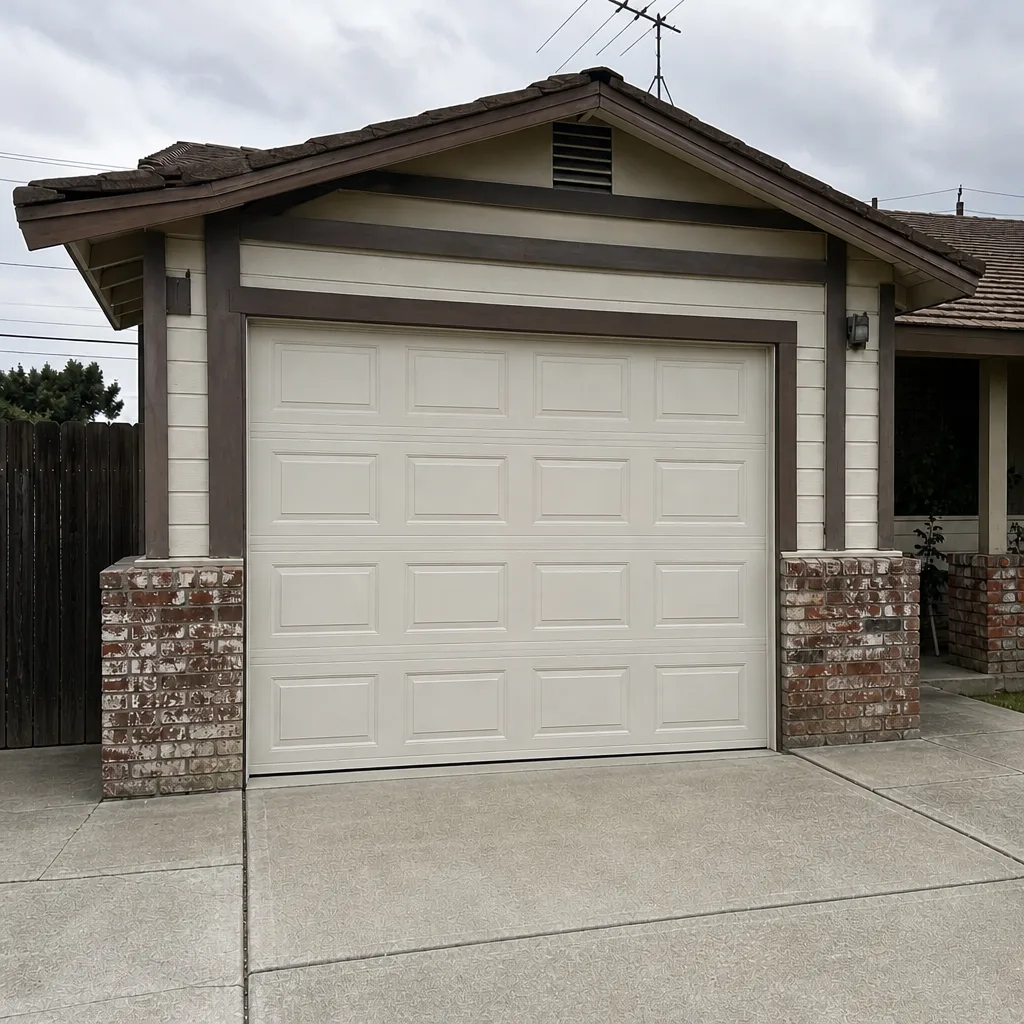 After
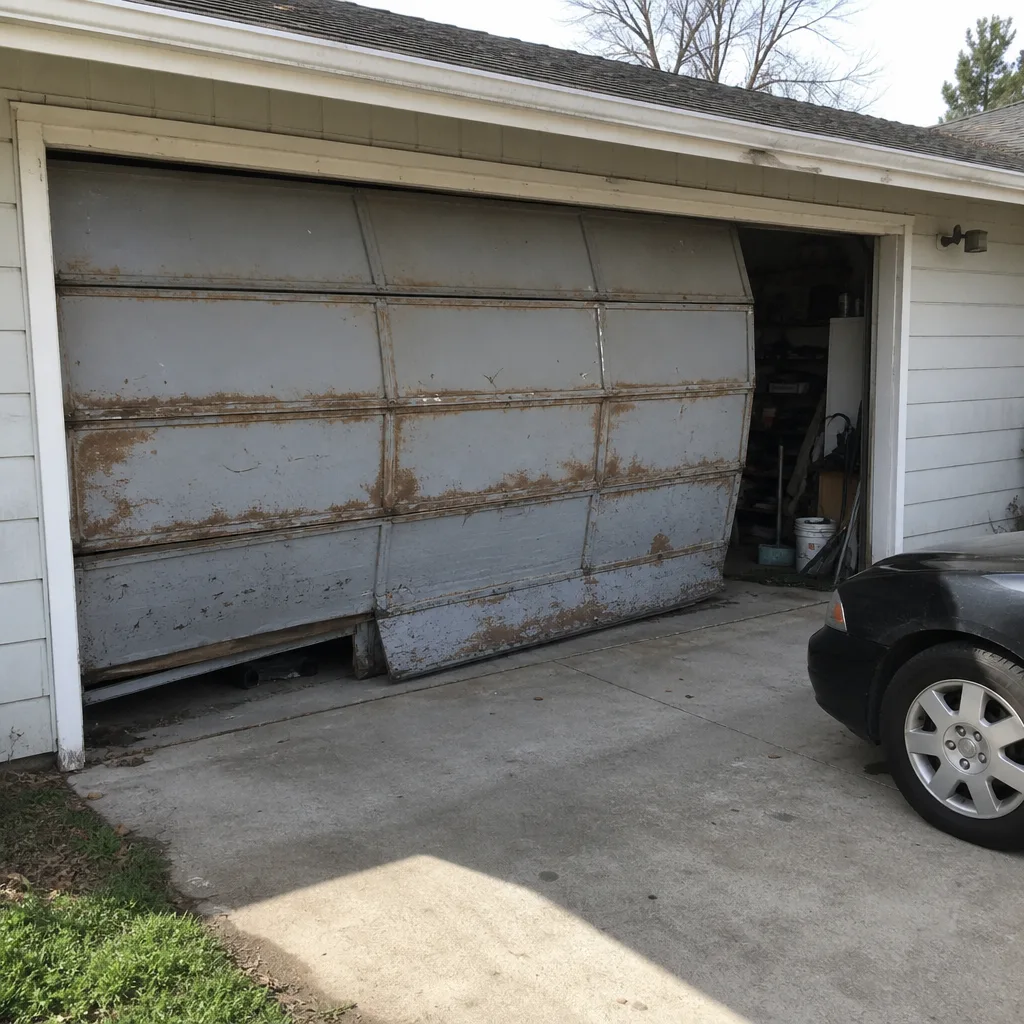 Before
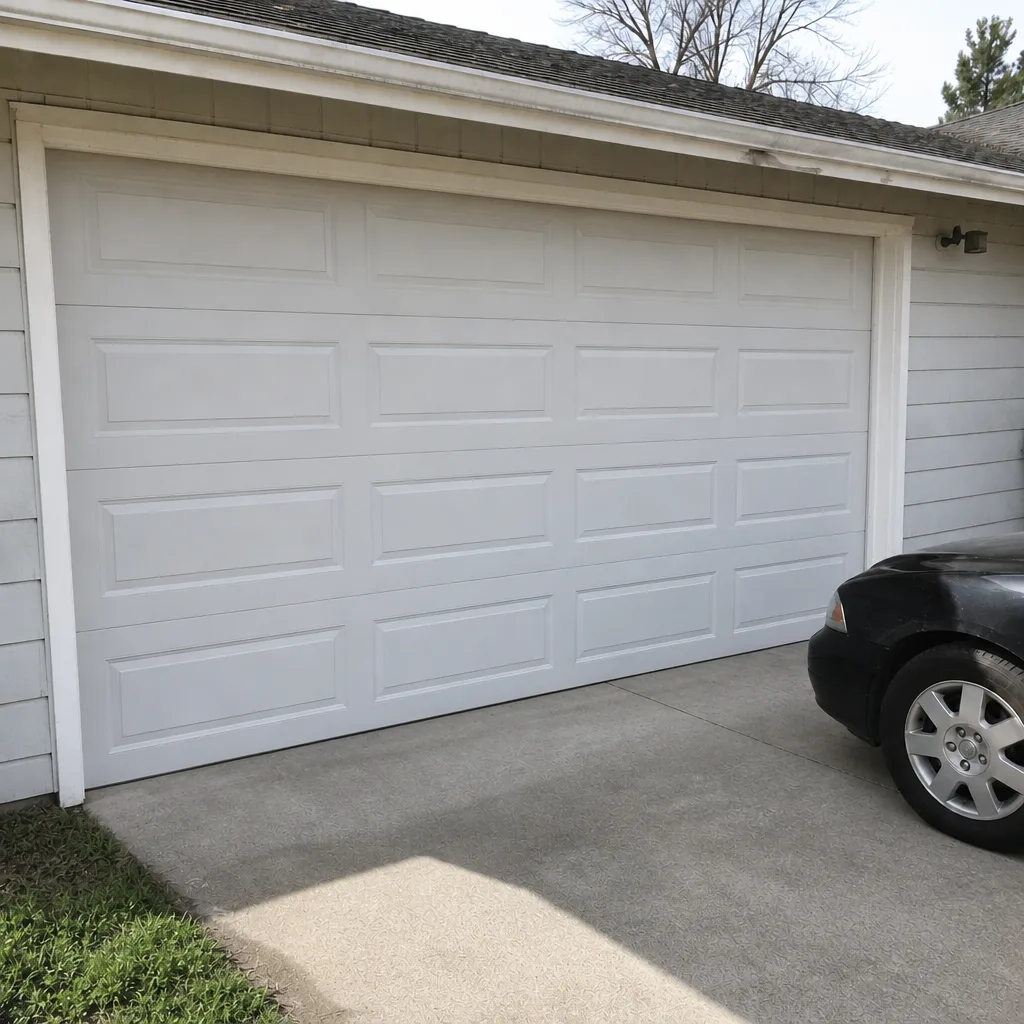 After
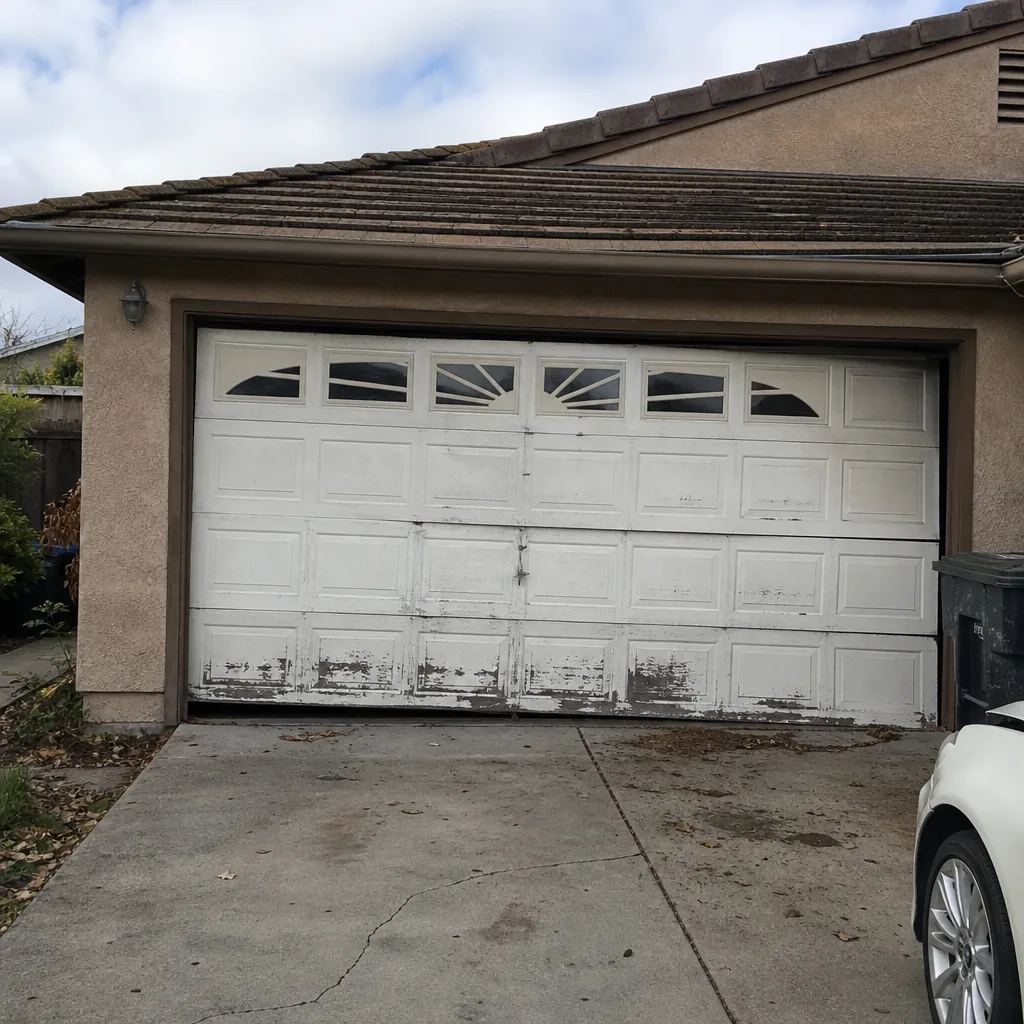 Before
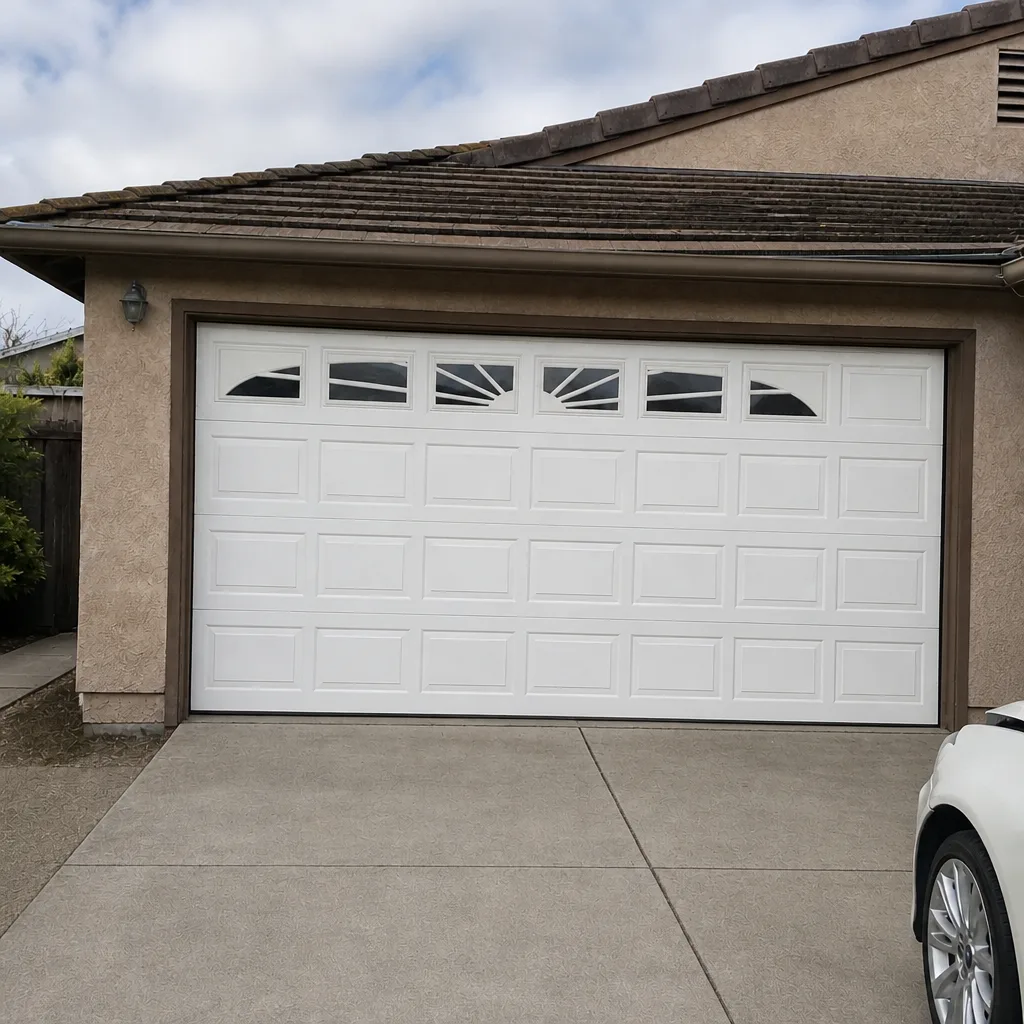 After
When to Call a Professional
Call a technician when the problem involves a torsion spring, a cable, or a track that needs straightening under load. Call when the door will not open by hand with the opener disconnected, when you see a gap in a spring, or when a cable looks frayed. Call when the opener runs but the door does not move, since that usually means internal opener hardware. And call when the failure is intermittent in a way that tracks the Modesto heat, because that pattern points to a real adjustment that hands-on inspection will catch. Frontline Garage Door Service offers free estimates in Modesto. Our technicians have up to 10 years of experience and we work on your brand, whether it’s a Raynor door, a Craftsman opener, or a system you inherited when you bought the house. Call (855) 473-8505. We answer 24/7. Fast dispatch from 7am to 7pm, Sunday through Friday.
Frequently Asked Questions
Disconnect the opener with the manual release and lift the door by hand. If it lifts with modest effort, the door mechanics are fine and the opener is suspect. If it feels heavy or slams down, the door’s spring or balance is failing and the opener is not the real problem. Run the opener with the door disconnected and see whether the trolley travels; if the motor runs but the trolley does not move, the problem is inside the opener head. Call (855) 473-8505 for an exact diagnosis, estimates are free.
Heat changes the tolerances in the whole system. Torsion springs lose tension faster when they live in 100°F afternoons, steel tracks on a sun-facing wall can bow enough to drag a roller, and the bottom seal hardens. A door that runs fine on a cool morning and binds by afternoon is reacting to temperature, and that pattern is real, not imaginary. Our technicians have up to 10 years of experience with this exact pattern. Call (855) 473-8505 for an exact quote, estimates are free.
Yes. A torsion spring stores enough energy to cause severe injury or worse if it is released the wrong way, and the cables beside it run under similar tension. No troubleshooting guide should walk you through winding a spring. The safe approach is to check everything else yourself and leave the springs and cables to a trained technician. We handle that work every day and treat it with the respect it demands. Call (855) 473-8505 for an exact quote, estimates are free.
No. The price is quoted and agreed before any work starts, so the written estimate is what you pay. We give you the diagnosis and the price in writing first, and you decide from there. If we find a second issue while we are in there, we tell you and update the estimate before touching it. Call (855) 473-8505 for an exact quote, estimates are free.
Yes, same-day service is usually available for stuck doors, broken springs, and failed openers. Call (855) 473-8505. We answer 24/7. Fast dispatch from 7am to 7pm, Sunday through Friday. A call outside dispatch hours is booked into the next opening, Sunday through Friday, 7am to 7pm.
Repair it. A grinding noise almost always means a worn roller, a dry torsion bar, or a hinge that needs attention, and those are component repairs, not a door replacement. Replacement only makes sense when the panels themselves are warped, rusted through, or the door still will not balance after new springs. Get a diagnosis and a written price for both before you decide. Call (855) 473-8505 for an exact quote, estimates are free.
The Bottom Line
Troubleshoot the system, not the noise. Disconnect the opener and lift the door by hand: heavy means springs or balance, easy means opener or sensors. Clean the sensor lenses and check the track before buying parts. Never touch a torsion spring or cable; that work belongs to a trained technician and carries real injury risk. Catch grinding and hesitation early, because friction and spring fatigue migrate to the opener and turn one repair into two. In Modesto’s heat, an intermittent problem is still a problem. Get the diagnosis in writing, agree the price before work starts, and repair when the failure is a component, replace when the panels themselves have given up. Garage doors are all we do, from the door to the opener, and that’s what keeps a repair from turning into a second call.
Ready to get it fixed? Frontline Garage Door Service provides garage door repair, garage door opener repair, and full new-door installation throughout Modesto. We work on your brand, from Amarr and Wayne Dalton doors to LiftMaster, Chamberlain, Genie, and Craftsman openers. Call (855) 473-8505 for a free estimate. We answer 24/7. Fast dispatch from 7am to 7pm, Sunday through Friday. Back up and running is the whole point, and Frontline-ready means we show up prepared.
Written by the team at Frontline Garage Door Service.