
Last updated November 15, 2026
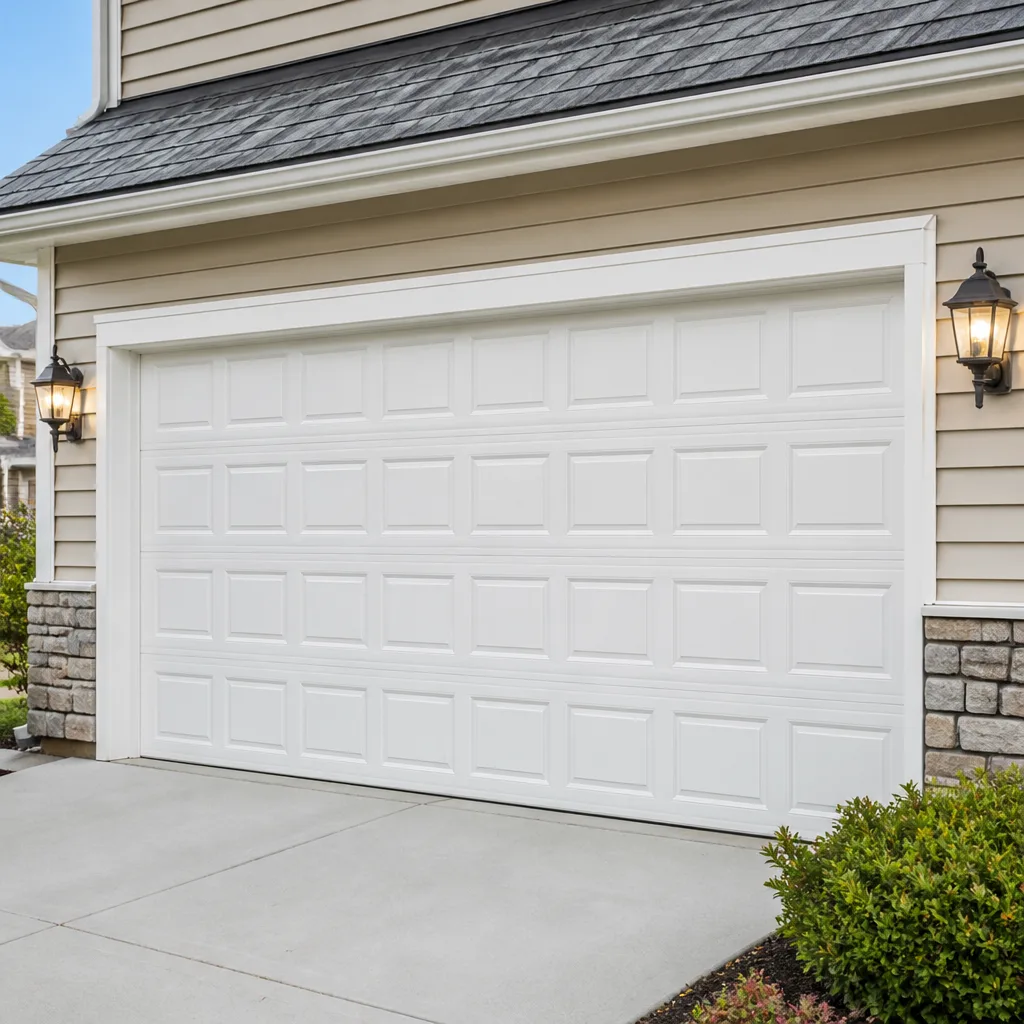 Raised-panel steel
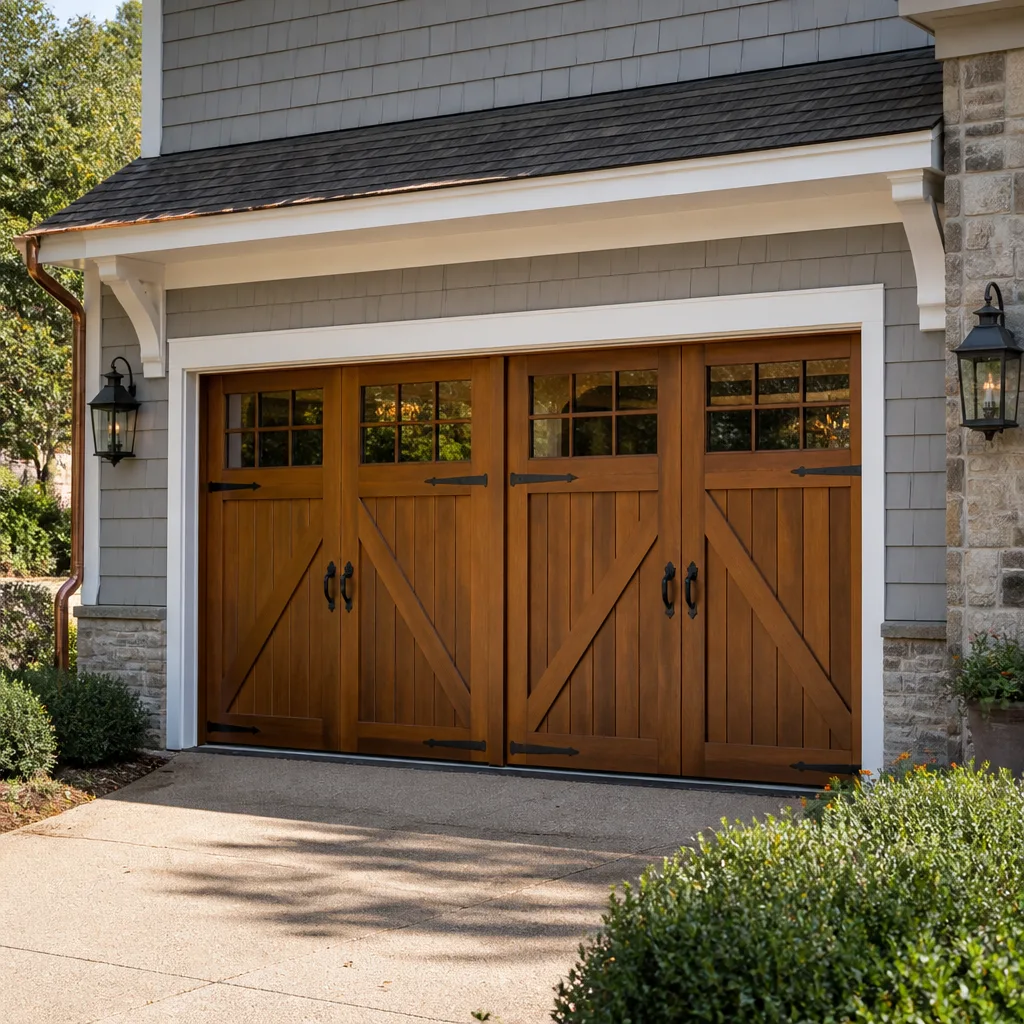 Carriage house
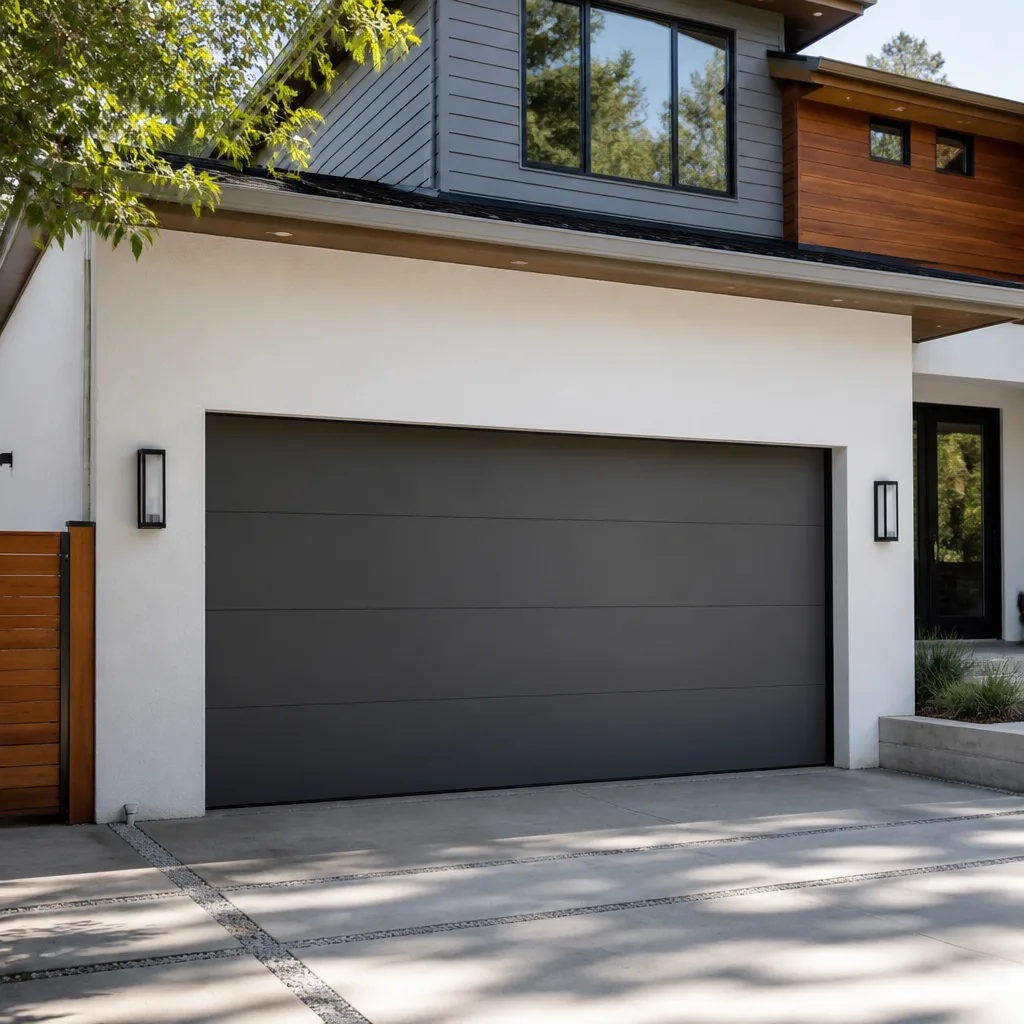 Modern flush
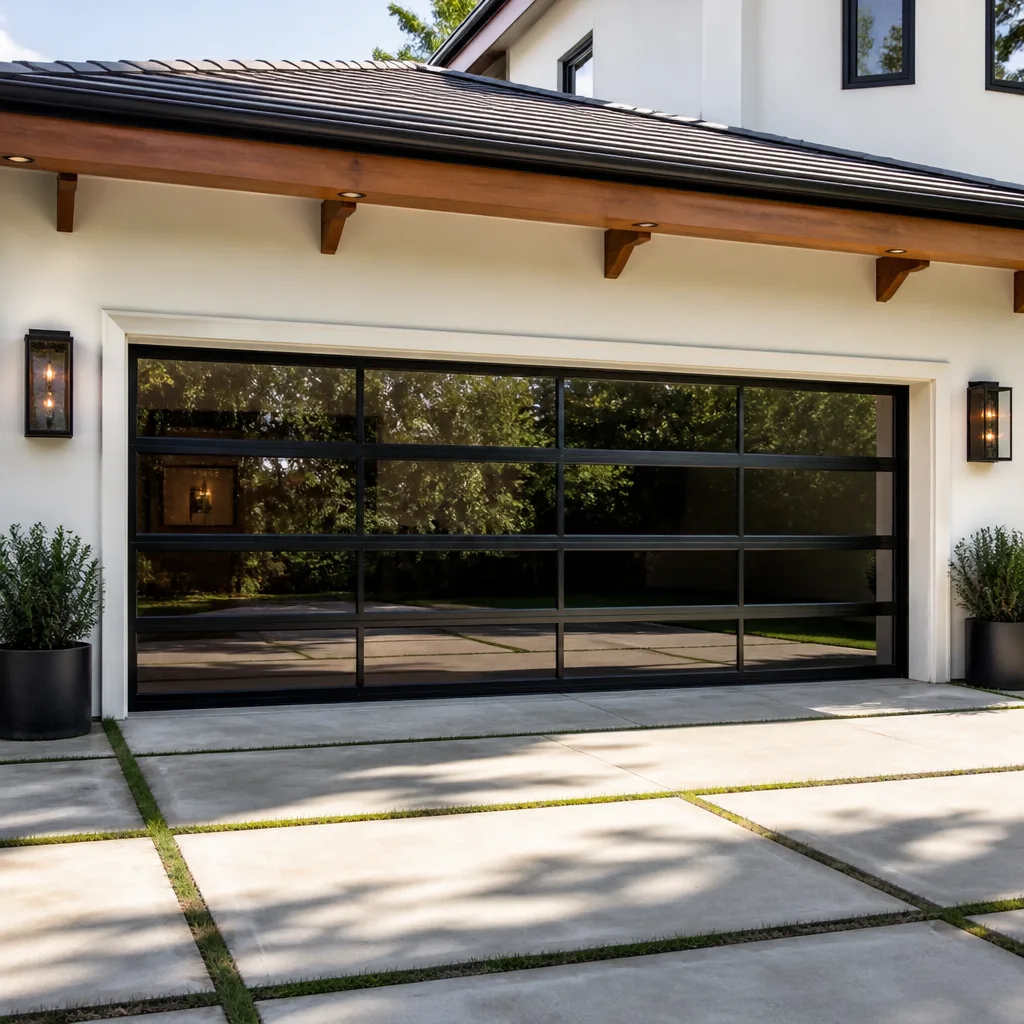 Full-view glass
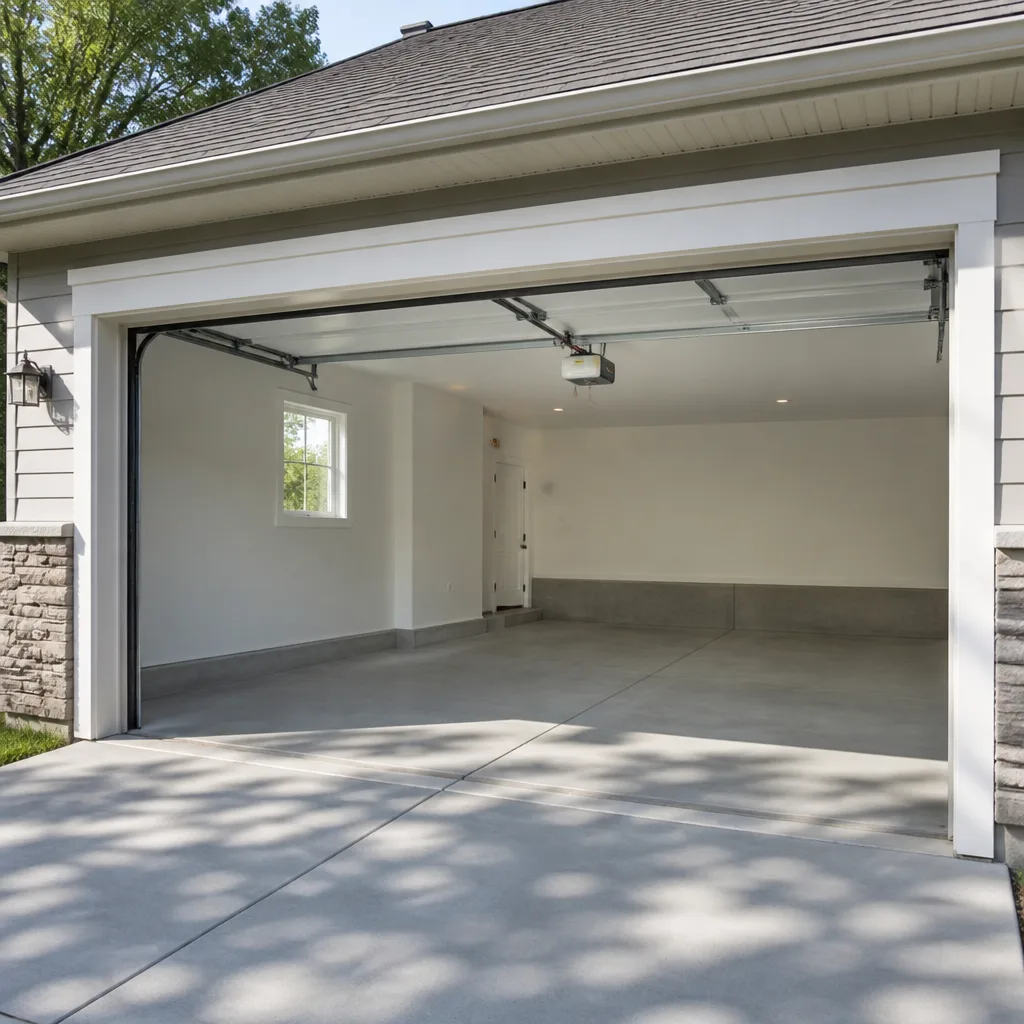 LiftMaster openers
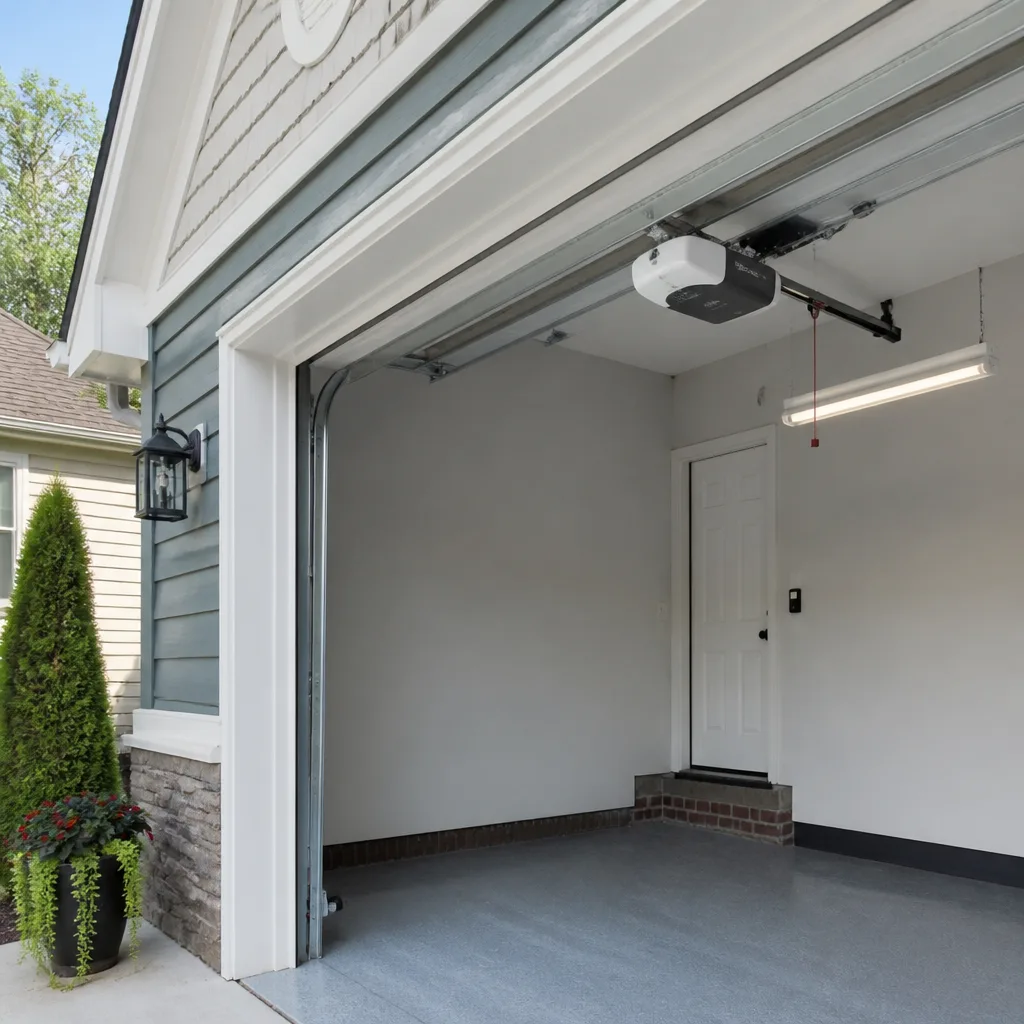 Chamberlain openers
Full 25-point door and opener safety check with every visit - springs, cables, rollers, tracks, and your LiftMaster or Chamberlain opener included
You get a price before we start. It does not change when the pro arrives.
Get your free estimateGarage Door Warning Signs: A Modesto Homeowner’s Reference Guide
Most garage door guides rank problems by how annoying they are. That’s backwards. A noisy door that opens fine rarely needs a same-day visit, while a door that reverses before it reaches the ground looks like a small quirk and can put everyone in the house at risk. The symptom’s volume tells you almost nothing about what’s actually failing behind it. What matters is the consequence if the part gives way – a snapped spring that turns the door into a falling weight, a limit switch that lets a door close on a child. This guide sorts Modesto garage door warning signs into three risk tiers: what to stop using today, what to book this week, and what to watch. You’ll also see how the valley’s heat, dust, and Tule fog push these signs along faster than generic national advice assumes.
Quick Answer
Garage door warning signs split into three risk tiers. Tier 1 means stop using the door now: a broken spring, a snapped cable, a door off its track, or an opener that runs while the door stays put. Tier 2 means schedule service within the week: slow or grinding operation, uneven movement, or a door that won’t seal at the floor. Tier 3 means monitor: light surface rust, minor weather seal cracking, and small balance drift. If any Tier 1 sign is present, call a trained technician before you touch the door again.
Styles & brands we work with
- Raised-panel steel
- Carriage house
- Modern flush
- Full-view glass
- LiftMaster openers
- Chamberlain openers
Table of Contents
- Tier 1: Signs You Should Stop Using the Door Today
- Tier 2: Signs to Schedule Within the Week
- Tier 3: Signs to Monitor and Plan For
- How Modesto Heat, Dust, and Tule Fog Speed Up Wear
- Seals, Tracks, and the Floor Line
- How to Describe a Symptom on the Phone
- Common Mistakes to Avoid
- Frequently Asked Questions
Tier 1: Signs You Should Stop Using the Door Today
These are the signs where every further cycle of the door adds risk. Garage doors are heavy mechanical assemblies under constant spring tension, and the parts that fail most abruptly are the ones holding that weight. If you see any of the following, stop operating the door and call a technician.
- A broken torsion or extension spring. You may hear a loud pop, or you may just find the door suddenly heavy and unable to stay up. Once a spring is broken, the opener (whether it’s a LiftMaster or a Chamberlain) is pulling the full dead weight of a door it was never designed to lift alone. Continuing to run it can burn out the opener motor or drop the door.
- A snapped cable. Cables carry the tension that springs create. A frayed or broken cable can whip loose. This is not a part to inspect by hand.
- The door is off its track. A roller out of the channel, a bent section, or a door hanging visibly crooked means the geometry has failed. Running the opener against a jammed door can bend panels and pull the whole assembly down.
- The opener runs but the door doesn’t move. A motor you can hear but no door motion means something in the linkage, springs, or cables has broken. Treat it as a spring or track issue until a technician confirms otherwise.
Every one of these involves stored mechanical force or a falling door. Springs and cables are under high tension that can cause serious injury if handled without the right tools and training. We don’t walk homeowners through spring work on the phone, and no reputable specialist would. To get this looked at, call for a trained visit.
Tier 2: Signs to Schedule Within the Week
Tier 2 signs aren’t emergencies, but they don’t resolve on their own. Every one is the visible symptom of a part wearing unevenly, and each gets more expensive to fix the longer it runs. Book a repair visit within the week.
- The door moves slowly or strains. Usually the opener is fighting drag from a dry hinge, worn roller, or a spring that’s lost some of its lift. It can also point to a limit setting or force adjustment on a Genie or Raynor opener that’s drifted. Left alone, the strain transfer to the motor.
- Grinding, scraping, or squealing. Metal-on-metal sounds usually mean dry bearings, worn nylon rollers, or a track misaligned against the door. Lubrication helps only if the worn part isn’t past saving.
- Uneven movement or a crooked door. One side rising faster than the other is a sign of an unbalanced door, a stretched cable, or a loose spring. An unbalanced door wears out the opener faster and can damage panels.
- It won’t seal at the floor. A visible gap under the door lets in heat, dust, and the evening insects that Modesto’s warm season brings. Usually the bottom weather seal is shot, or the door’s downward travel limit is off.
- The door reverses or stops partway. This is a safety sensor or limit switch issue. The door may need a sensor alignment or an opener logic check.
For those, garage door repair is the right starting point rather than a full replacement.
Tier 3: Signs to Monitor and Plan For
Tier 3 is where a homeowner can take their time. These signs don’t threaten safety today, but each one moves toward Tier 2 or Tier 1 on a track you can measure.
- Light surface rust on a steel door. A few flecks near the bottom edges or hinges, especially after a damp winter, are cosmetic for now. Expect a few seasons before rust reaches hinge pockets and rollers. Moderating moisture and touching up paint extends the timeline.
- Minor weather seal cracking. Small cracks in the bottom or side seals are normal after a few summers of heat. The seal hardens and cracks before it fails fully, and this is the stage where it can usually be swapped without other damage.
- Slight balance drift. If the door creeps down a few inches when you disengage the opener and lift it halfway, you have a small balance issue. That’s not dangerous today, but it’s a leading indicator that the springs are losing lift.
Three of these together move you into Tier 2 territory. One on its own gets a note in the calendar and an eye on it. Call a technician if you want a plan: the written estimate will tell you what’s actually needed and when.
How Modesto Heat, Dust, and Tule Fog Speed Up Wear
National garage door advice often assumes a moderate climate. Modesto’s Central Valley climate runs a much harder schedule on a garage door: long dry summers, airborne agricultural and road dust, and winter Tule fog that holds moisture in the air for days.
- Heat. Summer temperatures stress the rubber and vinyl in every seal and hinge gasket, hardening them so they crack earlier than a mild-climate guide expects. Heat also works on steel panels, causing slight expansion that makes tracks and alignment more sensitive over time.
- Dust. Valley dust is small enough to work into hinge pins, roller bearings, and the opener’s drive track. Left as grit, it wears metal to metal faster than the national average wear rate for the same door. A lubricated hinge and roller set is genuinely lower maintenance out here.
- Tule fog moisture. Fog is a moisture source without rain to wash the door clean. Over winter, moisture sits on steel panel surfaces and collects in the hidden hinge seams at the bottom edges. That’s where surface rust appears first on a Clopay or Amarr steel door.
The upshot: signs that other guides say to monitor for months may hit Tier 2 sooner in Modesto. Check seals and the floor line at the start of summer, and inspect hinges and bottom edges at the end of fog season. A garage door on a Modesto street and one in a mild coastal climate age on different schedules. Take the local signs a step earlier than a generic timeline suggests. If you want a trained set of eyes on the whole system, the team at Frontline Garage Door Service handles both the door and the opener. Modesto homeowners can get a free estimate.
Seals, Tracks, and the Floor Line
The floor line is the easiest place to spot a developing problem, because you can see it without tools. Look at the bottom seal as the door sits closed. Any visible gap under a door that should touch the floor is a sign of one of three things.
- Downward travel limit is off. The opener is stopping the door a fraction too early. This is a simple adjustment on most modern openers.
- The bottom weather seal is worn. The rubber has hardened and taken a set. A seal swap restores the contact line.
- The slab or the threshold has shifted. Common in the warmer parts of the valley. A slightly higher or lower threshold at the door contact point is a fit issue rather than a mechanical one, and the seal can be built up to meet the floor.
Tracks are the second place to check. Run your eye down each vertical track where the door rides. A bent or kinked channel, a track that’s pulled away from its bracket, or one that sits visibly angled means the door is riding off-line. That’s a Tier 2 issue at minimum because it grinds rollers and stresses the opener linkage; it can become Tier 1 quickly if a roller pops out. A well-aligned track and an intact seal protect most of the rest of the system.
How to Describe a Symptom on the Phone
The words you use when you call determine how fast you get the right visit and the right part. A phone diagnosis depends on the specific language you give the technician. Here is the language that gets results.
- Name the symptom, not the part. “The door won’t move when I press the remote” is more useful than “I think it’s the motor.” A technician can diagnose from the behavior, not from a guess.
- Say what you see and hear. “Grinding on the left side as it opens” or “a pop at the top, then the door fell heavy” gives a real diagnostic signal. Name the side, the direction of travel, and the specific sound.
- Say whether the opener still runs. “The motor runs but the door doesn’t move” points at springs, cables, or linkage. “Nothing happens when I press the button” points at the opener power, sensor, or remote. Different visit, different path.
- Say what brand and age the door and opener are if you know. A LiftMaster or Chamberlain opener diagnostic step differs from a Genie or a Raynor; door brand matters too, because Clopay, Amarr, and Wayne Dalton panels and hardware have different tolerances.
- Say what you’ve already tried. New remote battery, power cycle on the opener, sensor cleaning – it saves the technician from repeating what you already checked.
If you’re not sure of the brand, a close photo of the opener’s label and the door’s bottom bracket sent to the technician ahead of time narrows the diagnosis fast. If anything you see falls into Tier 1, say so in the first sentence of the call. Visit Frontline Garage Door Service to see which brands we’re equipped for, or call to describe the symptom and get booked in.
See the difference
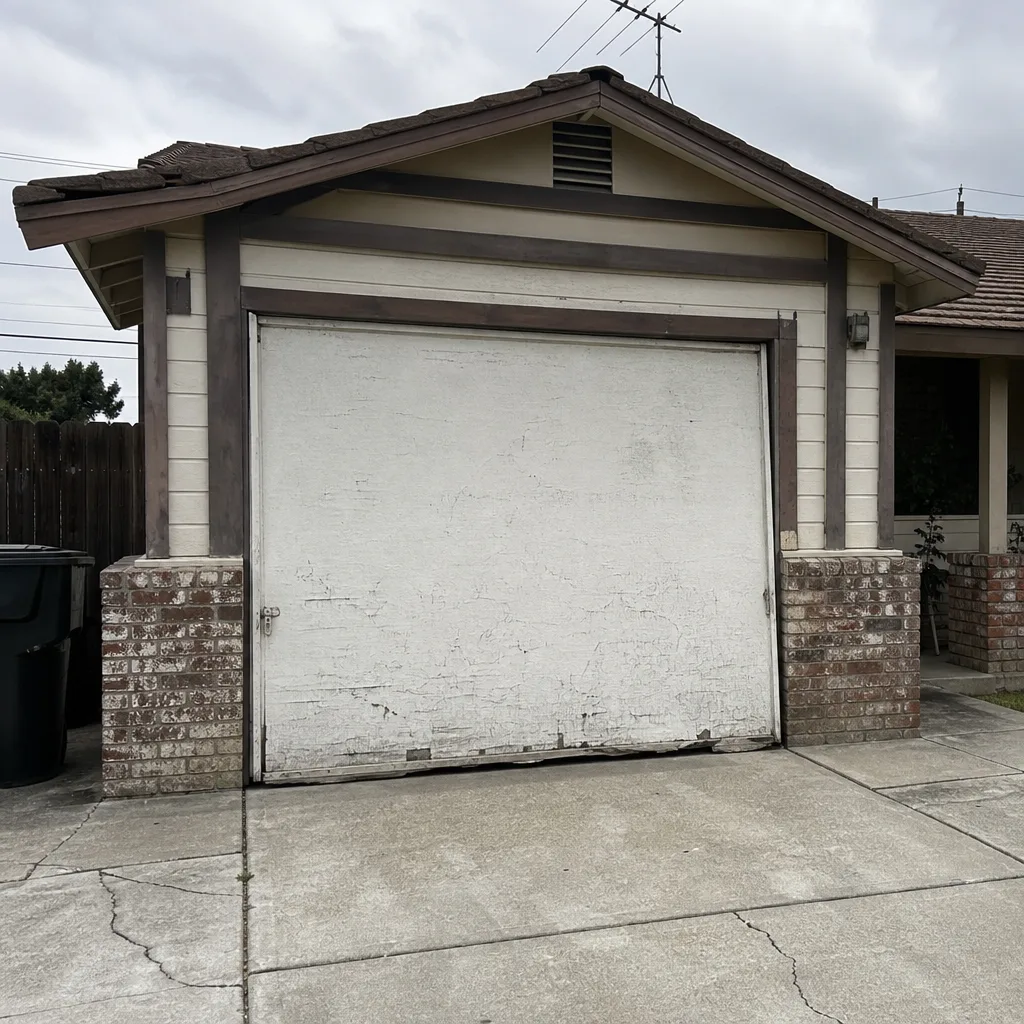 Before
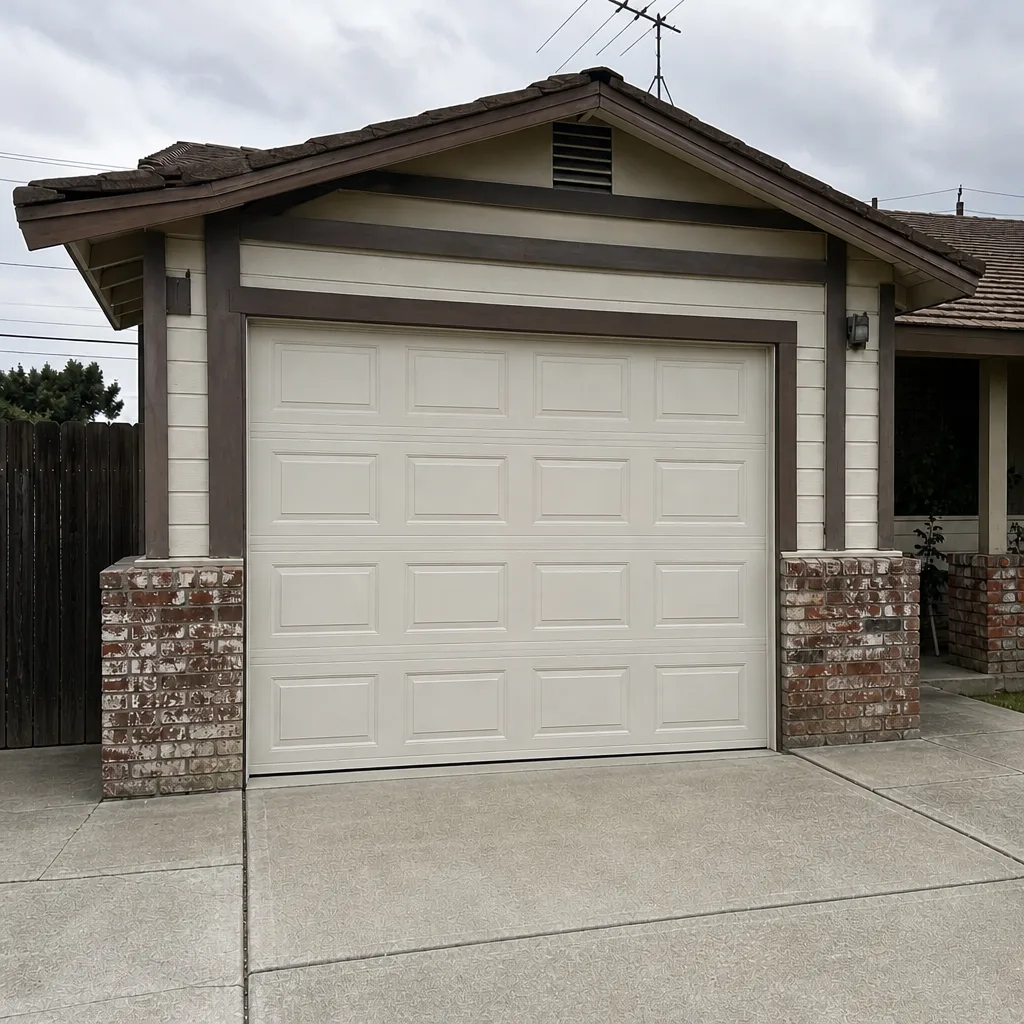 After
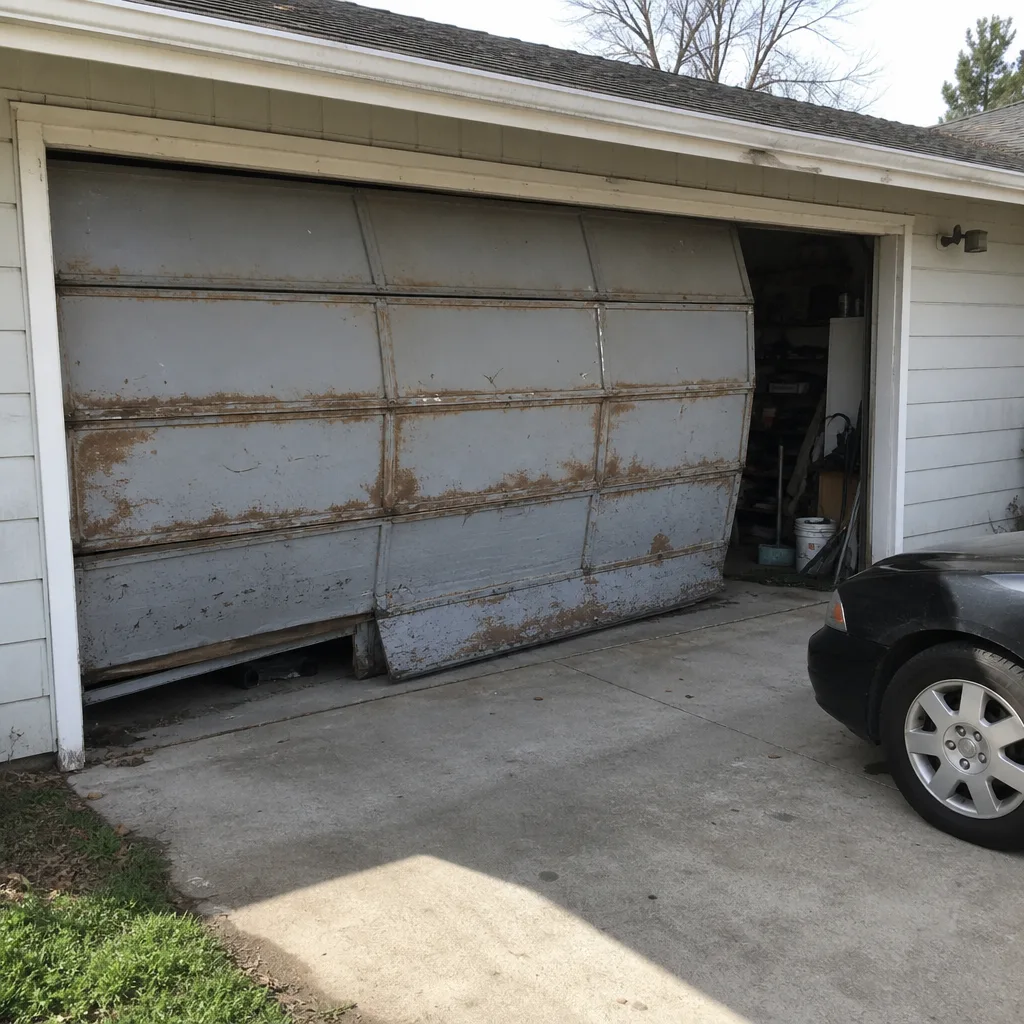 Before
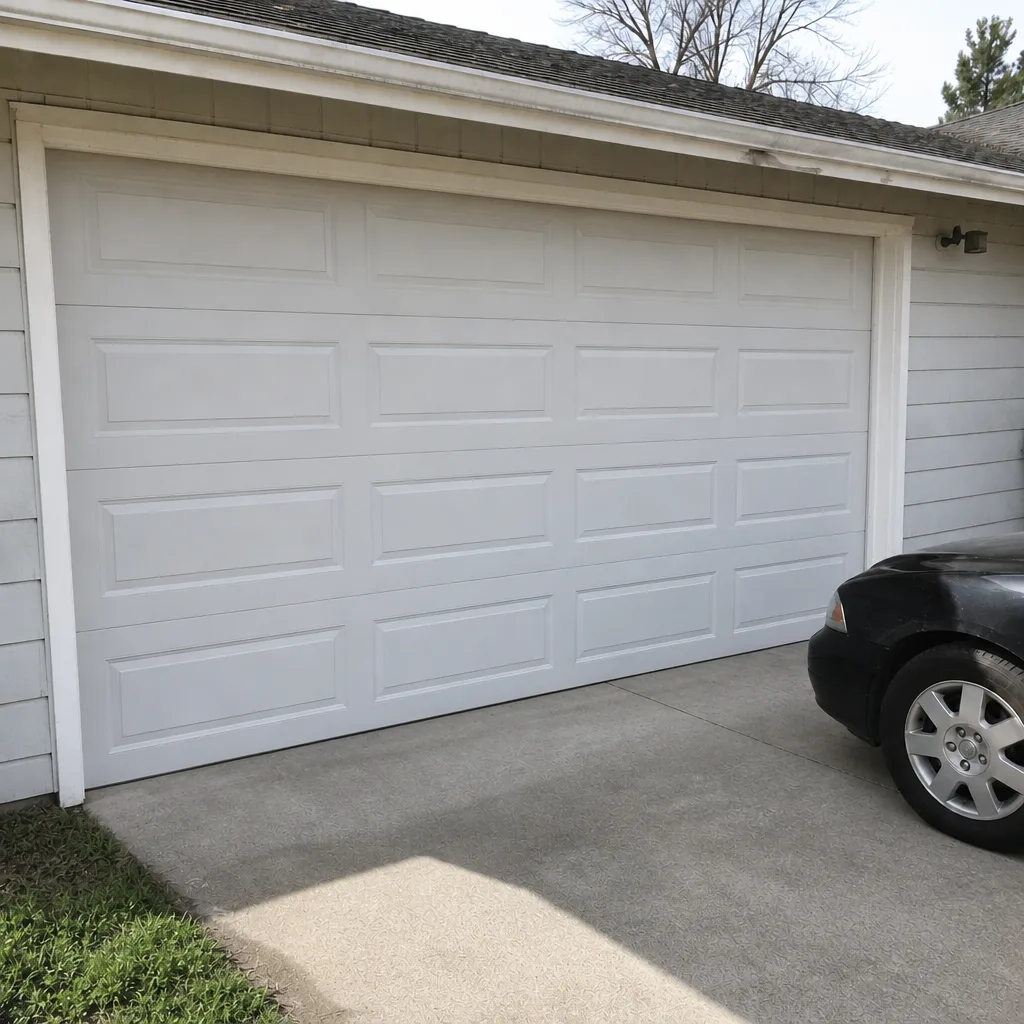 After
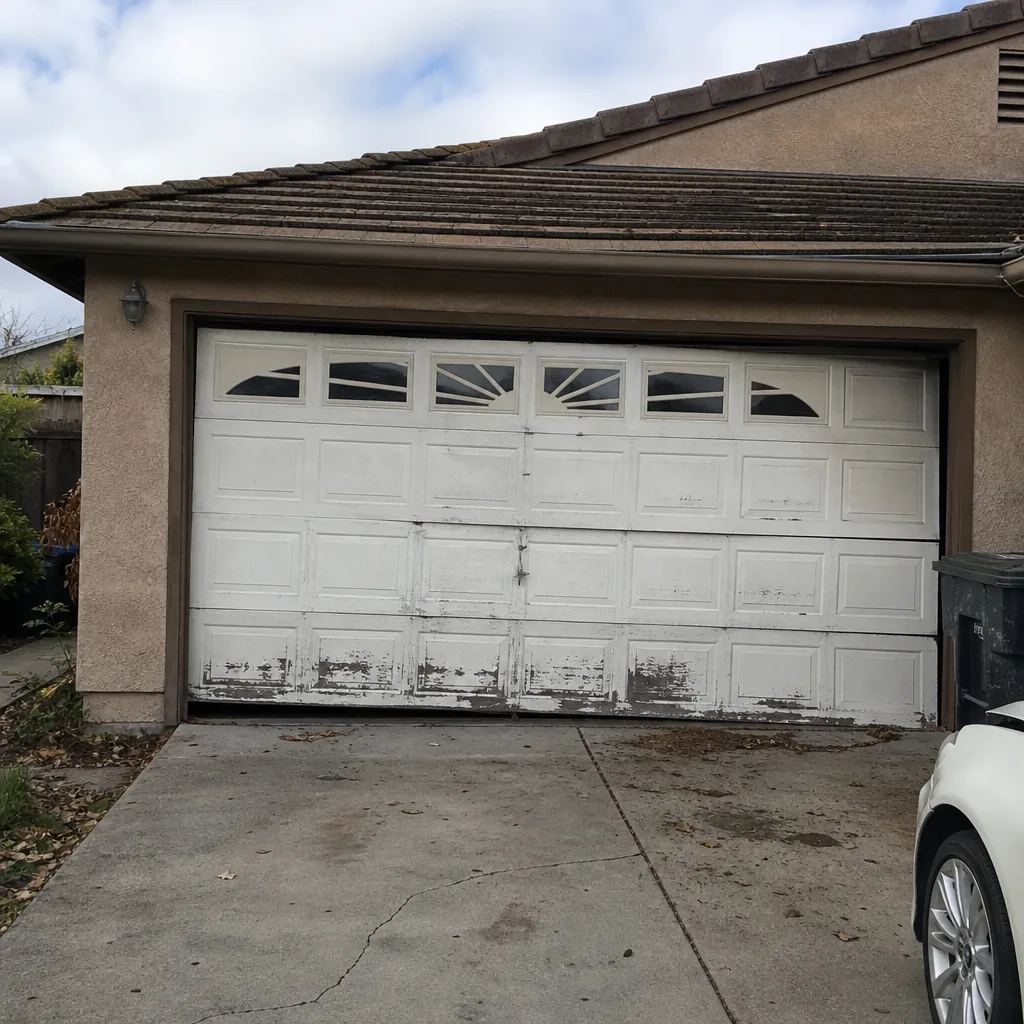 Before
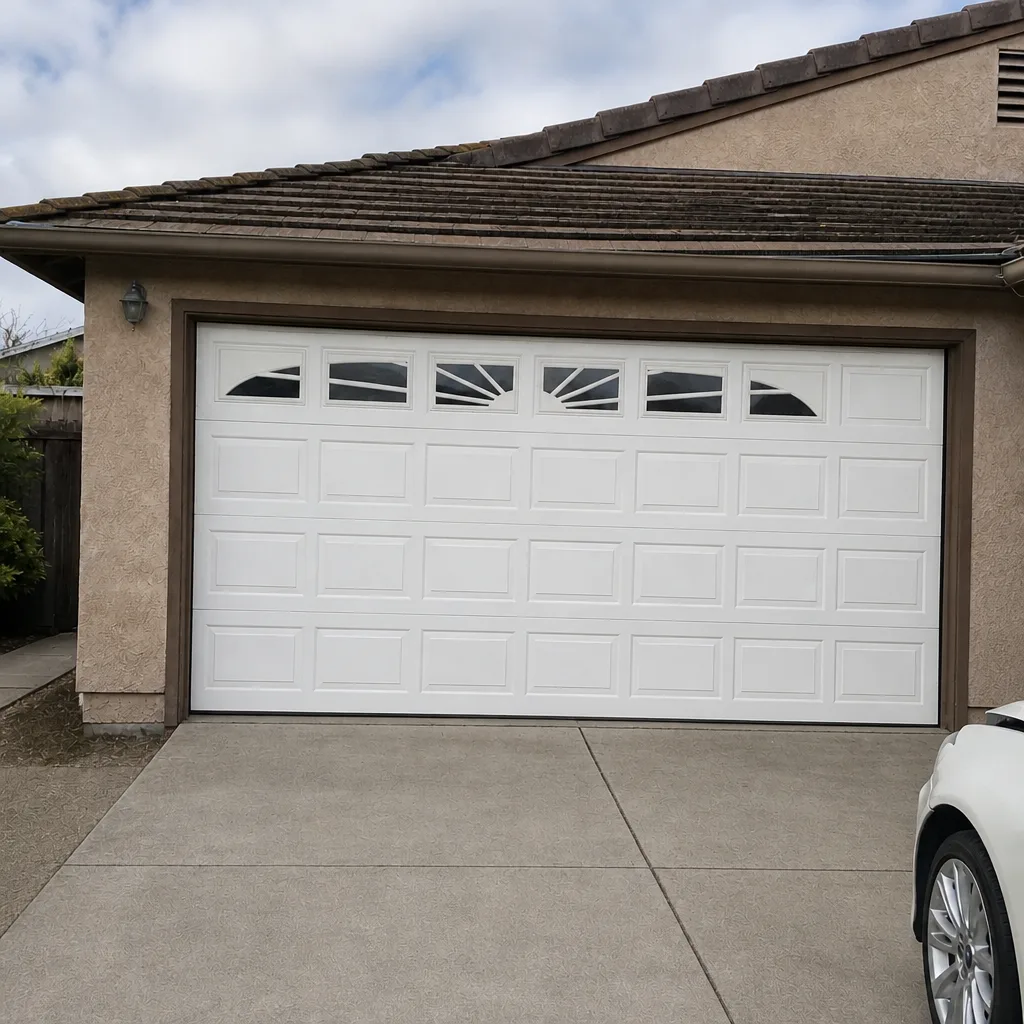 After
Common Mistakes to Avoid
- Bypassing or taping a sensor “just to get the door closed.” A sensor that reverses or stops the door is a safety device, and bypassing it removes that protection for everyone in the home, including children. Fix the sensor or limit switch instead of living with a workaround – this is not negotiable.
- Assuming a noisy door is always an emergency. A squeak usually means a dry hinge or worn roller and can wait a few days. Panic calls waste the time slot that a genuine Tier 1 repair needs.
- Running the opener after something snaps. Once a spring breaks or a cable snaps, every press of the button strains the opener motor and risks the door dropping. Stop, then call.
- DIY spring replacement. This is high-tension mechanical work. There is no safe homeowner shortcut on a torsion spring or a stretched extension spring, so don’t start the job.
- Ignoring the floor gap through Modesto’s warm months. A visible seal gap lets in heat, dust, and insects. It’s cheap and simple to correct and easy to ignore.
- Describing the brand as the symptom. Telling the technician “my LiftMaster is broken” doesn’t help diagnose the fault. Description of the fault does.
- Waiting for a crooked door to fix itself. An uneven door grinds rollers and can bend panels. It never self-corrects, so each week of use adds damage.
When to Call a Professional
Call a professional when any Tier 1 sign is present: a snapped spring or cable, a door off its track, a visibly crooked door, or an opener that runs but doesn’t move the door. None of those get better with time, and all of them involve stored mechanical energy that can hurt you if you try to manage it yourself. Also call if a Tier 2 sign has lasted more than a week, if you’re not sure which tier a symptom belongs to, or if your door and opener are different brands you’re not sure are compatible. Frontline Garage Door Service offers free estimates in Modesto – call (855) 473-8505. Our technicians have up to 10 years of experience and work on eight of the industry’s leading door and opener lines, including LiftMaster, Chamberlain, Clopay, and Raynor, so the specialist who arrives is equipped for the exact system at your house.
Frequently Asked Questions
A broken spring, because the door is no longer safely supported by the parts designed to carry its weight. If you hear a loud pop, find the door suddenly heavy, or see a spring that’s separated, stop using the door and call a trained technician before you press the button again. Call (855) 473-8505 for a free estimate.
Cost depends on which part has failed and the exact door and opener brand. We can’t quote by phone, but the price you’ll be given is set per job by the written estimate, agreed before any work starts. Free estimate: call (855) 473-8505.
Treat it as Tier 1. An opener running with a stationary door usually means a broken spring, a snapped cable, or a broken linkage, and each of those involves mechanical load that can fail again. Stop cycling the door and call. Call (855) 473-8505. We answer 24/7, with fast dispatch from 7am to 7pm, Sunday through Friday.
Yes, in the specific ways described above. The heat hardens weather seals and hinges, and the long fog months keep moisture on steel panels, especially in the seams where rust starts. The effect is that seal and hinge wear reach Tier 2 earlier in Modesto than a mild-climate generic schedule suggests. A trained visit once a season catches the wear early. Call (855) 473-8505 for a free estimate.
No. We quote the job in writing before work starts, and the written price is what you pay for that scope. If opening the door reveals more than could be seen up front, we stop, explain it, and re-quote before touching anything else. Call (855) 473-8505 to book a free estimate.
Yes. The technicians we connect you with are licensed and insured, and our technicians have up to 10 years of experience across both the mechanical door side and the smart opener side of the system. Call (855) 473-8505 to book a free estimate.
We can often look at a Tier 1 problem on the same day you call. We answer 24/7 for the phone line, with fast dispatch from 7am to 7pm, Sunday through Friday. A call outside dispatch hours is booked into the next opening, Sunday through Friday, from 7am to 7pm. Call (855) 473-8505 to check the day’s openings.
The Bottom Line
The garage door signs that matter most are the ones that look smallest – a door that reverses, a spring that pops, an opener that runs without moving the door. Sort your symptoms by risk tier, not by how loud they are. Tier 1 means stop using the door and call today. Tier 2 means book a repair within the week. Tier 3 means watch and plan. In Modesto, the heat, dust, and Tule fog push every one of these signs along a little faster than a generic climate guide suggests, so look at your seals at the start of summer and your hinges at the end of fog season. If you’re not sure which tier a symptom belongs to, describe it the way we laid out above and call to book.
For a problem you can’t place, get a trained eye on the door. Frontline Garage Door Service offers free estimates in Modesto – call (855) 473-8505. We answer 24/7, with fast dispatch from 7am to 7pm, Sunday through Friday. From the door to the opener, it’s the only trade we work on, and every part of the system is our job.
Written by the team at Frontline Garage Door Service.